Master's degree (2 years)Full timePlant Sciences
Are you interested in agriculture, horticulture and plant biology, environmental and climate effects on growth and quality of plants for food and feed?
ECTS credits:
120
Application deadline:
Applicants outside EU/EEA: 1 December
Norwegian, Nordic, EU/EEA and Swiss citizens: 15 April
Start of Studies:
Autumn
Number of students:
20
Requirements:
Bachelor’s degree in Plant Sciences, Biology, Biotechnology or equivalent education that includes basic knowledge in mathematics, chemistry, plant physiology, soil- and natural sciences.
Tuition fees (link)
Requirements in detail
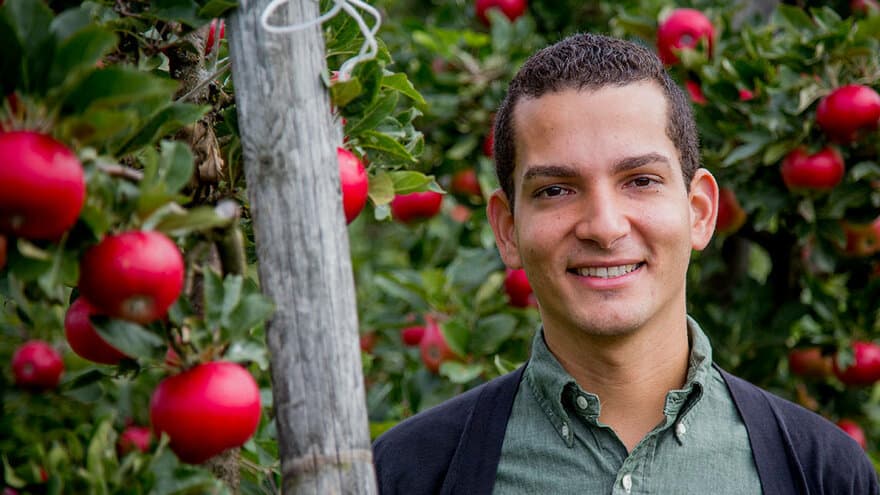
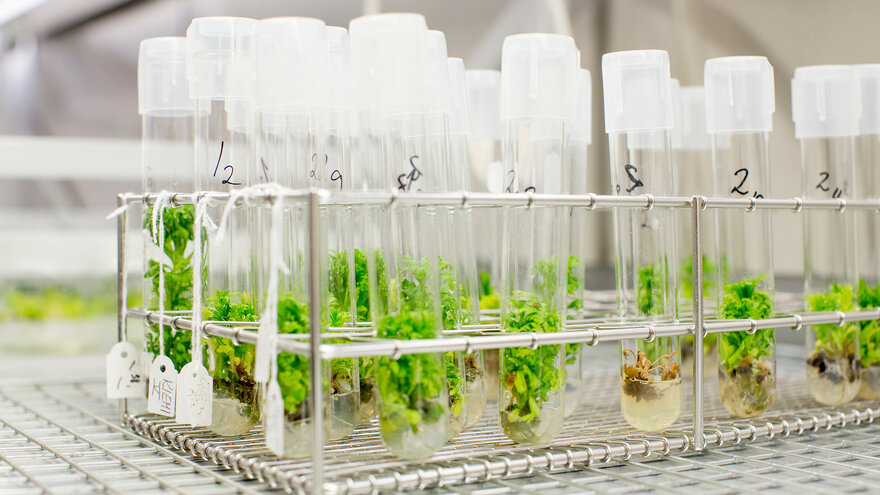

Master of Science. Two year, full time, 120 ECTS
Language of instruction: English
You can choose one of these two specializations in the programme:
- Plant Production and Plant Protection
- Plant Biotechnology
Students will learn about flowers, fruits, berries, vegetables and cereal. Understanding of plants function, and how the environment and climate effects on their functions. Genetics and molecular methods. Plant health and plant protection.
Some relevant courses:
- Plant production (PJH341, PJH360)
- Plant protection (PLV321, PLV330, PLV340)
- Plant Biotechnology (BIO300, BIO321, BIO324, BIO325, BIO327, BOT345)
- Soil (JORD330)
More information can be found in the study plan here: Study plan
Student accommodation:
Accommodation close to our stunning campus is offered through NMBU's Student Welfare Association (SiÅs). International students are prioritized for on-campus housing, though this is not guaranteed. We recommend that you apply for accommodation immediately after accepting your admission offer to secure housing. Read more.
Career opportunities
You can qualified for positions within:
- Agriculture, horticulture and environmental sectors, governmental, communal or private companies as a manager, adviser/consultant,
- PhD-studies, researcher,
- Lecturer (with pedagogic) etc.
- You can also work internationally, in UN organizations like FAO, and NORAD.
Graduate careers:
- Emily Follett - Researcher at NIBIO Ullensvang
- Bless Kufoalor - Lead/chief engineer - NIBIO
- Camilo Chiang Silva - Industrial PhD at UNIBAS (Switzerland) and Heliospectra (Sweden)
Program structure
Learning outcomes
Exchange possibilities
More about the program
Study advisor(s):

Cathrine Strømø

Societal relevance
Globally and domestic, there is increasing need for competence in many areas involving plant science, such as production of plants for food, feed and ornament, plant health, product quality and health aspects, development of green areas for recreation and sport, maintenance of cultural landscape and development of vital rural communities.
Globally, the production of sufficient food, and its distribution, constitutes a considerable challenge whilst global climate changes will affect the possibilities for food production in many regions. Plant production presents considerable challenges environmentally, and as users demand more freedom of choice, there will be more focus on production systems. To increase food production in a changing climate, and under strict environmental regulations, will require enormous effort in research and practice.
Research in all areas of plant production will also need to give increasing attention to the importance of food for health, and diet as a preventative measure for disease. In this respect, our green surroundings are also important, including green areas for sensory experiences and to stimulate physical activity. The plant science study programme connects the basic biology of plants with use of plants in practical agriculture and urban greening areas.