Hopp til hovedinnhold

Master 2 år
Heltid
Landskapsarkitektur for global bærekraft

Ready to engage in the most pressing issues of our time? This Master's degree offers a unique combination of practice from landscape architecture with studies in global development, planning and ecology.

Søknadsfrist:

Applicants outside EU/EEA: 1 December

Norwegian, Nordic, EU/EEA and Swiss citizens: 15 April

Studiestart:

August

Poenggrenser:

C (2024)

Opptakskrav:

To be admitted to the Master's program, applicants must meet the following criteria:

Must hold a Bachelor's degree in one of the following disciplines: Landscape Architecture, Architecture, Urban and Regional Planning, Landscape Planning, Landscape Sciences, Geography, Development Studies, Resource Management, Environmental Studies, Landscape Engineering and other relevant fields. 

Applicants must also submit a motivation letter and portfolio.

This degree is taught in English. See the full program description in the English-language webpage.

Karrieremuligheter

Graduates of the degree can look forward to various employment and professional opportunities including work in private practice, multidisciplinary firms, and public agencies. Our graduates are hired in private design firms, small and large, in multidisciplinary engineering consultancies, state and government agencies and planning authorities.

  • Hva lærer du?

    Graduates of this program shall have the following knowledge, skills, and general competencies:

    Knowledge

    Graduates will:

    • Possess advanced knowledge in landscape architecture with particular insight into global landscape practices related to sustainability, climate change, post-disasters, and post-conflict contexts.
    • Have an in-depth understanding of design-thinking approaches and field-based qualitative research methods, including landscape and context analyses.
    • Be experienced in inter- and trans-disciplinary teamwork, enabling them to apply and evaluate knowledge from multiple disciplines.
    • Be capable of developing original and context-appropriate landscape architecture projects.
    • Understand historic and contemporary theories in landscape architecture, especially those linked to global sustainability.

    Skills

    Graduates will be able to:

    • Analyse and critically evaluate diverse information sources and use them to support design arguments.
    • Critique and apply landscape design theories and methods to respond to specific physical, social, environmental, and governance contexts.
    • Formulate independent theoretical and practical design proposals.
    • Identify relevant purposes for landscape analyses and use these analyses to inform sustainable scenarios.
    • Work both independently and collaboratively in developing design outcomes.

    General Competences

    Graduates will:

    • Apply research methods and ethical principles when addressing contemporary critical issues with landscape architecture proposals.
    • Use their knowledge and skills to work with landscapes in crisis due to environmental, societal, or territorial challenges.
    • Communicate and disseminate ideas independently through varied modes of representation.
    • Receive, interpret, and integrate critical feedback into their design and research processes.
    • Contribute to innovative landscape practices by drawing inspiration from multiple geographical scales and disciplinary perspectives.
    • Critically reflect on and advance their work by engaging with historical and theoretical perspectives.
  • Programmets oppbygning

    Acknowledged by the International Federation of Landscape Architects, the GLA degree engages with the urgent environmental and social challenges of our time. It combines theoretical exploration and practical experimentation to address ecological and socio-environmental justice issues in contested landscapes. These are territories where competing claims, values, and power relations shape the use and meaning of land and resources. Across the globe, disputes over land management, resource exploitation, and cultural identity—together with social conflict and military occupation—have created such complex and often fragile environments. Rather than seeking fixed solutions, the research-driven, studio-based degree experiments with strategies and design scenarios for the future of contemporary landscapes. It prepares professionals who are capable of designing, planning, and managing sustainable environments that respond sensitively to diverse socio-cultural and ecological contexts. Building on prior studies in landscape architecture and related disciplines, GLA advances students’ existing qualifications (BA or MA) and deepens their understanding of landscape architecture within the context of an increasingly globalised world. The degree equips students with the skills and methods needed to navigate the uncertainties of future environmental and social challenges. Set within an international learning environment, the Landscape Architecture for Global Sustainability program exposes students to a wide range of global contexts and case studies, fostering opportunities for exchange, hands-on experience, and the development of intercultural knowledge and collaborative abilities.

    Academic Breadth (area, level, scope)

    The program features a distinctly transdisciplinary approach, integrating landscape management, planning, design, and ecology with theories and methods from development studies. This wide scope allows students to tackle ecological and socio-environmental justice challenges in contested landscapes—areas influenced by conflicting claims, values, and power structures. By engaging with various global contexts and case studies, the program equips students to operate effectively across different cultural, environmental, and political environments.

    Academic Depth (area, level, scope)

    As a research-focused master’s degree, the program deepens students’ theoretical and methodological competencies through an inquiry-driven, studio-based structure. Rather than seeking fixed solutions, students experiment with design strategies and future scenarios that respond to contemporary environmental and social challenges. This focus strengthens their ability to navigate uncertainty and complexity in landscape practice. Building on prior studies in landscape architecture or related fields, the program advances students’ disciplinary foundations to a global and critical level. It links design thinking with ecological knowledge, socio-political analysis, and development theory, creating a coherent progression from undergraduate competencies to advanced professional and academic practice.

    Compulsory Parts and Electives

    The curriculum includes 60 ECTS of compulsory courses, consisting of:

    • An introductory course in Landscape Architecture for Global Sustainability,
    • A theory course on Landscape in a Globalised World, and
    • Three design studios addressing the ecological, urban and social issues of contemporary contested landscapes.

    These core components establish shared theoretical, analytical, and design frameworks for all students. Students choose 30 ECTS of electives, allowing them to specialise in themes or regions of interest. The program concludes with a 30 ECTS master’s thesis, an independent research and design project that synthesises the program’s central concepts and contributes original insight into global landscape challenges.

    Master of Landscape Architecture for Global Sustainability (M-GLA) - Program structure 

  • Om programmet
    • Samfunnsrelevans
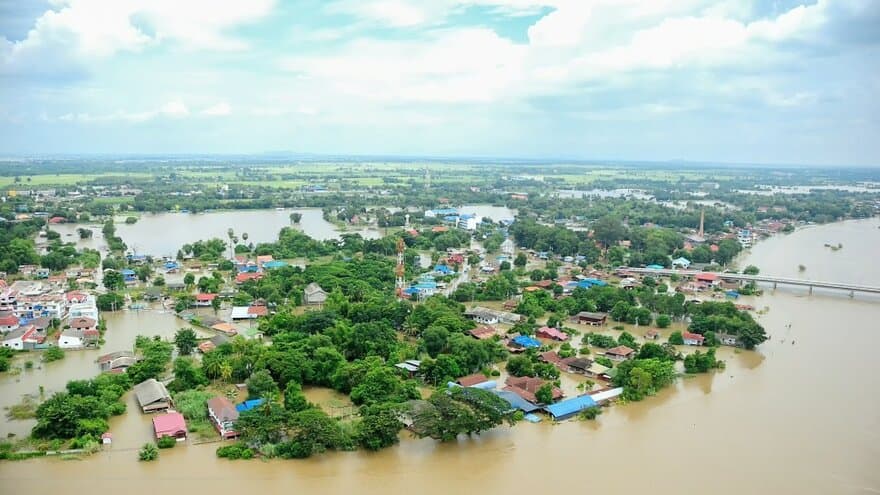
      Global transformation processes, developments towards the planet’s limits to growth, drive systemic landscape change at a global scale; increased frequency of environmental disasters, climate change and migration, affect how people interact with and perceive their everyday surroundings. Shaping these surroundings in a manner that is locally responsive to such challenges is the goal of a landscape architecture which takes a global perspective. Landscape architecture education in a globalized world provides specific skills for working in ways that are sensitive to different socio-cultural and ecological contexts. The programme responds to the dynamic evolution of the landscape profession to navigate the challenges our environment presents. As such, it will train and prepare professionals who will work in designing, planning and managing sustainable and resilient places. Students will learn skills and methods to be equipped when confronted with undeterminable /(unknown) future challenges.

Studieveileder(e):

Grete Grindal Patil

Grete Grindal Patil

Prodekan
Studenter i solen utenfor urbygningen, foto: Tommy Normann

Norges mest fornøyde universitetsstudenter

År etter år viser studentundersøkelser at NMBU-studentene er de mest fornøyde universitetsstudentene i Norge. Men hvorfor er de det?

Bli bedre kjent med studielivet