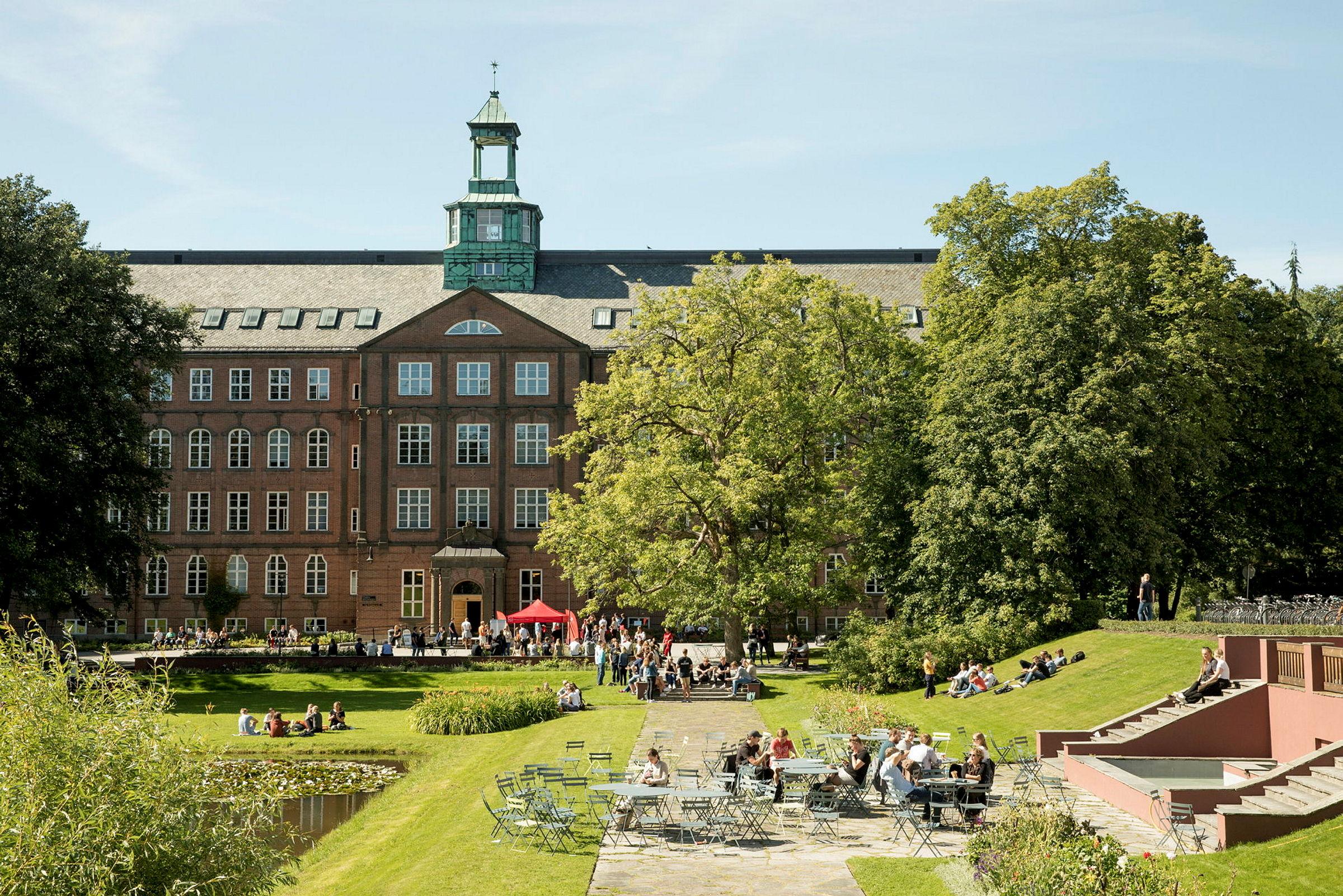
Four PhD research fellow positions are available at the School of Economics and Business this year. Up to two of the positions will be in transport economics, linked to the research centre TRANSPLAN. The remaining positions will be in one of the topics listed below (2-7).
Proposed topics for doctoral dissertation projects at the School of Economics and Business 2026:
1. Transport
- a. Behavioural adaptation and policy evaluation in sustainable transport
- b. Sustainable transport system: Scenarios and strategies
2. Finance
- a. Financial Forecasting and Risk Management
- b. Volatility and strategic flexibility: The role of Norwegian hydropower in European energy markets
- c. The impact of recent Uncertainties on the global and emerging financial Markets
- d. Investigates international spillovers of oil supply shocks on the exchange rate and stock market
- e. The role of Geopolitics and Climate change in the financial market
3. Climate
- a. Stated and revealed preferences for climate risks and nature-based solutions
- b. Climate Economics: Emissions, Inequality, and Behavioural Responses
4. Management
- a. Rethinking Job Design in Modern Work: A Dynamic Perspective
- b. Competitive cooperatives in resilient and sustainable food supply chains
- c. Antecedents to a Sustainable Career: A Life course Perspective
5. Tax Evasion and Data-Driven Enforcement
6. Behavioural Economics; Climate Risk, Preferences, and Trust
7. Open topic
More information
1. Transport
a. Behavioural adaptation and policy evaluation in sustainable transport
The School of Economics and Business at the Norwegian University of Life Sciences (NMBU) is seeking a PhD candidate to work within Research Area 3 (RA3): Behaviour and Adaptation of the Research Council of Norway–funded centre TRANSPLAN: A transport system within planetary boundaries (https://www.toi.no/transplan/).
Project goals:
The main objective of RA3 is to generate new empirical evidence on how households and transport-dependent organizations adapt to environmental policies and technological innovations in the transport sector. The PhD project will contribute to the research tasks focusing on experimental policy evaluation and behavioural responses to new technologies and policy instruments.
The PhD candidate will work closely with researchers in economics from NMBU, TØI (Institute of Transport Economics), and CICERO (Centre for International Climate Research), as well as user partners in the transport sector, to identify, design, and analyse natural and quasi-natural experiments arising from policy changes or external events. These could be adjustments in tolling systems, infrastructure improvements, or the introduction of new mobility services. These settings provide unique opportunities to assess the causal effects of policies on, for example, travel demand, mode choice, and technology adoption. The project may also draw on survey or register data to study how behavioural heterogeneity, preferences, and bounded rationality affect adaptation to policy and technology shifts.
Desired qualifications: We seek applicants with a master’s degree in economics, behavioural economics, transport economics, or a related field. Strong quantitative skills and experience with empirical analysis are desirable. Experience with survey design, causal inference, econometric analysis, or collaboration with public-sector partners will be considered an advantage. Proficiency in Norwegian or another Scandinavian language is preferred due to interaction with Norwegian transport agencies.
Supervisor(s): Frode Alfnes, frode.alfnes@nmbu.no
b. Sustainable transport system: Scenarios and strategies
The project is part of Research Area 1 (RA1): ‘Scenarios and strategies’ in the Research Council of Norway–funded centre TRANSPLAN: A transport system within planetary boundaries (https://www.toi.no/transplan/). The main objective of RA1 is to operationalize sustainability goals for the transport system and establish scenarios and pathways consistent with transitions to a low-emission society and commitments to preserving nature. The research will compare cost-effective strategies with alternative, politically feasible options, considering policy packages of taxes, subsidies and regulations.
Project goals:
The PhD project aims to contribute to RA1 research tasks by developing and modelling backcasting scenarios that take long-term climate and sustainability goals into account, and by exploring and evaluating strategies for achieving these goals using insights and tools from transport economics.
Data sources/type: Model-based scenario data, policy and planning documents, and possibly survey or experimental data generated within RA1.
Desired qualifications: Applicants should hold a master’s degree in economics, transport economics, or a related field. Strong analytical and quantitative skills are desirable, and proficiency in Norwegian or another Scandinavian language is preferred due to collaboration with Norwegian transport agencies.
Supervisor(s): Knut Einar Rosendahl, knut.einar.rosendahl@nmbu.no, Senior Researcher Paal Brevik Wangsness (TØI) and Senior Researcher Daniel Ruben Pinchasik (TØI).
2. Finance
a. Financial Forecasting and Risk Management
Decisions are made with the help of forecasts. An investor chooses a portfolio of assets based on their anticipated returns; a firm budgets its cash flows using predicted sales and costs; forecasts of financial derivative prices underpin risk management decisions. The topics of financial forecasting and risk management accommodate a broad range of problems that can be addressed using financial econometrics and machine learning. Whether you have a business problem you are trying to crack, a market you would like to learn more about, a passion for quantitative analysis in finance, or perhaps all three, this is your opportunity to pursue them with the support of like-minded researchers.
Project goals:
Project goals are to develop efficient forecasting and risk management solutions addressing the needs of businesses and financial market participants. We start by noting that forecasting asset and derivative prices is notoriously difficult. With risk managers and sophisticated investors demanding density (instead of point) forecasts, the first objective is to develop, implement and evaluate forecasting algorithms that efficiently extract information from current and historical data. The second objective is to use them in optimization and risk management strategies under realistic utility functions, while taking into account cash flow effects, asset-pricing implications and other practical considerations. Collaboration with private-sector companies on problem formulation and development of practical solutions is desirable.
Data sources/type: Financial time series from open sources and DataStream as well as company’s private data if available.
Desired qualifications:
- Strong quantitative skills with an emphasis on econometrics, statistics and time series analysis
- Interest in applied financial econometrics, forecasting, applied machine learning and/or risk management
- A healthy relationship with programming and data analysis in R, Python or similar
Supervisor(s): Daumantas Bloznelis, daumantas.bloznelis@nmbu.no
b. Volatility and strategic flexibility: The role of Norwegian hydropower in European energy markets
Europe’s shift to wind- and solar-based power systems introduces significant market volatility, supply uncertainty, and price risks. As thermal back-up capacity declines, the need for flexible and reliable balancing resources grows. Norwegian hydropower with its reservoirs, rapid ramping, and interconnectors has the potential to stabilize regional power markets. However, hydropower itself is increasingly exposed to hydrological uncertainty (e.g., droughts, shifting precipitation patterns), strategic risks from cross-border electricity trading, and regulatory uncertainty linked to EU market integration.
For policy makers, this creates a complex challenge of how to leverage hydropower's flexibility to support European decarbonization while managing risks to national electricity prices, domestic welfare, and long-term resource sustainability.
Project goals:
The successful candidate can study this topic from several viewpoints, including, but not limited to:
- Financial markets
- Structural analysis
- Machine learning and market dynamics
The detailed research questions and methodological approaches will be developed in collaboration with supervisors. Applicants are encouraged to outline initial ideas for how they would approach this topic and what methods they would apply.
Data sources/type: Market data are available under our licenses from LSEG DataStream and Montel. If other data is needed, they can likely be obtained without cost (from e.g. Nord Pool Group).
Desired qualifications: We seek candidates with a master’s degree in Business Administration, Economics, Business Analytics, Industrial Engineering, or related field. The candidate must have strong quantitative skills.
Supervisor(s): Torun Fretheim (torun.fretheim@nmbu.no), Jens Bengtsson, Olvar Bergland
c. The impact of recent Uncertainties on the global and emerging financial Markets
Over the past two decades, the role of uncertainty in financial markets has expanded significantly. In the wake of the global pandemic and ongoing geopolitical and trade uncertainties, we observe that the financial markets exhibit varying degrees of network dependence with regional and international markets.
This project examines how market news, sentiment-based uncertainty, and policy uncertainty impact the dynamics of sectoral financial markets during recent periods of crisis and heightened uncertainty. We will construct our own sentiment and uncertainty measures based on the news or events. Our empirical design is based on developed, emerging, and frontier markets. This study examines sectoral equity indices across global and emerging markets, using daily or high-frequency data.
A comprehensive literature review of the role of uncertainty in financial markets will be added to the project. This study will use an asymmetric dependency approach to quantify the effects of uncertainty on significant characteristics of sectoral financial markets. This approach naturally allows us to analyse asymmetric relationships across various market environments (normal, good, and bad). Our findings may reveal the heterogeneity of financial integration across industrial sectors when analysing sectoral financial markets under conditions of fragmentation risk, trade policy uncertainty and Geopolitical risk.
Project goals:
The project aims to investigate how various forms of uncertainty - economic policy, financial, real-sector, and trade policy - shape the dynamics of sectoral financial markets across developed, emerging, and frontier economies. It seeks to develop sentiment-based and event-driven uncertainty measures derived from market news and policy events, comparing them with established indices. Using asymmetric dependency frameworks, the study will examine how uncertainty shocks affect sectoral market behaviour differently across market states, emphasizing stronger effects during downturns. It will also assess the extent of cross-sector and cross-market spillovers, exploring whether heightened uncertainty leads to greater market integration or fragmentation. Ultimately, the project contributes to understanding how uncertainty influences financial stability and market interconnectedness under varying global conditions.
Desired qualifications: The successful candidate will have a master’s degree in economics, finance or a related field.
- Strong quantitative and analytical background in econometrics
- Experience with programming
Supervisor(s): Gazi Salah Uddin, udsal0529@nmbu.no, Atle Guttormsen, Muhammad Yahya
d. Investigates international spillovers of oil supply shocks on the exchange rate and stock market
This project investigates the international spillovers of oil supply shocks on exchange rates and stock markets. Using high-frequency identification, we isolate exogenous oil supply disturbances from intraday price movements around OPEC announcements, production disruptions, and geopolitical events. These shocks are combined with daily exchange rate data and firm-level stock prices across both oil-exporting and oil-importing economies to examine real-time financial transmission. We estimate dynamic effects using instrumental variable local projections, which trace the impulse responses of exchange rates and equity returns to oil supply shocks while addressing endogeneity. Complementary structural panel VARs with sign restrictions capture cross-country heterogeneity in adjustment patterns. At the firm level, quantile local projections and panel regressions identify asymmetric and non-linear effects based on firm’s energy intensity, trade exposure, and leverage, uncovering competitiveness and balance-sheet channels. We further employ time-varying connectedness models to quantify volatility transmission between oil, currency, and equity markets. This network-based approach highlights periods of heightened contagion and structural change following major supply disruptions. Finally, we assess policy effectiveness across four domains—energy, fiscal, financial, and exchange rate—using a panel difference-in-differences design. By linking policy frameworks to the magnitude of observed spillovers, the study evaluates how strategic reserves, fiscal buffers, and exchange rate flexibility mitigate financial contagion. Overall, the project provides new global evidence on the asymmetric transmission of exogenous oil supply shocks and institutional conditions that enhance macro-financial resilience.
Project goals:
This project examines how exogenous oil supply shocks transmit internationally to exchange rates and stock markets. Using high-frequency identification, we isolate supply disturbances from intraday oil price movements around OPEC decisions, production outages, and geopolitical events. These shocks are linked with daily exchange rate data and firm-level equity returns across oil-exporting and oil-importing economies to capture real-time financial spillovers. Dynamic effects are estimated through instrumental variable local projections and structural panel VARs with sign restrictions, revealing cross-country asymmetries in adjustment. At the firm level, quantile local projections explore how energy intensity, trade exposure, and leverage shape heterogeneous responses. Time-varying connectedness models quantify volatility transmission between oil, currency, and equity markets, highlighting episodes of heightened contagion. Finally, a panel difference-in-differences design evaluates how energy, fiscal, financial, and exchange rate policies mitigate these spillovers. The project aims to provide new evidence on the asymmetric transmission of oil shocks and the institutional mechanisms that strengthen macro-financial resilience.
Data sources/type: Financial and economic data. Most data are publicly available or can be bought.
Desired qualifications: The successful candidate will have a master’s degree in economics, finance or a related field.
- Strong quantitative and analytical background in econometrics
- Experience with programming
Supervisor(s): Atle Guttormsen, atle.guttormsen@nmbu.no, Gazi Salah Uddin, Muhammad Yahya
e. The role of Geopolitics and Climate change in the financial market
We aim to conduct a multidisciplinary research initiative examining how geopolitical tensions/risk and climate risk jointly influence financial market dynamics and investment decisions. The project integrates machine learning based risk connectedness models with financial systems theory and green finance frameworks to capture the interdependence between global shocks, asset prices, and investment. Using high-frequency financial data and advanced time-varying network models, we measure how climate and geopolitical risks propagate across asset classes, sectors, and countries. Complementing this, panel econometric methods and causal machine learning approaches are applied to identify how investors adjust portfolios in response to systemic uncertainty, energy transitions, and policy interventions. By combining insights from data science, financial economics, and climate policy research, the project develops an integrated understanding of risk transmission under multiple global stressors. The results will inform strategies for enhancing financial stability, guiding sustainable investment flows, and improving the design of macroprudential and environmental policies. Ultimately, this research seeks to generate actionable insights for academics, investors, and policymakers navigating the interconnected challenges of climate and geopolitical uncertainty.
Project goals:
This project explores how geopolitical news-based tensions and climate risk jointly shape financial market behavior and investment decisions. It combines machine learning based AI-risk connectedness models with financial systems and green finance frameworks to capture how global shocks influence asset prices and capital flows. Using high-frequency data and dynamic network models, the study traces how climate and geopolitical risks spread across assets, sectors, and countries.
Complementary panel econometric and causal machine learning methods identify how investors adapt to systemic uncertainty, energy transitions, and policy shifts. By integrating insights from data science, finance, and climate policy, the project aims to deepen understanding of risk transmission under multiple global stressors and provide evidence-based guidance for enhancing financial stability, directing sustainable investments, and strengthening macroprudential and environmental policy design.
Desired qualifications: The successful candidate will have a master’s degree in economics, finance or a related field.
- Strong quantitative and analytical background in econometrics
- Strong understanding of machine- and deep learning
- Experience with programming
Supervisor(s): Muhammad Yahya, muhammad.yahya@nmbu.no, Atle Guttormsen, Gazi Salah Uddin
3. Climate
a. Stated and revealed preferences for climate risks and nature-based solutions
As extreme precipitation events increase in Norway due to climate change, urban flooding threatens infrastructure, properties, and ecosystems, leading to escalating economic costs and societal risks. Understanding these risks and developing nature-based solutions (NBS) to mitigate them is essential for sustainable adaptation.
The candidate will have the opportunity to work on the related RNC-funded projects “NATURE - Nature-Based Adaptation Targeting Urban Resilience and Economic Efficiency” and “CO-CRED: Navigating growth and sustainability: Co-creating local climate resilient development practice in the Oslofjord region.”, where SEB-NMBU is involved in both. These projects assess people’s behavior when exposed to climate risks and nonmarket benefits of NBS to mitigate climate risks in urban areas. Anders Dugstad is the project leader of NATURE.
The PhD candidate will primarily work on Norwegian case studies, using survey and secondary data to conduct economic valuation and appraisal NBS implementation, as well as how people respond to climate risk. The survey data will be collected through stated preference methods. Secondary data involves property transactions
Project goals:
The overarching goal is to generate knowledge on how climate risks shape people’s choices and to assess the nonmarket values of nature-based solutions for mitigating stormwater and urban flooding, thereby supporting better decisions for resilient and sustainable urban development.
Desired qualifications:
- The successful candidate will have a master’s degree in economics, including environmental and resource economics, or a related field.
- Familiarity with revealed and stated preference methods is desirable.
- Proficiency in a Scandinavian language is desirable to actively participate in all aspects of data gathering.
Data sources/type: Revealed and stated preference data
Supervisor(s): Anders Dugstad, anders.dugstad@nmbu.no, Erlend Dancke Sandorf, Ståle Navrud.
b. Climate Economics: Emissions, Inequality, and Behavioural Responses
Climate change creates economic pressures that affect households, firms and markets in ways that standard models only partially capture. Emissions are unevenly distributed across the population and sectors. Investors and workers increasingly respond to firms’ environmental performance. Technological innovation may or may not accelerate decarbonisation. And individuals’ perceptions of climate risks shape attitudes toward policy, taxation and local adaptation.
Recent advances in administrative data, firm-level emissions records, financial datasets, innovation measures and surveys open new opportunities for empirical research. This project provides a broad platform for a PhD candidate to study how climate-related risks and externalities influence economic behaviour, resource allocation and inequality.
Project goals:
The overarching aim is to generate new empirical evidence on how climate change shapes economic decisions across different parts of the economy, in particular:
- Emissions and inequality: Analyse how emissions, carbon taxes, and climate burdens are distributed and how this affects economic disparities and policy choices.
- Markets and behaviour: Study how investors, firms or workers respond to environmental performance, climate risks or regulatory changes.
- Innovation and the green transition: Examine the role of technological change and tax policies in emissions reductions and assess causal effects of innovation.
- Risk perceptions and attitudes: Investigate how exposure to climate-related hazards influences attitudes toward taxation, policy or investment behaviour.
The precise focus will be shaped by the candidate’s interests and available data, in collaboration with the supervisors.
Data sources/type: The project can draw on a range of empirical resources already available here at NMBU, in particular the unique data environment of the research centres Skatteforsk and CENCE, including administrative register data on households, workers and firms, firm-level emissions data, financial market and ownership data, and survey data.
Desired qualifications: Familiarity with the tax system and/or climate policies, and experience with coding in Stata or similar programs
Supervisor(s): Annette Alstadsæter, annette.alstadsater@nmbu.no, Knut Einar Rosendahl
4. Management
a. Rethinking Job Design in Modern Work: A Dynamic Perspective
Traditional job design theories (e.g., Hackman & Oldham, 1976; Parker et al., 2017) assume that jobs are relatively stable bundles of tasks and characteristics. Yet modern work is increasingly dynamic, fluid, and self-organizing. Employees shift between tasks, contexts, tools, and demands multiple times per day. Hybrid work, digital communication, role fragmentation, and continuous change mean that understanding jobs as singular entities no longer captures the real variability of work experiences
Recent scholarship calls for a shift from static, between-person models toward within-person, moment-level, and multilevel approaches to understand how work is actually experienced (Sonnentag et al., 2015; 2025). Despite this, theory and empirical research still rely heavily on cross-sectional surveys that assume stable job characteristics and linear processes.
This project aims to address this gap by reconceptualizing job design and motivational processes as dynamic, multilevel, and fluctuating. It will investigate how task-level experiences, moment-to-moment work conditions, and day-level patterns interact with the more traditional job-level characteristics to shape outcomes such as motivation, strain, well-being, engagement, and performance.
Building on intensive longitudinal methods that have previously been hard to apply but are now more widely available and utilized within other fields, such as experience sampling methodology, the project will explore how modern jobs unfold in real time. By advancing a dynamic approach to job design, the project will contribute to theory development and offer practical insights for organizations navigating the increasing complexity of modern work.
Project goals:
The overarching aim is to develop a dynamic understanding of modern work that captures how contemporary job design should be conducted, including examining how structural and contextual features of modern work (e.g. hybrid work, task switching, role fragmentation) alter the meaning and impact of job design constructs. In addition, the project should provide practical insights for designing healthy, motivating work in organizations characterized by instability, rapid change and fluid roles.
Data sources/type: The project will draw on both existing experience sampling datasets collected from Norwegian workplaces, as well as new data collected during the project from collaborating organizations.
Desired qualifications: The successful candidate will hold a master’s degree in a relevant field, such as organizational psychology, psychology, sociology, leadership or economics and business.
- Interest in topics such as job design, motivation, performance, or well-being.
- Experience with quantitative research methods; familiarity with longitudinal data and/or multilevel modeling is an advantage but not a requirement.
- Experience with statistical programs (e.g. R, Stata, Mplus) is desirable.
Supervisor(s): Frida K. Feyer, frida.karine.feyer@nmbu.no, Bryndís Steindórsdóttir and Sverre Ubisch
b. Competitive cooperatives in resilient and sustainable food supply chains
The PhD project is linked to the Center for Cooperative Research at NMBU School of Economics and Business, which focuses on the role, organization, and governance of cooperatives in the Norwegian economy.
Agricultural cooperatives play a key role in European food value chains. In Norway, TINE, Nortura and Felleskjøpet are dominating actors within their domains. However, geopolitical shifts, climate change, and changing societal demands for sustainable, secure, and affordable food call for a reassessment of their competitiveness and organizational models.
Project goals:
The PhD project aims to advance knowledge about the future role and strategies of Nordic agricultural cooperatives in building resilient and sustainable food value chains.
Depending on the candidate’s background and interests, the project may focus on one of two perspectives:
- (P1) Resilient and sustainable food supply chains. Planning, preparedness and response
- (P2) Governance structures and strategic adaptation
The project contributes to the emerging research that addresses the integration of sustainability and resilience objectives and the renewed interest in cooperative organizations to achieve sustainable corporate governance.
Data sources/type: Through the Center for Cooperative Research, the project will gain access to data and networks within Norwegian agricultural co-operatives, as well as links to European partners. The project will draw on survey data, simulations, model-based scenario data, interviews, policy and planning documents, and databases from the agricultural sector and cooperatives, along with data from policy changes and real-world interventions.
Desired qualifications: Applicants should hold a master’s degree in business administration, economics, bioeconomics or a similar field, preferably with a focus on strategic management, logistics, supply chain management, industrial engineering or industrial marketing management.
- Strong skills in empirical analysis of quantitative data are desirable.
- Knowledge of the agricultural sector and policies, as well as co-operative organizations, will be considered an advantage.
- Proficiency in Norwegian or another Scandinavian language is preferred.
Supervisor(s): Jens Bengtsson, jens.bengtsson@nmbu.no (P1) and Silja Korhonen-Sande, silja.korhonen-sande@nmbu.no (P2), Frode Alfnes and Sigurd Rysstad
c. Antecedents to a Sustainable Career: A Life course Perspective
In recent years, the concept of a sustainable career has attracted growing attention from both scholars and practitioners (De Vos et al., 2020). This shift reflects a broader understanding of career outcomes—one that extends beyond traditional markers of success to include outcomes such as well-being, continuity, and a sense of meaningfulness. Yet, research has given limited attention to the antecedents of sustainable careers, particularly through the lens of a life course perspective.
This project seeks to examine how demographic characteristics, early life experiences, and supportive contextual factors shape the trajectories of a sustainable career later in life. Adopting a life course approach (Elder, 1994) is especially valuable as it highlights how early advantages and disadvantages accumulate over time and contribute to individual differences in the sustainability of career paths across adulthood. To achieve this, the project will draw on data from Understanding Society Dataset, a large-scale longitudinal household study in the United Kingdom, that provides rich information on individuals’ employment histories, well-being, and life circumstances.
By identifying these long-term patterns, and their underlying mechanisms, the project will contribute to a deeper theoretical understanding of how sustainable careers are formed and maintained over time. The findings may help to identify both risk and protective factors underlying (un)sustainable career trajectories, thereby informing policies and organizational practices that foster inclusiveness and equitable career development.
Project goals:
The overarching project goals are to enhance our understanding of how social identities (e.g., socioeconomic background, age, gender), early life experiences, and supportive contextual factors (e.g., quality of family relationship) shape the development and maintenance of sustainable careers across the lifespan.
Data sources/type: The project draws on the Understanding Society Dataset, a large-scale longitudinal survey from the United Kingdom.
Desired qualifications: The successful candidate will hold a master’s degree in a relevant field, such as within organizational psychology, psychology, economics and business or sociology.
- Experience with quantitative methods and statistical programs is strongly desirable.
- Interest in topics related to the field of careers will be an advantage.
Supervisor(s): Bryndís Steindórsdóttir, brste5509@nmbu.no, Sverre Ubisch, Frida Feyer
5. Tax Evasion and Data-Driven Enforcement
Economies with high trust and strong welfare institutions depend on efficient and fair tax enforcement. Yet rapid digitalisation, complex financial structures and fragmented information flows challenge traditional approaches to detecting and preventing tax evasion. Banks and financial institutions report large volumes of suspicious transactions, but only a small share leads to investigation. Authorities often hold partial information, and legal uncertainty around data sharing limits coordinated responses. At the same time, new digital infrastructures, regulatory sandboxes and cross-agency collaborations create opportunities for smarter and more targeted enforcement.
This PhD project provides a broad platform for studying the economics of tax evasion, with emphasis on how information, incentives and institutional design shape compliance, as part of the broad national and international network of Skatteforsk – Centre for Tax Research and our ongoing collaboration with tax administrations, regulators, and financial institutions.
Project goals:
The project aims to develop new empirical evidence on how tax evasion can be detected, sanctioned and deterred in a trust-based and increasingly automated tax system. The candidate will study how information frictions, institutional design and digital processes affect both evasion behaviour and enforcement outcomes. Possible directions include:
- analysing how automated case handling, risk-based selection or fragmented data influence detection and the likelihood of sanctions
- assessing the effectiveness of tax penalties and other sanctions, including behavioural responses, deterrence effects and inequalities in outcomes
- examining how cooperation and information sharing between banks, tax authorities and enforcement agencies affect the quality and timing of interventions
- evaluating the potential of guidance, early intervention and low-cost compliance tools as alternatives to traditional sanctions.
The project leaves considerable room for the candidate to shape a dissertation consistent with their interests and competencies, given that it is within the frames of the overall and applied project portfolio at Skatteforsk.
Data sources/type: The project can draw on a range of empirical resources already available at https://www.nmbu.no/en/research/skatteforsk-tax-center, including administrative register data on households, workers and firms, financial market and ownership data, international financial flows, corporate structures or enforcement frameworks, and planned survey data, in addition to qualitative and quantitative data from digital reporting platforms, supervisory guidelines or institutional practices. The precise data strategy will be developed with supervisors based on feasibility, access and the student’s chosen research direction, pending project approval by the Centre leader.
Desired qualifications: Familiarity with the tax system; experience with coding in Stata or similar programs.
Supervisor(s): Annette Alstadsæter, annette.alstadsater@nmbu.no
6. Behavioral Economics; Climate Risk, Preferences, and Trust
The Behavioral Economics (BEE) group is a highly active research group. The project builds naturally on the group’s core focus on sustainability and climate risk.
Project goals:
The project aims to study how adaptation to climate risk is shaped by the interaction between climate risk (perceived or actual), risk preferences, time preferences, and trust in institutions. The overarching goal is to improve understanding of behavioral mechanisms underlying successful climate adaptation, especially where adaptation requires behavior oriented toward the common good.
Desired qualifications: Master’s degree in economics or a closely related field, strong quantitative skills; experience with experimental methods and/or microdata analysis is an advantage; interest in sustainability, climate risk, and development contexts.
Supervisor(s): Dag Einar Sommervoll, dag.einar.sommervoll@nmbu.no, Aida Tabarroky Ardebili
7. Open topic
Priority will be given to candidates interested in one of the topics listed above, but other well-qualified applicants will also be considered based on their research proposal.