Aims of the research school
The aim of Empowered Futures is to significantly strengthen the societal and professional relevance of doctoral education by addressing the social and environmental controversies of low-carbon energy transitions. In this PhD school, key research environments in Norway join forces to educate scholars of the future in energy social science.
The Faculty of Landscape and Society at the Norwegian University of Life Sciences (NMBU) will work together with multiple academic and societal partners to form an innovative, collaborative and international state-of-the art research school.
Empowered Futures enables a coordinated and unique platform for collaboration, knowledge sharing, joint courses and activities with governance and business partners. The School targets a broad range of social scientific PhD candidates with a specific interest in building careers (in research, business, consultancy and the public sector) geared to both critically explore and empower energy transitions, and to enable workable and just pathways through the controversies they generate.Apply for membership
Join Empowered Futures
Benefits of membership include fully funded PhD courses, workshops, internships, policy roundtables, field trips & co-publishing opportunities. Travel grants are available along with access to a strong network of industry, academic & societal partners and engagement with a close-knit community of energy researchers.
Applications for this year are now closed.Who can apply?
PhD Fellows in the first 18 months of their PhD fellowship, whose research interests are within energy / renewable energy and/or low-carbon energy transition.
Benefits of membership
PhD courses, training workshops on communication and impact assessment, internships, practica, policy roundtables, and study tours. All of the activities are fully financed by Empowered Futures. Grants will be made available to members of the School to assist with funding travel and accommodation.
Members join a network of PhD and postdoc fellows as well as national and international faculty and partners associated with the PhD School. We will help to facilitate continued contact between members as an alumni network. We will actively respond and promote the interests and output of all members. Opportunities will be created for candidates to write and co-publish together, and where when feasible, with the experts connected to the school.
Membership is for a period of 3 years or until the doctoral degree is awarded if within the 3-year term. Members are encouraged to participate in 3 Empowered Futures activities during their term.
Selection criteria
The committee will select candidates based on the following criteria: (1) thematic fit to the scope of the researcher school, (2) the potential benefit to the applicant of participation in the researcher school, and (3) academic quality of the submitted material.
Deadlines
Applications for this year are now closed. There will be a new call in autumn 2026.
2025 Cohort
The fourth cohort of new members to the Empowered Futures research school has now been selected. Congratulations to the 11 new candidates for 2025. The candidates come from Italy, Iran, Finland, USA, Norway, Germany, Netherlands, and Zimbabwe. They are affiliated to the following institutions: University of Adger; University of Sydney/University of Glasgow; University of St. Andrews; NMBU – Norwegian University of Life Sciences; University of Stavanger; University of Bergen; University of Stirling.
2024 Cohort
The third cohort of new members to the Empowered Futures research school has now been selected. Congratulations to the 12 new candidates for 2024. The candidates come from Denmark, Paraguay, Norway, Sweden, Germany, Finland, Netherlands, Singapore, and Bangladesh. They are affiliated to the following institutions: NTNU – Norwegian University of Science and Technology; Autonomous University of Barcelona; Fafo Research Institute; Lund University; University of Bergen; University of Helsinki; University of Adger; University of Amsterdam; University of Exeter; NMBU – Norwegian University of Life Sciences.
2023 Cohort
The second cohort of new members to the Empowered Futures research school has now been selected. Congratulations to the 12 new candidates for 2023. The candidates come from Scotland, Austria, India, Japan, Norway, Canada, Finland, Germany, Chile, and Brazil. They are affiliated to the following institutions: University of the Highlands and Islands; University of Natural Resources and Life Sciences (BOKU); University of Geneva; University of Manchester; Fridtjof Nansen Institute; University of Agder; Memorial University of Newfoundland and Labrador; Glasgow Caledonian University; University of Stavanger; University of Edinburgh; Norwegian University of Life Sciences (NMBU).
Activities 2026
PhD Course
Porto, Portugal, 13-16 October 2026This PhD course, organised in collaboration with FEP School of Economics and Management, University of Porto, explores the social, political, and environmental dimensions of renewable energy transitions. Hosted partly in Porto, participants will engage directly with Portugal’s pioneering renewable energy developments across both land and marine environments.
The course examines how expanding renewable energy infrastructures reshape land and seascapes, raising critical questions about ownership, access, governance, and justice. Through an interdisciplinary lens, it connects theories of the commons with debates on enclosures, energy extractivism, and resource frontiers, while also exploring alternative governance models such as community energy initiatives.
Combining theoretical lectures, international guest seminars, and field visits – including offshore wind projects and local energy initiatives – participants will gain practical and analytical tools to critically assess energy transitions and their wider societal impacts.
A key component of the course is collaborative PhD research reflection sessions, designed to integrate course insights into participants’ doctoral work and foster academic networking.
The programme also includes a rich social agenda, offering opportunities to experience local culture through shared dinners, port tasting, and fado music.
The course is fully funded for Empowered Futures members (travel from within Europe).
Non-members must cover their own travel, accommodation, and evening meals.
Application: https://nettskjema.no/a/626448
Deadline for registration: 16th June 2026.Empowered Futures Conference 2026: Controversies of Energy Transitions in an Age of Crises and Opportunities
Norwegian University of Life Sciences (NMBU), Ås, Norway | 05 November 2026
Organised by Empowered Futures alumni, the Empowered Futures Conference 2026 brings together researchers, practitioners, and policymakers to explore the controversies, challenges, and possibilities shaping contemporary energy transitions. Featuring presentations from current Empowered Futures members and alumni, alongside keynote talks and researcher-practioner panel discussions, the conference addresses themes including critical minerals and green extractivism, energy justice, state governance, urban climate adaptation, community-led energy initiatives, industrial decarbonisation, and the uneven geographies of sustainability transitions. Join us for a day of critical dialogue on the power relations, opportunities, and trade-offs embedded in energy transitions, while exploring pathways towards more just, democratic, and socio-ecologically sustainable futures.
Keynote speakers:
Dr Gisa Weszkalnys (London School of Economics)
Dr Anna-Sophie Hobi (Empowered Futures alumna)Presentations:
Caroline Buus Ponthieu (Norwegian University of Science & Technology – NTNU)
Challenges to decolonising energy transition mineral supply chains in Kanaky-New CaledoniaDaniel Molin (University of Oslo)
State of Charge: From Petrol Stations to Charging Networks: The Spatial Transformation of Norway's Automotive Energy System, 1993-2025Greg Grant (Norwegian University of Life Sciences) & Erin Rizzato Devlin (Lund University)
Stealing from the Wind: Moving from a Corporate-Led to Community-Led Transition in Scotland’s Rural PeripheriesHåkon da Silva Hyldmo (Norwegian University of Science & Technology – NTNU)
Green Industrial Development in the Global South: Challenges from the Lithium and Nickel Industries in Chile and IndonesiaJanina Jasper (University of Stavanger)
Who Can Participate? Distributed Capacity and Energy Transition Controversies in Urban Flexibility GovernanceKaren Waneska de Jesus (Norwegian University of Life Sciences)
The Hidden Cost of Green Cities: Aluminium Extraction and Green Colonialism from Norway to BrazilSharayu Shejale (University of Geneva)
How Urban Communities Face the Heat: Insights from Mumbai, IndiaTafadzwa Maukazuva (University of Stirling)
Where the Earth Bleeds Light: Sacrificial Geographies and Everyday Struggles for Energy Justice in Zimbabwe's Lithium FrontierThe conference is free to attend and includes refreshments and a light lunch.
Where: Gullvepsen, Bikuben, Norwegian University of Life Sciences (NMBU), Oluf Thesens vei 35, 1433, Ås, Norway
When: 05 November 2026, 08:30-16:30Register here: https://nettskjema.no/a/641518
- Practica
Practica will be organized in collaboration with local government and private sector partners. The aim is to help you as a PhD candidate to develop vital skills and confidence for your projects and future work. Through field labs and experiments, the practica will develop and test monitoring and regulation methods and technologies and discuss implications through PhD group work, as well as testing methodological and theoretical approaches which has value for local governments in energy development contestations.
Financing is available to cover travel and accommodation for PhD School Members.
If you are interested in practica with any of our societal partners, enquire through neil.gordon.davey@nmbu.no.
- Internships
The school will facilitate PhD candidates to gain practical experience in the business and governance of energy development and planning, with at least 3 annual internships in local government, energy companies, government regulatory bodies and consultancy companies. This can benefit you as a PhD candidate by offering the potential to develop research exchange with our wider international network. It will also aid recruitment, work-life relevance and the co-production of relevant and tested skills and knowledge.
Financing is available to cover travel and accommodation for PhD School Members.
If you are interested in internships with any of our societal partners, enquire through neil.gordon.davey@nmbu.no.
Activities archive

14 Apr 2026
Field Excursion & Communications Workshop
Bergen & Solstrand Hotel
The excursion and workshop brought together the 2024 and 2025 cohorts, focusing on networking between PhD-candidates and partners, and research writing and publishing for both academic and non-academic purposes.

06 Nov 2025
Social & Environmental Impact Assessment Workshop
UiT, Tromsø
The workshop at the Arctic University of Norway in Tromsø brought together scholars, practitioners, and community representatives, focusing on the critical intersections of impact assessment, Indigenous rights, and energy transitions.
24 Oct 2025
Publications workshop for climate and energy social science researchers
Centre for Climate and Energy Transformation, University of Bergen
The workshop focused on improving academic writing in climate and energy social science. Participants worked on crafting strong arguments, clear theoretical frameworks, and effective analyses for high-impact publications. Andy Stirling, Professor at the University of Sussex, shared insights on writing and publishing. The session included hands-on work with participants’ manuscripts to strengthen them for submission to leading journals.
23 Sept 2025
- Policy Roundtable - Energy Transitions
On 23 September, our partners at Oslo’s Fridtjof Nansen Institute hosted a policy roundtable on energy transitions as part of the Nansen Climate and Energy Seminar 2025.
The event brought together leading voices from research and policy to tackle ethical dilemmas, governance challenges, and practical solutions in today’s shifting global energy landscape. Highlights included insights from Jan Rosenow (Director, Environmental Change Institute, Oxford University) and Mette High (Director, Centre for Energy Ethics, University of St Andrews).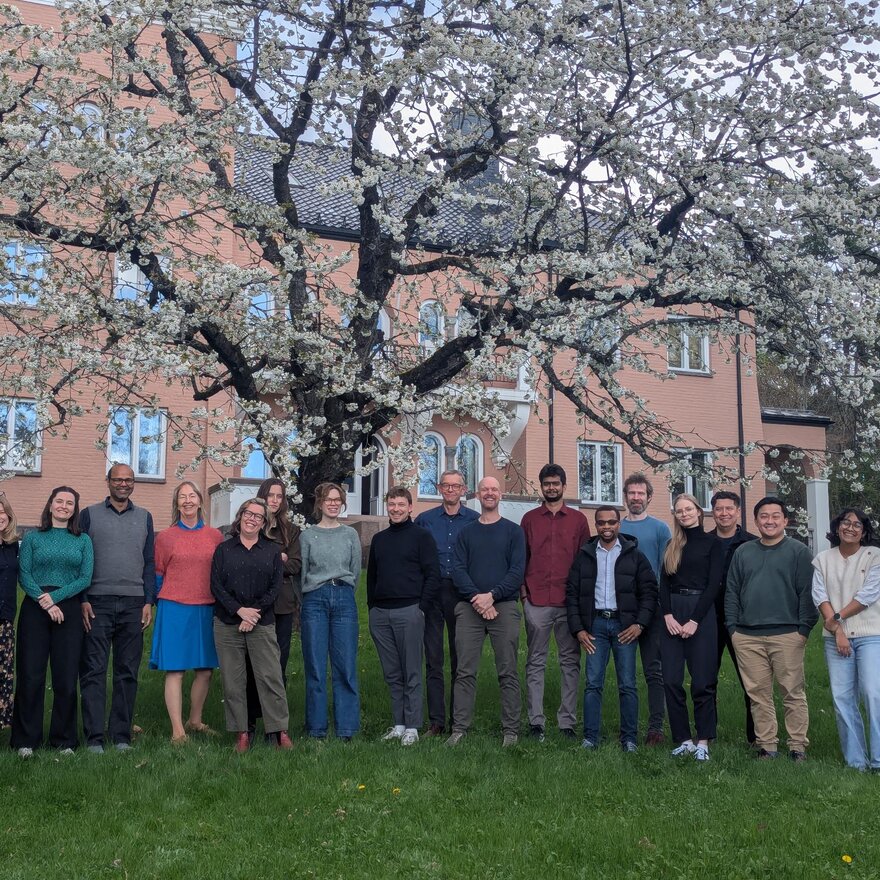
23 Apr 2025
PhD course
Prefigurative politics and the changing rhythms of just energy transitionsOslo (Fridtjof Nansen Institute & Centre for Development and the Environment, University of Oslo) & field excursion to Rjukan
The PhD course explored the evolving dynamics of energy systems under transition, focusing on the interaction between electrification, digitalization, and low-carbon energy systems, while examining the challenges and opportunities these transitions present and the prefigurative politics associated with these changing energy systems.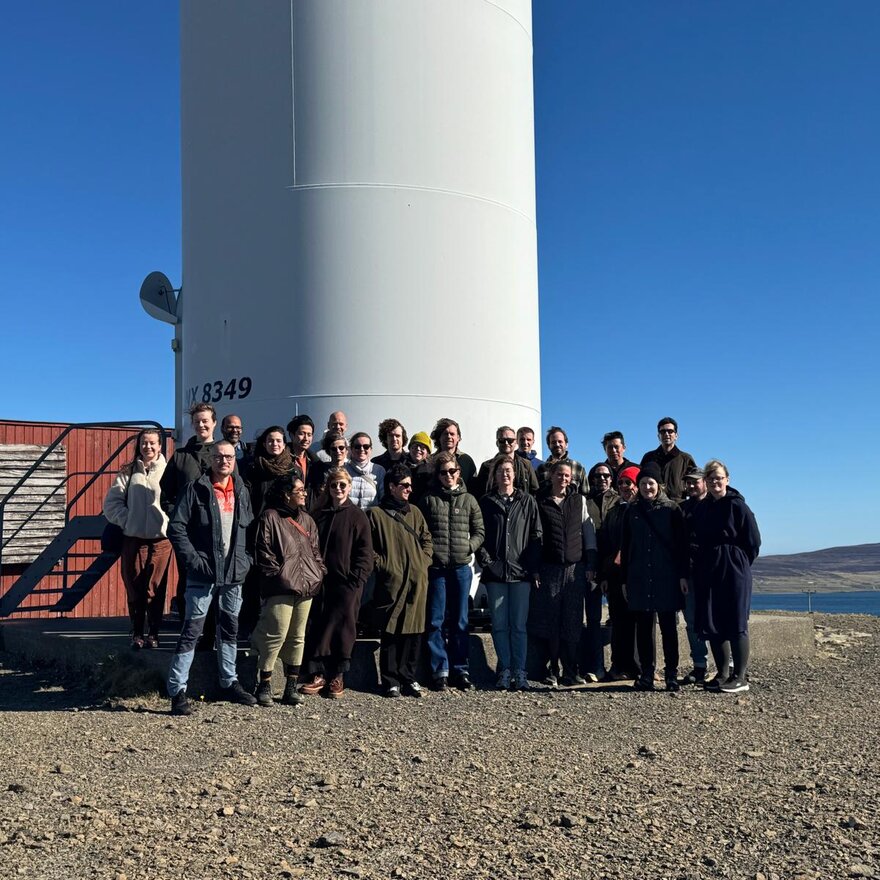
01 Apr 2025
Field course to the Orkney Islands
Coordinated by UiA
The Empowered Futures field course in Orkney explored the impact of small-scale renewable energy projects on local communities, contrasting these initiatives with larger market-driven developments, and included visits to key sites like the European Marine Energy Centre (EMEC). Participants engaged with topics such as energy justice, contested landscapes, and the role of energy in local development through lectures, field visits, and group work.
13 Mar 2025
Policy Roundtable
This Empowered Futures roundtable examined low-carbon mobility transitions, focusing on governance challenges and planning shifts away from automobility. Professors Brita Hermelin and Karolina Isaksson shared research on Swedish transport reforms and transformative planning. The discussion highlighted multi-level governance tensions in sustainable transport planning.

28 Nov 2024
Roundtable on the Social Justice Implications of Smart Energy and Low Carbon Urban Mobility
This roundtable at Kollektivtrafikkkonferansen 2024 discussed the social justice and inequality impacts of urban energy transitions, emphasizing smart, energy-efficient, and low-carbon mobility solutions, as well as changes in the built environment, informed by ongoing research and stakeholder insights.
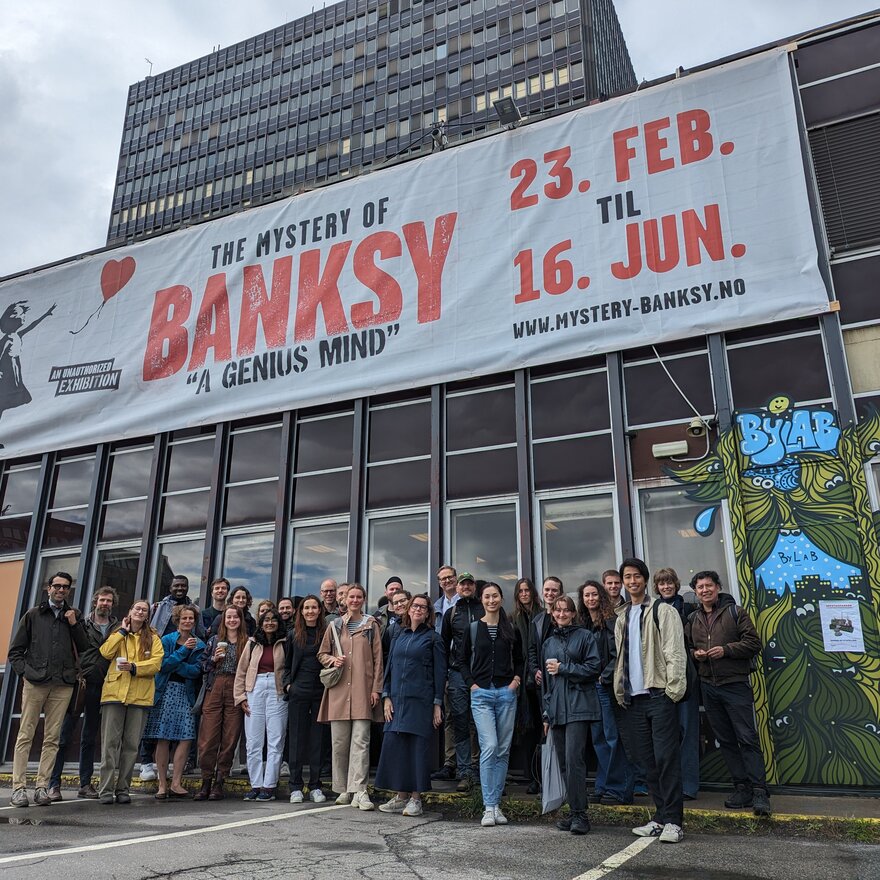
27 May 2024
Empowered Futures PhD Course: Theory and practice for equitable and just transformations to sustainability
The course explored the challenges and difficulties in linking theories and practices of achieving equitable and just transformations to sustainability, focusing on urban development, mobility, and consumption. It examined different approaches to sustainability transformations and used concrete examples from policymaking and business to gain theoretical insights from practical implementation.
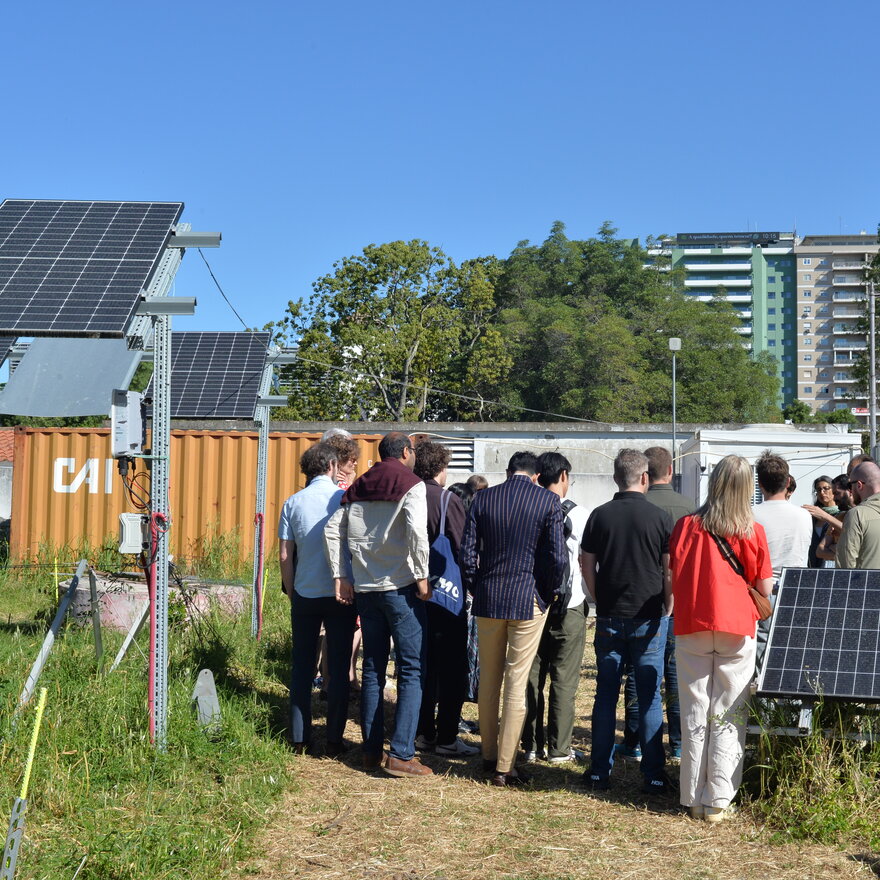
22 Apr 2024
Excursion & communications workshop, Lisbon, Portugal
Meeting and getting to know key figures from the community and academia involved in the role out and testing of PV technologies within different urban settings.
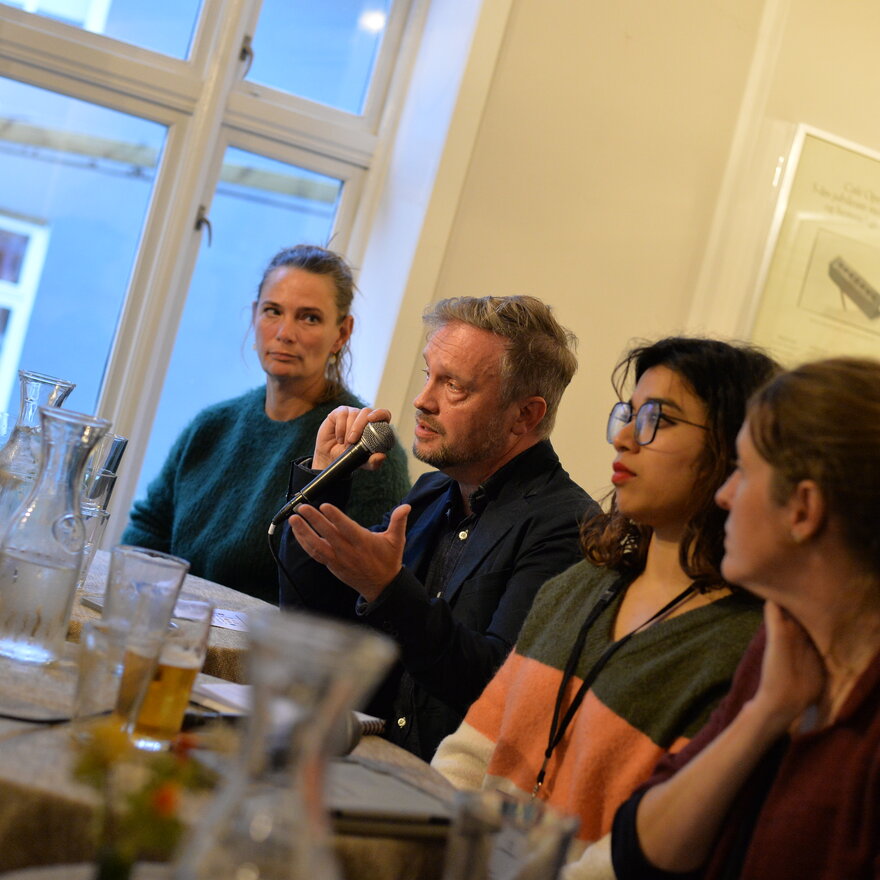
16 Oct 2023
Roundtable discussion, Cafe Opera, Bergen, Norway
Roundtable on the roles that academics play in sustainability transformation

25 Aug 2023
Social & Environmental Impact Assessment workshop, Nome, municipality, Telemark, Norway
Social and environmental impact assessment workshop exploring the conflicts and controversies that commonly accompany impact assessment.
21 Aug 2023
PhD course, Rjukan, Norway
Exploring and Communicating Competing Narratives of Energy Production Across Time and Space. Hosted by Rjukan Solarpunk Academy.
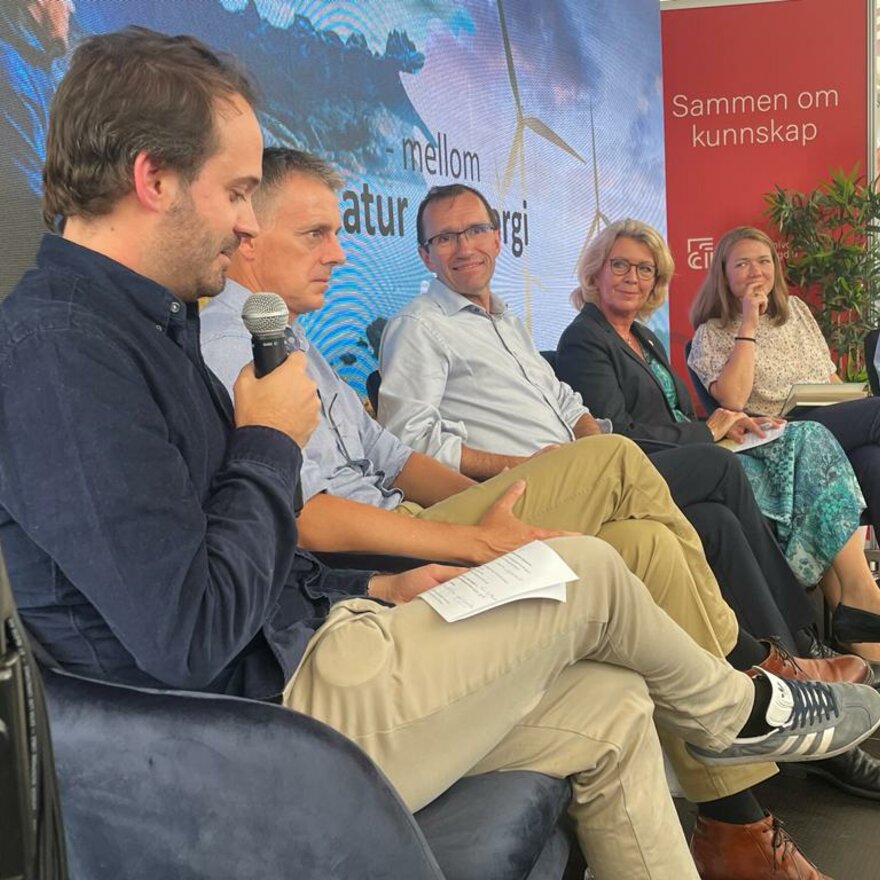
14 Aug 2023
Policy roundtable at Arendalsuka, Arendal, Norway
The battle for land between energy and nature: which knowledge counts? UiA tent, Arendalsuka, Arendal, Norway

25 May 2023
Excursion to Stavanger / Sola Kommune, Norway
Field excursion to learn about Sola kommune's plans for a different energy future
23 May 2023
Communications workshop, Bjørnafjorden Hotell, Bergen, Norway
Meet and greet and academic writing masterclass with Benjamin Sovacool
02 Dec 2022
Energy transitions and controversies
NMBU Global Development Studies Lecture 2022

01 Oct 2022
Internship at NVE
The Norwegian Water Resources and Energy Directorate

29 Sept 2022
Kick off Seminar
16:30-18:30h Vitenparken, NMBU
- Practica
School News

Looking Beyond the Past: Finlay Bain Kerr's Research on Mine Water Energy and the Political Economy of Just Transitions
For Empowered Futures alumnus, Finlay Bain Kerr, the energy transition is not simply about replacing one technology with another. It is about people, places, and the futures communities want to create for themselves.
Read the full article here.

Reindustrialisation and Norway‘s battery futures: Anna-Sophie‘s journey from local everyday life to global geopolitics
Anna-Sophie Hobi began her PhD by looking beyond the hype to examine how industrial growth shapes communities and perceptions of the future. Her research explored why certain industrial visions gain traction and how people connect meaning to large-scale developments amid shifting geopolitical contexts.

Where Landscapes Shift and Stories Collide: Shayan’s Journey Through Energy Transitions and Empowered Futures
Over the past four years, Shayan Shokrgozar, a member of the first cohort of Empowered Futures, has developed a deeply interdisciplinary and grounded understanding of energy transitions through research spanning Norway to India. Shayan spoke to us recently to offer reflections on their work, motivations, challenges, and the community that shaped their path.

Making Energy Futures: A Journey Through Orkney's Energy Transition with Lara Santos Ayllón
Lara Santos Ayllón examines how energy transitions can be built around justice rather than technology or efficiency. Using perspectives from energy justice and just transitions, she investigates the values and assumptions shaping today’s energy systems and explores whether alternative approaches could address climate change alongside the social and environmental injustices tied to energy and resource extraction.
Congratulations to all candidates accepted to the 2025 cohort of Empowered Futures
The 11 new members come from Italy, Iran, Finland, USA, Norway, Germany, Netherlands, and Zimbabwe.

Under the “Good Birch Tree”: Stories from Polhøgda, from Moats to Modernity by Shayan Shokrgozar
EF member Shayan Shokrgozar reflects upon their time as a guest researcher at our partner, Fridtjof Nansen Institute.
Read Shayan's full practicum report here.

Learning, being and anticipating in the spirit of Fridtjof Nansen : a practicum report by Caroline Buus Ponthieu
Earlier this year, member Caroline Buus Ponthieu spent two months at our partner, Fridtjof Nansen Institute.
Read Caroline's full practicum report here.

Exploring Impact Assessment and Indigenous Rights in Energy Transtions: Insights from UiT Workshop
Over two dynamic days at UiT – The Arctic University of Norway in Tromsø, scholars, practitioners, and community representatives came together for our Social and Environmental Impact Assessment Workshop. The event focused on the critical intersections of impact assessment, Indigenous rights, and energy transitions, offering rich perspectives from Norway, Canada, Chile, and beyond.
Read the full article here.

Empowered Futures at Beyond Oil 2025: Driving conversations on just energy futures
In October, Beyond Oil 2025 brought together leading social scientists and humanities scholars to grapple with foundational questions of energy justice, governance, and transition. Empowered Futures members were at the heart of these discussions.
Read the full article here.

From Tromsø to Polhøgda: Insights from my practicum at the Fridtjof Nansen Institute
In June 2025, Empowered Futures member Larry Ibrahim Mohammed visited our partner institution, the Fridtjof Nansen Institute, for a two-week practicum. Read what inspired Larry's visit and his reflections on this memorable experience.
Read the full article here.

Disrupting Energy Imaginaries: Hayato Koga's Journey Through Community Energy in Japan
Hayato Koga has successfully defended his PhD in Human Geography at the University of Manchester. His research into energy communities sheds new light on grassroots efforts to democratize energy governance and promote sustainability, offering fresh perspectives on energy justice and transformation.
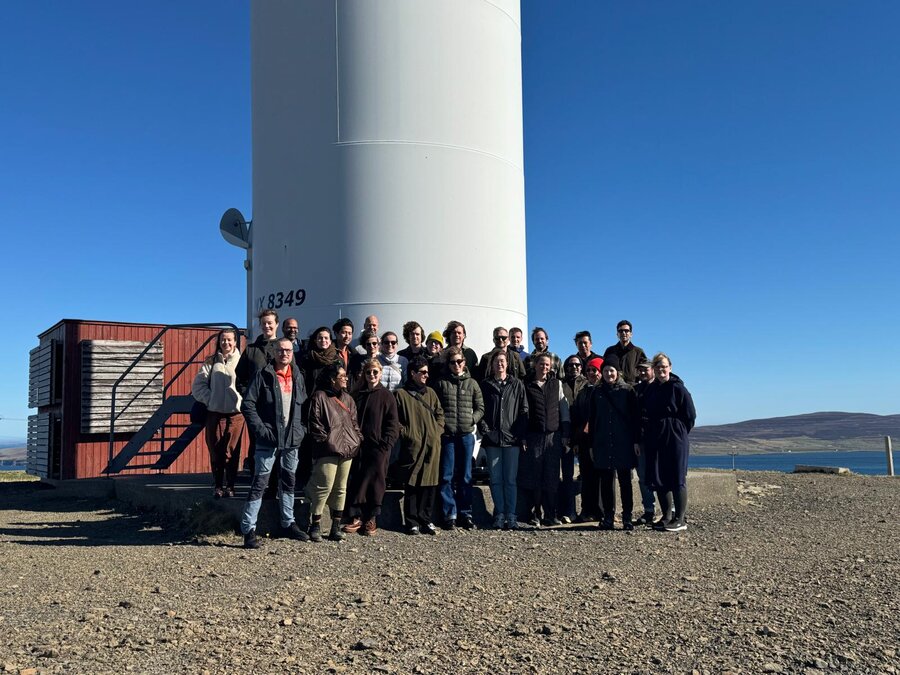
Exploring Energy Transitions: Insights and Innovations from the Orkney Islands Field Course
Our recent field course in the Orkney Islands (1 – 4 April, 2025) got off to an incredible start, thanks to the fantastic venue provided by the Islands Centre for Net-Zero (ICNZ) at the Orkney Research and Innovation Campus overlooking Stromness.
Read the full article here.
Congratulations to all candidates accepted to the 2024 cohort of Empowered Futures
The 12 new members come from Denmark, Paraguay, Norway, Sweden, Germany, Finland, Netherlands, Singapore, and Bangladesh.
Biomass Combustion and Well-being in Rural Ethopia: Empowering a Sustainable Future
Last week, we had the pleasure of reconnecting with our first alumni, Dr. Harald Grabher, who successfully defended his PhD in Social Ecology at BOKU, Vienna.
Harald's research on biomass combustion in rural Ethiopian households reveals its vital role beyond cooking, enhancing community well-being through drinking water preparation, room heating, and hygiene.
We discussed his key findings, motivations, challenges, future plans, and his journey with Empowered Futures.
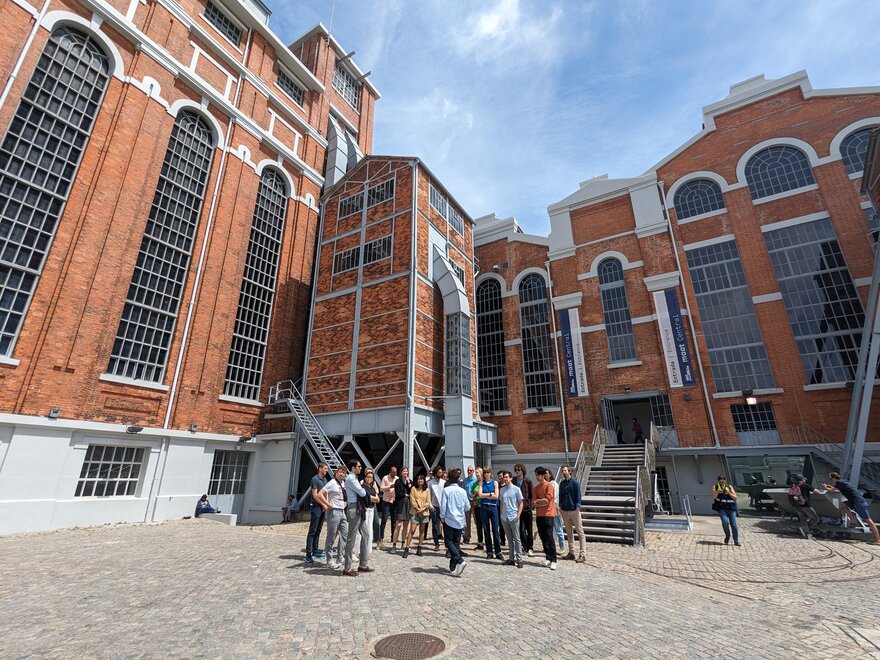
Insights into Portugal's PV energy future
The first Empowered Futures excursion of 2024 took place from 22-25 April, when we travelled to Lisbon to meet our new cohort and get to know key figures from the community and academia involved in the role out and testing of PV technologies within different urban settings.
Read the full article here.
Congratulations to all candidates accepted to the 2023 cohort of Empowered Futures
The 12 new members come from Scotland, Austria, India, Japan, Norway, Canada, Finland, Germany, Chile, and Brazil.
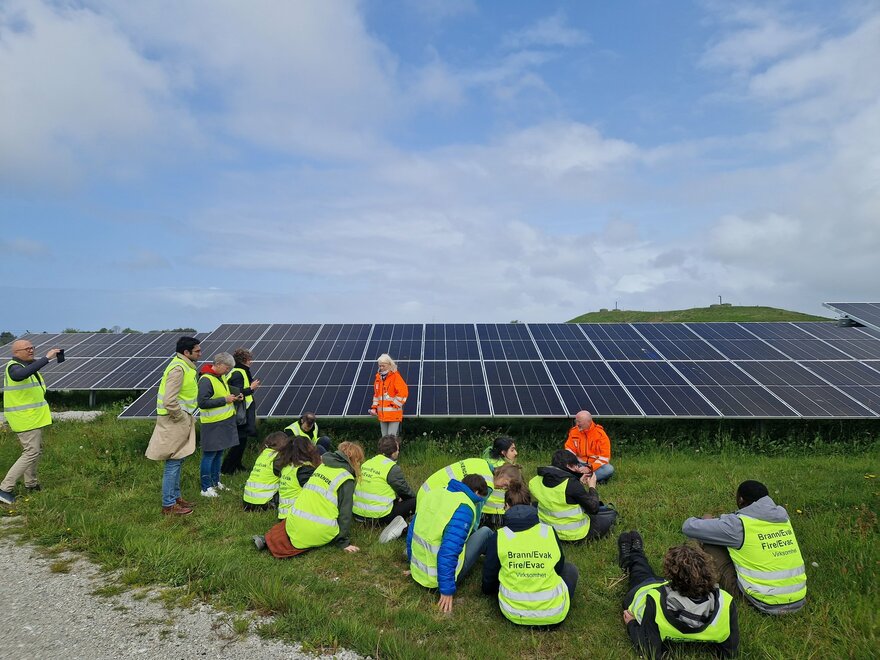
Reflecting upon alternative energy futures in Sola municipality, Norway.
The excursion focused on sustainable urban development, energy efficiency, and innovative technologies, highlighting various initiatives, discussions, with presentations by local stakeholders and experts aimed at translating global sustainability goals into local actions and exploring future energy technologies.
Read the full article by Birgitte Nygaard here.
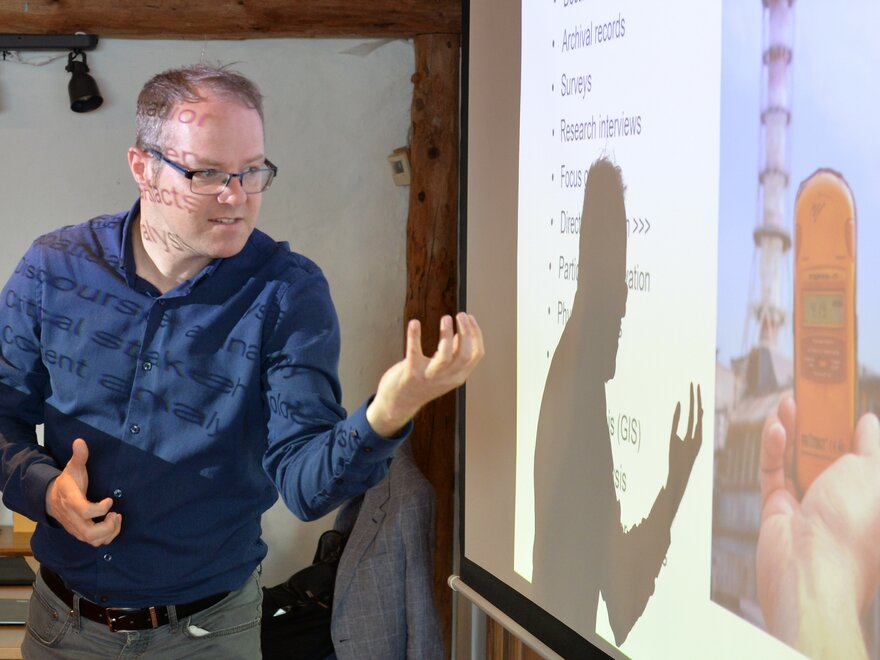
1st Empowered Futures workshop in Bergen
The first Empowered Future communications workshop took place on 23 and 24 May. Academic partners and 15 school members met each other in-person for the first time at Bjørnafjorden Hotel, Os, near Bergen.
Read the full article here.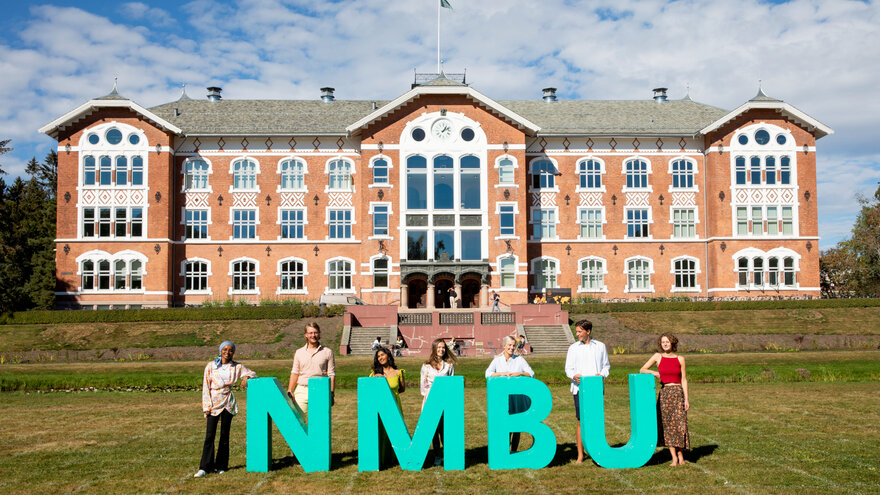
Congratulations to all candidates accepted to the first cohort of Empowered Futures
Candidates come from Norway, Denmark, Chile, Sweden, Ireland, UK, Spain, Ghana, Netherlands, France, Czech Republic and Switzerland.
NMBU to lead new PhD school on the green shift and energy transition
New research school to strengthen the societal relevance of doctoral education by addressing the social and environmental controversies of transitioning to a low carbon society.
Read more here.
Media

Who owns the wind?
Read member Angela Antle's commentary on how the renewable energy approaches of Scotland’s Orkney Islands raises questions of renewable energy benefits for communities in Canada's Newfoundland and Labrador.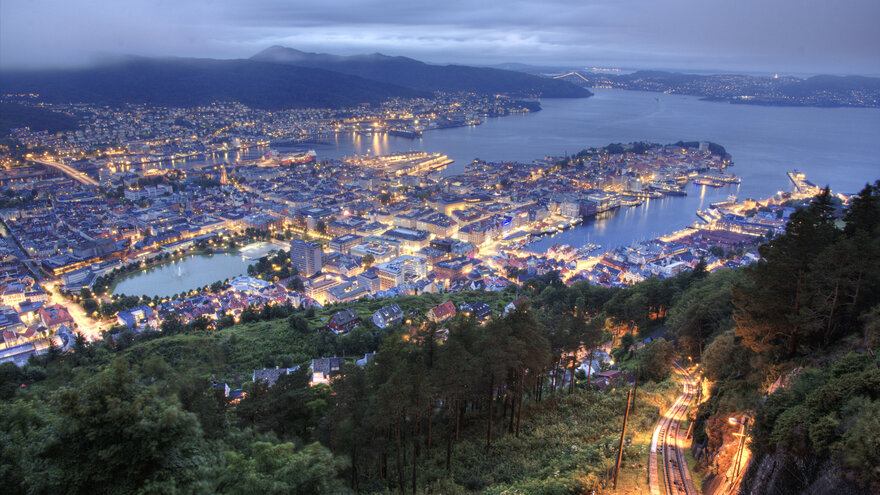
Can St. John’s learn a climate lesson from a city in Norway?
Analysis by member, Angela Antle, on 'Climate Budgets' as an effective policy tool to reduce GHG emissions, developed in Norway and now being used by municipalities worldwide including Edmonton, Saskatoon and Montreal. Photo: TomasEE, CC BY 3.0
Risks the same fate as wind power: The demand for progress in the extraction of rare earth species is a pitfall for the Norwegian mineral industry.
Op-ed by members Håkon da Silva, Anna-Sophie Hobi & Lara Santos Ayllón in Adresseavisen.
Indigenous Peoples in the Renewable Energy Transition: Protest, Contestation, and the Potential of Improved Deliberation
PRIO policy brief by Anna-Sophie Hobi and John Andrew McNeish.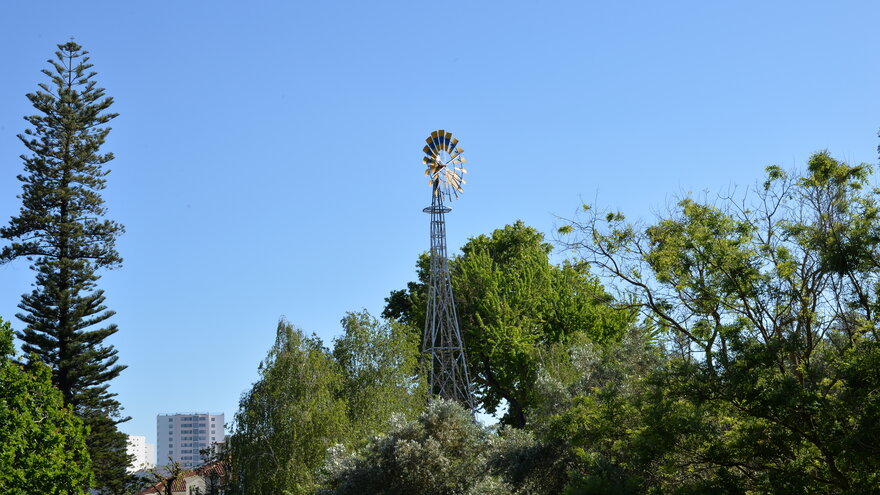
Portugal’s energy poverty paradox
Analysis by member Angela Antle examining the disparities in Portugal's renewable energy revolution.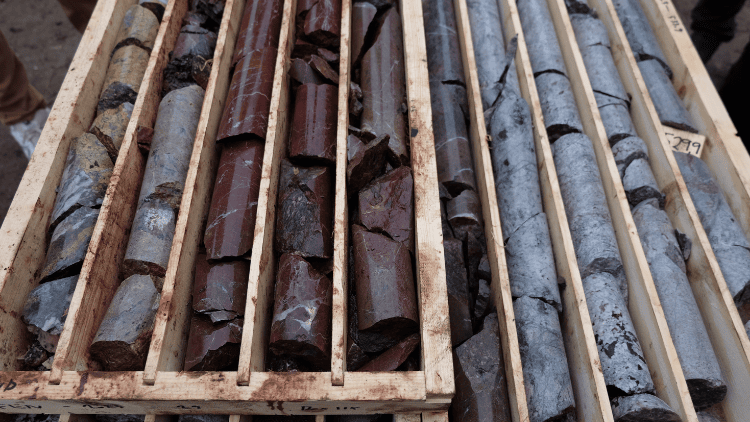
Rare earths, geopolitics and a village called Ulefoss
Op-ed by members Anna-Sophie Hobi, Lara Santos Ayllón & Håkon da Silva in Social Europe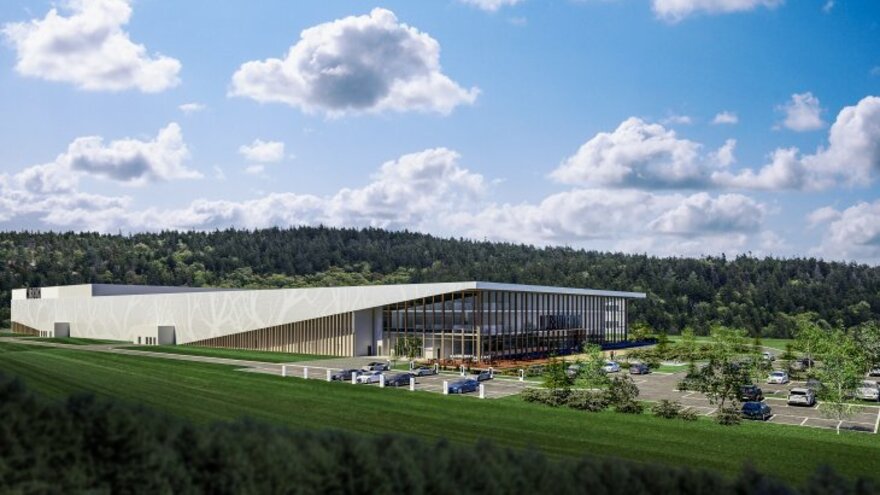
Norway and the Geopolitics of Battery Minerals
Blog post by Anna-Sophie Hobi, PRIO BlogIn this digital story, Neil Gordon Davey reflects upon his PhD research that explores visual experiences of energy development in the Orkney Islands. In doing so, he highlights digital storytelling as a viable means of communicating research results to a wide audience.
Recommended Reading

Societal Transitions to Sustainability
The Prefigurative Politics of Present Transformation
Editors: Siddharth Sareen, Sirkku Juhola
This open access book responds to the need for rapid and transformative societal change towards a sustainable future. The editorial introduction and conclusion bookend 27 case chapters about urban sites of experimentation and contestation, spaces of conviviality and politics, sectoral movements, and cross-sectoral and transdisciplinary transitions. These short case chapters address the prefigurative politics of present transformations based on wide-ranging empirical and conceptual analyses. They span societal transitions in and across sectors such as energy, food, and transport. Three key insights concern the multi-scalar nature of prefiguration, its entanglement with boundary transgression, and the multiple temporalities of prefigurative politics in the present.
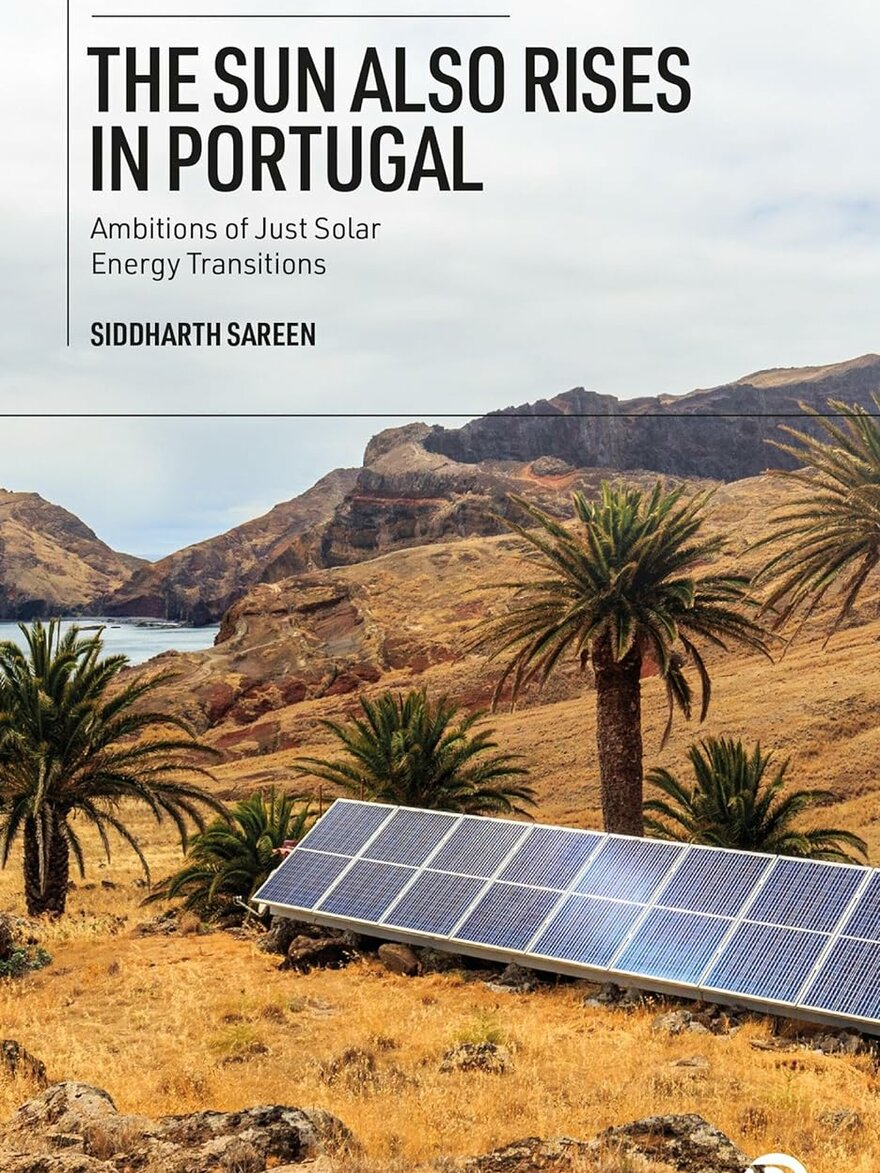
The Sun Also Rises in Portugal: Ambitions of Just Solar Energy Transitions
Book by Siddharth Sareen (2024)
Portugal is among the best-placed European countries to take advantage of solar power, having achieved a five-fold increase in installed capacity during 2017-2023 despite financial constraints. In 2023, its National Energy and Climate Plan set an ambitious target for a further eight-fold increase from 2.5 GW to 20.4 GW by 2030. How can such fast-paced deployment secure sociospatial justice? What insights do political economic dynamics hold for future transitions? Drawing on long-term, multi-sited ethnographic fieldwork, this book is a one-stop resource for policymakers, practitioners, scholars, and anyone interested in just solar energy transitions.This new publication by Siddharth Sareen is available for pre-order open access digitally under CC-BY licence and in paperback format now.
Engineering Reality: The Politics of Environmental Impact Assessments and the Just Energy Transition in Colombia
Book by Cornelia Helmcke (2023)
In this new publication, Cornelia Helmcke focuses on one highly contested environmental impact assessment of a large dam project in South Colombia. The author proposes a new framework to assess energy projects and demonstrates how environmental impact assessments are an essential tool for environmental governance.
Energy justice in the context of green extractivism: Perpetuating ontological and epistemological violence in the Yucatan Pensinsula
Article in the Journal of Political Ecology by Carlos Tornel (2023)
Drawing on semi-structured interviews with different actors, this article looks at the deployment of low carbon infrastructure in the Yucatan Peninsula, Mexico, as the colonial legacies, politics and power relations embedded in energy systems interact with the construction of the so-called "Maya Train", a regional integration project seeking to interconnect the southeast of Mexico. It asks the question: can we speak of energy justice in a context of total extraction? Drawing on the literature of green extractivism, it argues that as long as energy justice is linked to a Westernized conception of modernity and development it risks reproducing injustices instead of solving them.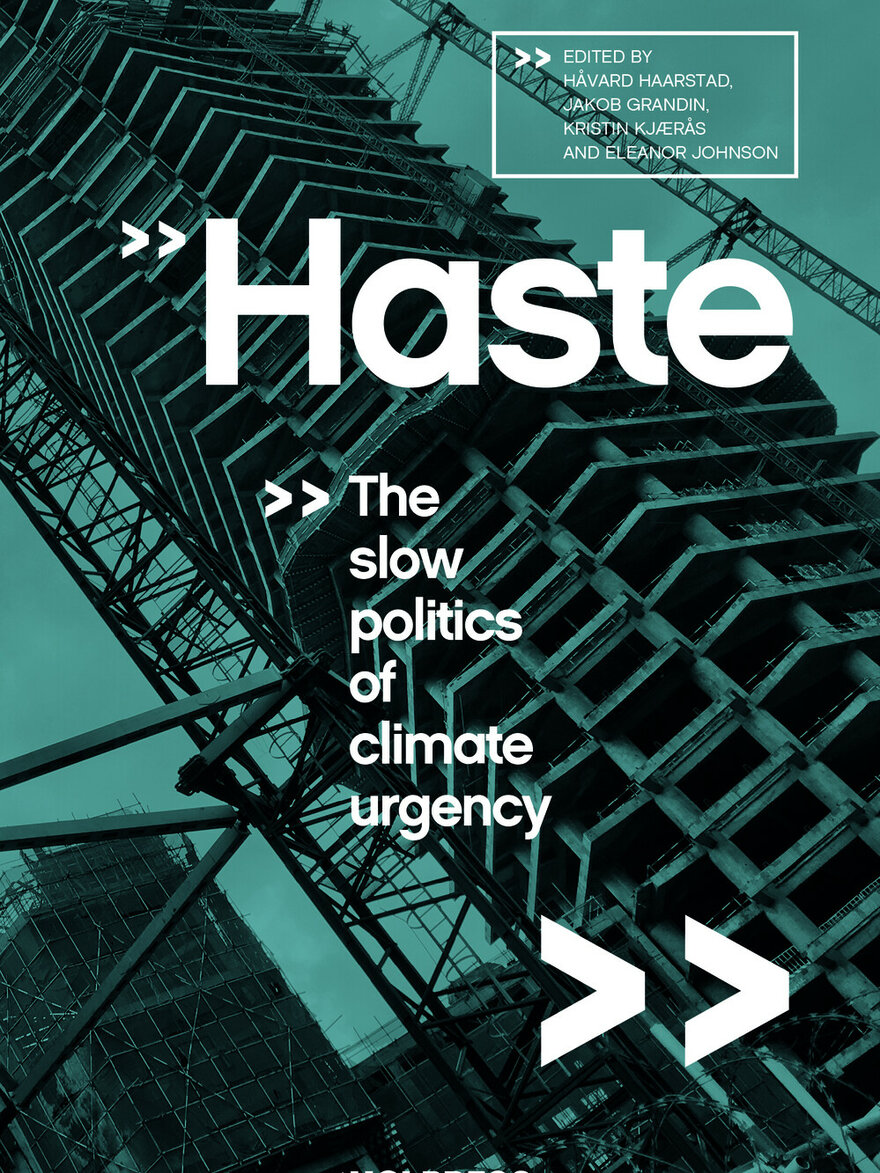
Haste: The Slow Politics of Climate Urgency
Book edited by Håvard Haarstad, Jakob Grandin, Kristin Kjærås, and Eleanor Johnson. UCL Press 2023
What does it mean politically to construct climate change as a matter of urgency? We are certainly running out of time to stop climate change. But perhaps this particular understanding of urgency could be at the heart of the problem. When in haste, we make more mistakes, we overlook things, we get tunnel vision. Here we make the case for a ‘slow politics of urgency’. Rather than rushing and speeding up, the sustainable future is arguably better served by us challenging the dominant framings through which we understand time and change in society.
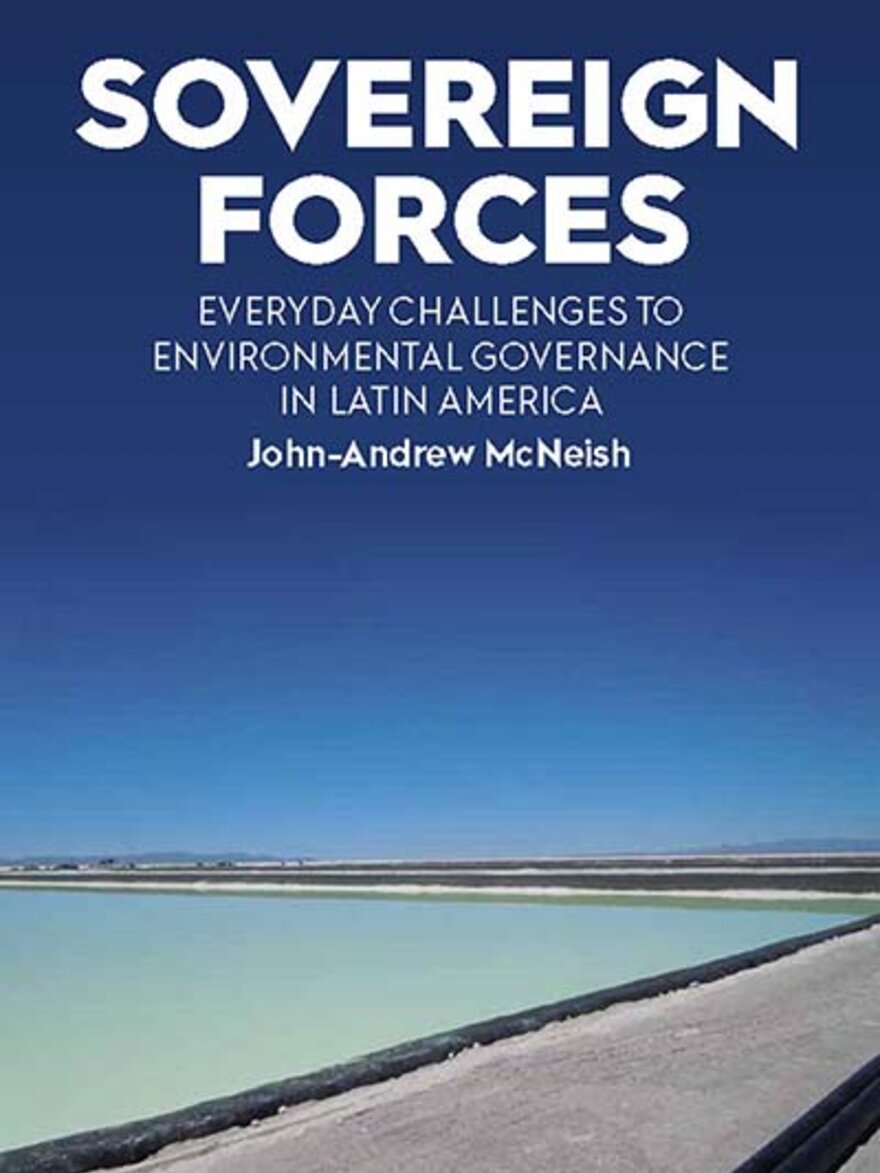
Sovereign Forces: Everyday Challenges to Environmental Governance in Latin America
Book by John-Andrew McNeish. Berghan June 2021
Sovereignty is a significant force regarding the ownership, use, protection and management of natural resources. By placing an emphasis on the complex intertwined relationship between natural resources and diverse claims to resource sovereignty, this book reveals the backstory of contemporary resource contestations in Latin America and their positioning within a more extensive history of extraction in the region. Exploring cases of resource contestation in Bolivia, Colombia and Guatemala, Sovereign Forces highlights the value of these relationships to the practice of environmental governance and peacebuilding in the region.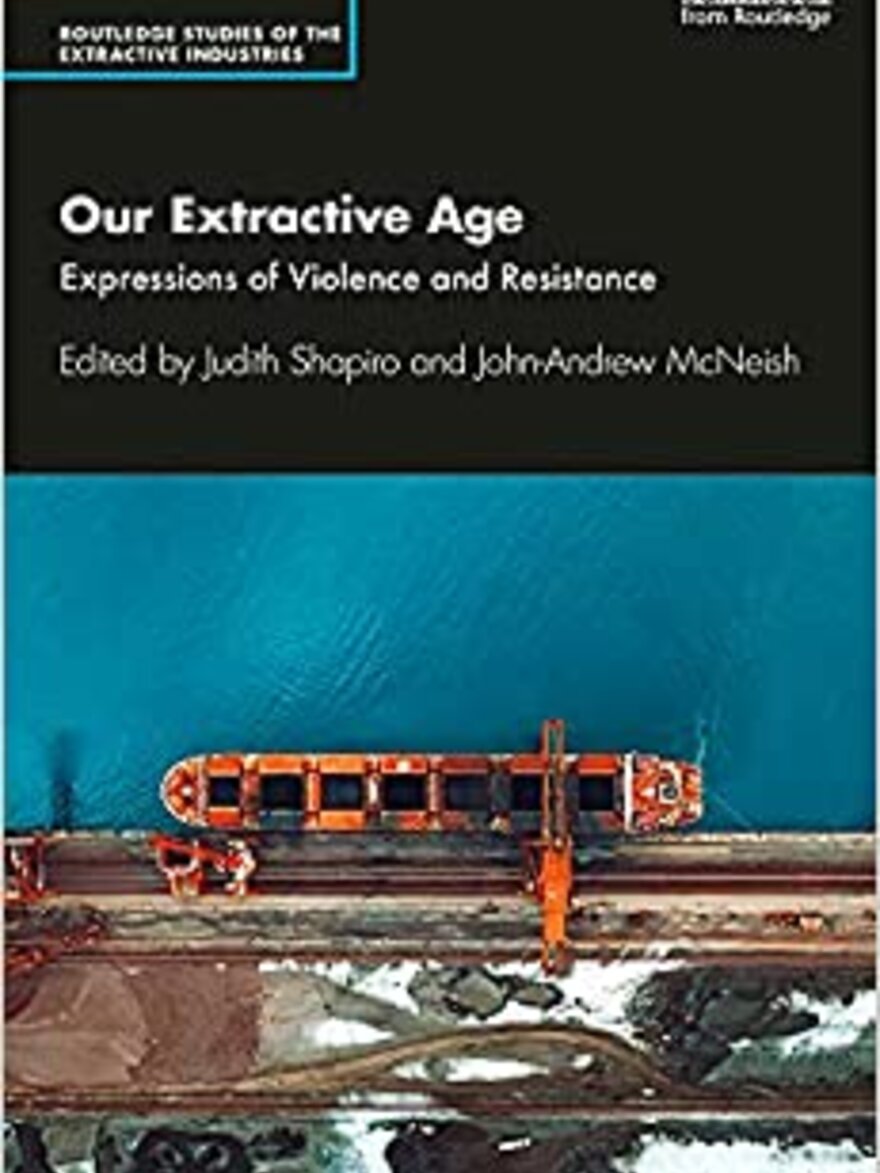
Our Extractive Age. Expressions of Violence and Resistance
Book edited by Judith Shapiro & John-Andrew McNeish. Routledge 2021.
Our Extractive Age: Expressions of Violence and Resistance emphasizes how the spectrum of violence associated with natural resource extraction permeates contemporary collective life. Chronicling the increasing rates of brutal suppression of local environmental and labor activists in rural and urban sites of extraction, this volume also foregrounds related violence in areas we might not expect, such as infrastructural developments, protected areas for nature conservation, and even geoengineering in the name of carbon mitigation.Members Publications
The article examines how justice is addressed in Scottish energy policy, using energy justice and Just Transitions frameworks. It identifies four key themes: affordability, recognition, political decision-making, and the Just Transition, based on interviews and policy documents from 2010–2020.
The article critically examines the evolving framework of energy justice, especially the tension between universal and pluralistic approaches. It proposes a re-grounded model that retains the core tenets of distributional, procedural, and recognition justice, while reconnecting with environmental justice roots and challenging anthropocentric biases in cosmopolitan justice.
This paper introduces Justice by Design, a framework combining energy justice and responsible research and innovation to proactively address justice in future low-carbon energy systems. It shifts focus from retrospective harm mitigation to anticipating and designing just transitions, offering practical guidance for evaluating energy technologies, projects, and system changes.
da Silva Hyldmo, H., Rye, S. A., & Vela-Almeida, D. (2024). A globally just and inclusive transition? Questioning policy representations of the European Green Deal. Global Environmental Change, 89, 102946.
The paper critiques the European Green Deal for promoting a “just transition” while relying heavily on resource extraction from the Global South. Analyzing 195 EU policy documents, it reveals how official discourse downplays the negative external impacts, creating contradictions that challenge the legitimacy of the Green Deal and offer opportunities for more equitable policy reform.
This paper examines how Indonesia’s nickel governance has been restructured in response to rising demand for energy transition materials. Focusing on Sulawesi, it shows that centralization has dramatically increased extraction but also intensified social and environmental harms. The study highlights the shrinking space for local participation and calls for policies that balance urgent material needs with just transition principles.
The paper argues for cosmotechnical pluralism — embracing diverse worldviews and technologies — as a path to global energy justice. It explores the ethical dimensions of energy and technology through cosmology, epistemology, and morality, ultimately offering policy suggestions for more inclusive and morally grounded energy politics.
This paper explores how national peatland preservation policies influence local land-use planning in Norwegian mountain municipalities, especially regarding second home development. Despite peatland’s rising importance, development continues—often under the guise of preservation. The study conceptualizes peatland as an institutional layer and reveals tensions between national environmental priorities and local planning practices. (In Norwegian)
This paper analyzes Chile’s expansion of lithium extraction beyond the Salar de Atacama using Sovacool’s “4Es” framework. It highlights how processes of enclosure, exclusion, encroachment, and entrenchment risk deepening historical injustices. The study calls for ongoing scrutiny of extractive policies to ensure equitable and sustainable transitions in resource-rich economies.
The article examines how Chile’s legal classification of lithium-rich brines affects the environmental oversight of mining in the Andean salt flats. It reveals that a legal loophole allows brines to be treated as mining resources, enabling extractive practices with significant socioecological impacts. The authors propose alternative legal interpretations that could better protect ecosystems and align with indigenous perspectives
This study explores how women's agency influences rural energy practices in bioenergy-dependent communities in Ethiopia. It finds that while energy-efficient technologies offer benefits, social norms often limit women's ability to change energy-related behaviors. A practice-centered understanding of agency is essential for designing equitable and sustainable energy policies.
This study analyzes biomass use in rural Ethiopian households using a source-to-service approach. It finds that biomass is the dominant energy source, with significant health and environmental impacts. Improved cookstoves can reduce energy use, but comprehensive data and understanding of biomass flows are needed to inform sustainable energy policies and innovations.
This study shifts the focus from “cooking” to a broader energy services perspective in rural Ethiopian households. It shows that biomass-based energy is used for multiple, interconnected purposes, and that improved cookstoves reduce energy use but limit service combinations. Understanding actual energy needs is key to designing effective and sustainable energy solutions.
This ethnographic study explores how Norway’s emerging battery industry, exemplified by Morrow Batteries in Arendal, is legitimized through historical narratives. Local actors invoke industrial figures like Sam Eyde and Arne Rettedal to frame the battery sector as a morally responsible and socially beneficial path toward a post-oil future.
This paper compares eight collaborative housing projects in Milan and Amsterdam, identifying four types—common, self-promoted, co-managed, and developer-led—based on tenure and project initiator. It finds that while trade-offs in affordability, accessibility, and autonomy persist, the first three types can better support these values when they are explicitly prioritized, unlike developer-led models.
This paper reviews Japanese debates on community-based energy governance (CEG), highlighting how the Fukushima disaster reshaped local energy dialogues. Unlike Western models, Japan’s CEG emphasizes endogenous development and energy autonomy as responses to centralized, “colonial” energy systems. The study offers a valuable alternative lens for understanding CEG globally.
This study examines how agrivoltaics influences community-based energy governance (CEG) in Japan. Using interviews and a case study, it shows that while agrivoltaics can support democratic energy transitions, its spatial and technological characteristics may also limit transformative potential. The research highlights the need to consider how specific technologies shape energy governance dynamics.
This paper critically examines how the concept of “community” is mobilized in community-based energy governance (CEG), arguing that romanticized views can undermine its transformative potential. Drawing on Jean-Luc Nancy’s philosophy of “being-with,” the authors reconceptualize CEG as a disruptive political force rather than a fixed institution, offering a deeper framework for energy democracy.
Copenhagen’s carbon-neutral goal is being compromised by corporate influence. The article shows how a waste-to-energy plant was approved despite increasing emissions, revealing how sustainability can be used to advance private interests. It argues that green coalitions need broader alliances and strategic planning to resist such pressures
The article examines how Brazil and Norway justify their carbon capture and storage (CCS) policies in light of equity concerns. While CCS is seen as a key climate mitigation tool, the study finds that its current design can lead to unjust outcomes and reinforce fossil fuel dependence. However, CCS also has potential beyond fossil fuels, which could enhance its role in addressing climate change.
This paper presents an intersectional analysis of a rejected wind power application in Northern Norway, highlighting how indigenous and biodiversity concerns influenced the decision. It finds that while biodiversity was prioritized, indigenous input lacked sufficient weight, revealing structural bias. The study calls for clearer, more transparent energy decision-making that fully integrates intersectional justice considerations.
This paper analyzes how three major shocks—Covid-19, the energy crisis, and the war in Ukraine—shaped public narratives around offshore wind in Norway. Using newspaper coverage, it identifies two dominant storylines: offshore wind as a green opportunity and as a threat. The study shows that shocks can initiate change but also reinforce incumbent interests, limiting transformative potential.
This paper explores how intersectionality theory can enrich energy justice research by integrating diverse justice perspectives, such as feminist, anti-racist, and Indigenous theories. While conceptually promising, its methodological application remains complex. The authors advocate for explicit integration of intersectionality and propose recommendations to guide a more politicized and radical energy justice research agenda.

Sasse, L. M. (2026). Grünheide becoming giga? Contesting scale and pace in the establishment of Tesla’s Gigafactory in Germany. Geoforum, 172, 104619.
This paper examines local opposition to the Tesla Gigafactory in Grünheide, Germany, showing how the project’s rapid planning process and large scale have generated feelings of procedural injustice and a loss of sense of place. While media narratives framed protests as NIMBYism, qualitative interviews and participation in local hearings reveal deeper concerns about mismatches between the project’s pace and local expectations, and about how industrial expansion threatens the area’s identity as a green, rural municipality. By analysing these tensions through a place‑based and procedure‑focused lens, the paper highlights how accelerated green‑transition projects can create local dilemmas within the broader restructuring of electric‑vehicle production.
This study analyzes 378 energy initiatives and 81 interviews across eight European countries to assess how citizen engagement contributes to energy justice. It identifies three types of initiatives—demand-side, supply-side, and political action—and finds that collective and political engagement offers greater potential for procedural, distributional, and recognitional justice. However, inclusive representation remains a challenge.
This ethnographic study critiques the dominant naturalist worldview in global energy transitions, using solar energy development in Rajasthan, India, as a case. It introduces Situated Energy Ecologies, a framework that emphasizes energy sufficiency, ontological recognition, and autonomous practices to better reflect local lifeways and foster pluralistic, emancipatory energy-society relations.
This ethnographic study critiques the dominant naturalist worldview in global This paper critically examines India’s solar energy expansion, focusing on Rajasthan as a case study. While the country positions itself as a leader in low-carbon transitions, the rollout of Solar India has caused socio-ecological harm, especially to agropastoral communities. The study argues that these impacts stem from a regime rooted in colonial modernity, which imposes industrial lifeways on indigenous populations.
This paper investigates the socioecological harms of water and energy infrastructure development in Jaisalmer, India, arguing that these projects perpetuate colonial modernity by transforming agropastoral lands into extractive frontiers. Drawing on fieldwork, it highlights how national environmental politics reproduce historical injustices, undermining local lifeways and onto-epistemologies in the name of development.
This paper examines Oslo’s climate-focused land-use planning, which prioritizes green mobility, climate resilience, carbon preservation, and sustainable construction. It highlights the city’s leadership in expanding legal interpretations of the Planning and Building Act to regulate emissions and integrate climate goals into urban development. Success has hinged on strong municipal competencies and collaboration across governance levels and sectors.

Valenzuela, N. S. (2025). The Chilean energy transition through energy justice as a policy assessment approach. In Energy Justice in Latin America (pp. 123-145). Routledge.
This book chapter assesses Chile’s rapid renewable energy expansion in the Biobío and Araucanía regions through an Energy Justice lens. Using interviews and official data, it examines procedural, distributional, and recognition-based justice outcomes. The study reveals significant social tensions and cumulative impacts, offering insights for more equitable energy transitions across Latin America.
This paper reviews a decade of critical scholarship on the development of the “Green City” in the Global North, examining how these critiques address socio-environmental justice, spatial scales, and colonial entanglements. Drawing on a scoping review of 206 peer-reviewed articles, it analyses key strands of the literature, including green gentrification, climate adaptation, green financialisation, urban degrowth, urban metabolism, and planetary urbanisation.
Partners and Advisory Board
Academic partners:
- Faculty of Landscape and Society (Norwegian University of Life Sciences)
- INCLUDE Research Centre for Socially Inclusive Energy Transition (University of Oslo)
- Centre for Climate and Energy Transformation (University of Bergen)
- Sustainability Transformation programme area (University of Stavanger)
- Department of Global Development and Planning (University of Agder)
Societal Partners:
- Multiconsult Norge AS
- Energi Norge
- Fred Olsens Renewables AS
- Norges Naturvernforbund
- Statkraft AS
- Vestlands Fylkeskommune
- Sola Kommune
- Nordic Edge AS
- Fridtjof Nansen-stiftelsen
- Norges Vassdrags og Energidirektorat (NVE)
- Rjukan Solarpunk Academy
Advisory board:
- Benjamin Sovacool, University of Sussex, UK
- Adrian Smith, University of Sussex, UK
- Gisa Weszkalnys, London School of Economics, UK
- Gordon Walker, Lancaster University, UK
- Ingmar Lippert, Brandenburgiche Technische Universität - Berlin, Germany
- Timothy Moss, Humbolt University - Berlin, Germany
- Lina Dencik, Cardiff University
- Mette High, St. Andrews University, Scotland, UK
- Nathalie Ortar, ENTPE France
- Simone Abram, Durham University, UK
- Lars Kåre Grimsby, Norwegian University of Life Sciences
- Erling Holden, Norwegian University of Life Sciences
- Samuel Adamarola, Norwegian University of Life Sciences
- Laura Tolnev Clausen, University of Agder, Norway
- Kjell Overåg, University of Agder, Norway
- Hans Kjetil Lysgård, University of Agder, Norway
School Members 2025

Alice Tomaselli
Italy
University of Adger
PhD programme: Social Sciences - Specialisation in Public AdministrationPhD project: What resilience narratives when sustainability is the adversity?
The project investigates how organizations in the energy sector, considered hybrid organizations with a high level of publicness, combine stability and change to navigate sustainability transition demands. This combination is framed using the concept of resilience.Alireza Ajorloo
Iran
Norwegian University of Science & Technology - NTNU
PhD programme: Science and Environmental Technologies
Annie Taitto
Finland
University of Sydney
University of Glasgow
PhD programmes: Joint Doctor of Philosophy in Arts and Social Sciences (USYD), Sociology (UofG)PhD project: The health and wellbeing impacts of the energy transition for lower-income renters: a comparative UK-Australia study.
My research aims through UK-Australia comparison to provide new perspectives into how issues of energy justice can be explored on a wider scale through theories of climate justice and the capability approach. The project explores energy related retrofit and the associated health and wellbeing impacts for renters through qualitative interviews, and comparison of interview data between the UK and Australia.

Avery Newell
Norway
University of St. Andrews
PhD programme: Social Anthropology
PhD project: The Legacy of Gender and Coal: The future energy imaginaries of women in the anthracite region of Appalachian Pennsylvania
My PhD project will focus on gendered legacies in coal mining regions of Pennsylvanian Appalachia. My project seeks to identify women’s connection to coal both as miners and as individuals living in an extractive landscape as well as the ethical implications of women working in fossil fuels.

Eilert Berre Ellefsen
Norway
Norwegian University of Life Sciences (NMBU)
PhD programme: Urban and Regional PlanningPhD project: Norwegian Planning Consultocracy - The impact of consultants on planning, and challenges to the legitimacy of processes and practice.
This PhD project investigates how planning consultancies influence urban development, focusing on their role as delegated actors within Norway’s planning system and sustainability transition. As global urbanization accelerates, private consultants increasingly shape visions, frame problems, and set priorities in planning. A critical question remains to what extent current "consultocratization" of planning undermines the legitimacy of planning processes and applied knowledge practices.
Janina Jasper
Germany
University of Stavanger
PhD programme: Social Sciences (Just Energy Systems - Politics and Society)PhD project: Flexible Lives, Just Transitions: A Multi-sited Ethnography of Energy Governance in Japan and the Netherlands
This project explores how policies promoting flexible energy consumption shape everyday life and energy justice in European and non-European contexts. Using multi-sited ethnography, it examines how energy transitions create new forms of inclusion and exclusion across different governance settings.
Kjersti Sollund
Norway
University of Bergen
PhD programme: Human GeographyPhD project: The transformative potential of urban climate governance.
My research examines the role of climate budgets as governance tools within Nordic cities, with particular attention to their implications for transformative change. Through the ECOBUDGETS project, we seek to identify ways for making sustainability budgeting more actionable, thereby influencing administrative and political decision making.
Laura Campagna
Italy
Norwegian University of Science & Technology - NTNU
PhD programme: Industrial Economics and Technology ManagementPhD project: Is small beautiful and strong? Decentralisation, flexibility, and security of supply in Nordic and European electricity systems.
My PhD examines how decentralised energy systems reshape governance, authority, and participation. It critically assesses whether decentralisation in Scandinavian energy systems actually leads to more democratic and just energy transitions.
Rory Daniel Antonuik
Netherlands
Norwegian University of Science & Technology - NTNU
PhD programme: Science and Technology StudiesPhD project: The 'Nature' of Re-Politicization and Participation in Norwegian Energy Transitions.
Through tracing the circulation and productive effects of emergent framings of nature across interconnected sites, Rory's project develops a relational, multi-scalar analysis of participation in Norwegian energy transitions. In doing so, it critically maps how the current participatory ecology opens up and constrains opportunities for contestation and re-politicization.
Tafadzwa Maukazuva
Zimbabwe
University of Stirling
PhD programme: PoliticsPhD project: Landscapes of Contradiction: Re-territorialization and Dispossessive Development in Zimbabwe’s Lithium Mining Frontier.
My PhD examines the socio-environmental contradictions of lithium mining in Zimbabwe. Situated at the intersection of global green energy transitions and local extractive economies, the project investigates how the pursuit of "transition minerals" shapes questions of governance, justice, and uneven development. Through ethnographic fieldwork, I critically explore what justice looks like in contexts where the promise of green modernity is built upon complex histories of extraction.
Mariel Kieval
USA
Norwegian University of Life Sciences - NMBU
PhD programme: International Environment and DevelopmentPhD project: Seeing Beyond the State: Arctic Security, Resource Governance, and Identity in Greenland and the Faroe Islands
This project centers Greenland while situating it comparatively alongside the Faroe Islands, analyzing how resource governance, autonomy, and international alliances intersect to shape contemporary understandings of security. In doing so, the research aims to understand how notions of security are constructed and negotiated in the Faroe Islands and Greenland, while focusing on ontological concerns and how Indigenous perspectives inform these processes.School Members 2024
Caroline Buus Ponthieu
France/Denmark/
NorwayNorwegian University of Science & Technology - NTNU
PhD programme: Social Sciences - Specialisation on Energy Transition StudiesPhD project: A justice approach to critical minerals for the European Union’s energy storage systems.
My project revolves around developing a better understanding of the impacts of EU green energy storage system policies in the race for critical minerals. My aim is to contextualise the growing European demand for nickel, lithium and cobalt for batteries. While this growing demand is necessary to transition away from our current fossil-dominated system, and shows the first steps towards a decarbonised Europe, it is imperative to rethink our current patterns of extractivism, both in terms of social and environmental impacts and geopolitical consequences. The current EU discourse revolves around the idea that competing with Chinese prices is not a reality, but that there is an opportunity for European investors and mining companies to have a 'sustainable competitiveness’. Considering the oligopolistic nature of the aforementioned critical minerals, I ask the question: From a social justice perspective, what are the opportunities and consequences of the European agenda for batteries, used to feed its power-hungry energy system?
Guillermo Achucarro
Paraguay
Autonomous University of Barcelona
PhD programme: Science and Environmental TechnologiesPhD project: Limits and contradictions of the energy transition in the Global South. The case of Paraguay.
This doctoral thesis examines the Paraguayan context, exploring the dynamics of energy colonialism, the global consensus on decarbonization, and the legal reforms initiated since the Paris Agreement in 2015.
Ingrid Altamirano
Mexico/Sweden
Lund University
PhD programme: Human & Economic GeographyPhD project: Energy landscapes across space, labor, and gendered dynamics: A social reproduction analysis of the lithium supply chain from Antofagasta to Skelleteå.
I study the lithium and copper supply chains embedded in the European Union´s battery production for electric automobility and the correspondent dynamics of social reproduction of labor.Ingrid Andrea Holland
Norway
Fafo Research Institute
PhD project: Shaping the Future of Work: The Role of Collective Labour Agency in the Offshore Wind Industry in Norway and Scotland
The PhD project explores how the emerging offshore wind industry in Norway and Scotland is reshaping collective labour agency, and this process’ implications for a just energy transition and future labour agency.

Janne Katharina
ThomsenGermany
University of Bergen
PhD programme: Natural Resource ManagementPhD project: My PhD project, grounded in social-ecological systems research and building up on the 2022 IPBES values assessment, explores the potential of nature valuation to guide sustainable land-use planning in the Nordhordland UNESCO Biosphere Reserve, Norway. Through an interdisciplinary mixed-methods approach, the research examines the impacts of large-scale infrastructure developments (such as wind farms, power lines, and road expansions) on the diverse values people ascribe to nature. Additionally, I adopt an environmental justice perspective to analyze the diverse planning processes associated with these developments.

Janne Venæs
Norway
Norwegian University of Science & Technology - NTNU
PhD programme: Interdisciplinary Studies of CulturePhD project: Building capacity for transformative action in reducing energy demand in the transport sector.
My project focuses on assisting public authorities in navigating controversies associated with reducing energy consumption in the transport sector through 'avoid' and 'shift' strategies. Although these strategies are highly impactful, they often provoke controversy as they challenge entrenched practices and lifestyles. Accordingly, the project involves the development of a co-creation methodology called 'Social Innovation Arenas,' designed to promote broad inclusion of citizen representatives and facilitate the achievement of legitimate decisions.Maria Skjelbred Meyer
Norway
University of Adger
PhD project: How are issues of procedural energy justice represented in discourses on offshore wind developments in Norway?
Mirte Jepma
Netherlands
University of Amsterdam
PhD programme: Urban PlanningPhD project: My work focuses on the intersection of housing and energy. I look at new and existing inequalities emerging from the housing-energy-nexus and how citizen-led initiatives may address this housing-energy-nexus in alternative ways. In particular, my PhD reseach focuses on the role of energy communities working on prefigurative project within the heat transition.
Academic publications:
Jepma, M., Savini, F. and Coppola, A., 2025. Property and values: the affordability, accessibility, and autonomy of collaborative housing. International Journal of Housing Policy, 25(1), pp.170-192.
Griffith, E.J., Jepma, M. and Savini, F., 2024. Beyond collective property: A typology of collaborative housing in Europe. International Journal of Housing Policy, 24(1), pp.121-141.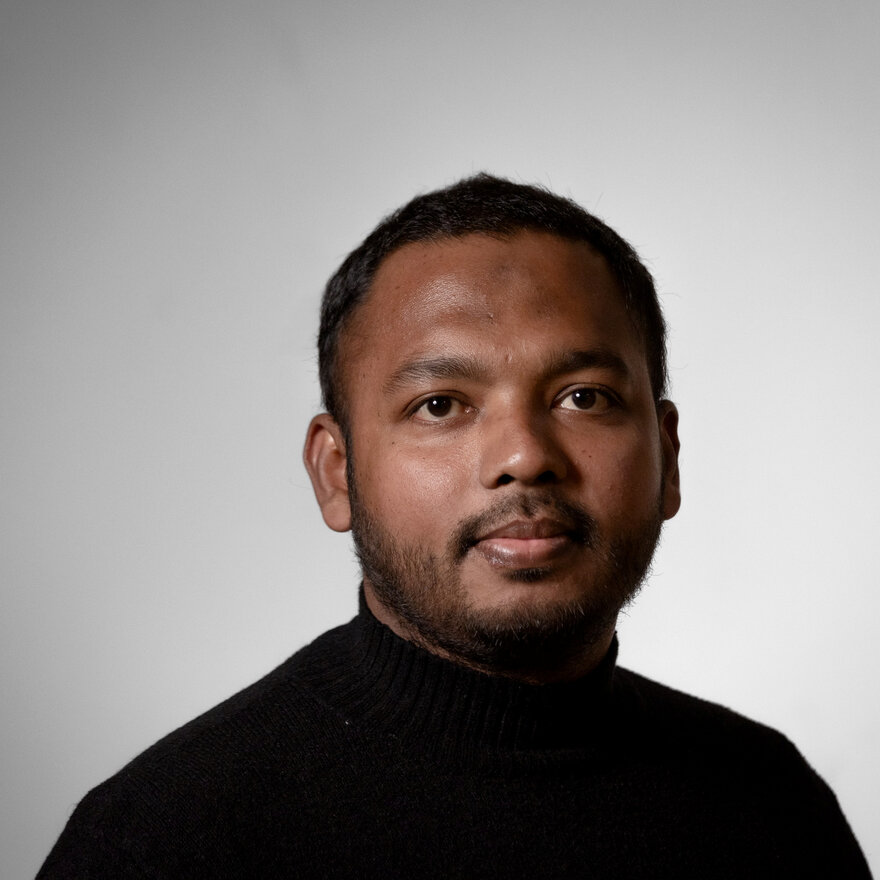
Seikh Hayatul Haque
Bangladesh
Norwegian University of Life Sciences - NMBU
PhD programme: MINA: Environmental Sciences and Natural Resource ManagementPhD project: Modeling a Resilient Energy System for the North European Context.
My PhD project tackles the challenges of transitioning to a low-carbon, resilient energy system in Northern Europe, with a focus on developing the BALMOREL energy system model while accounting for weather variations.
Sebastian Koa
Singapore
University of Exeter
PhD programme: GeographyPhD project: Temporalities of Nuclear Infrastructures: Histories and Futures of Energy and Community.
My project studies the effects on communities, power relations, and the rhythms of everyday life in rural spaces where new nuclear power plants are built. Specifically, I focus on Hinkley Point C, the first nuclear power plant to be built by the UK in decades.
Thea Lurås Oftebro
Norway
Norwegian University of Science & Technology - NTNU
PhD programme: Science and Technology Studies (STS)PhD project: The voices of nature and society: Justice in Norwegian offshore wind development in Norway.
The project examines the socio-economic and environmental dimensions of offshore wind development in Norway. It looks at how the development of offshore wind affects local communities and nature, while integrating global perspectives.
Viliina Kaikkonen
Finland
University of Helsinki
PhD programme: Political, Societal, and Regional ChangesPhD project: My research examines the processes of resource-making and resource politics in the EU, with a specific focus on lithium mining in Portugal. I am particularly interested in questions of power, knowledge, and future orientations—such as anticipations, expectations, and speculations—and how they shape the resource-making processes.
School Members 2023

Angela Antle
Canada
Memorial University of Newfoundland
PhD programme: Interdisciplinary Ph.D. Candidate researching energy humanities and climate disinformationPhD project: Harnessing podcasting’s affective power to challenge Newfoundland’s petroculture narratives.

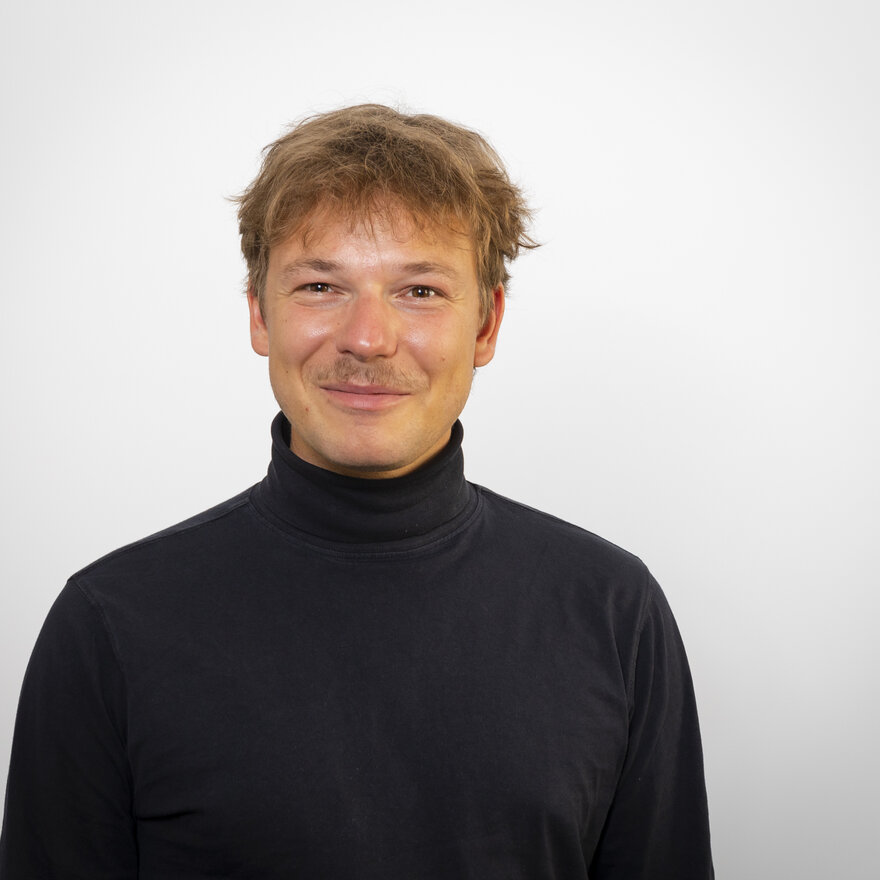
Erin Rizzato Devlin
Italy
Lund University
PhD programme: Human RightsPhD project: Justice as Reciprocity: the role of rural communities in informing, participating and imagining just energy futures in the Skaraborg region. The aim of this project is to achieve a critical understanding of the moral grounds and competing claims underpinning the current governance system and imagine alternative approaches that center relationality and reciprocity in rural energy transitions
Academic publications:
Rizzato Devlin, E. (2021). Democratising and Judicialising: The Judicialisation of Politics. Democracy & Society, on Truth and Information. Vol. 18, 2021-2022, pp. 23-25.
Rizzato Devlin, E. (2022). The Politics of Bananas: Modern Slavery and the Commodification of Morality. [X] position, Vol. 6, issue 2, January 2022.
Rizzato Devlin, E.(2023). Energy and Episteme: Towards an Ecology of Knowledges. Saperi Territorializzati, Paesi in transizione e transizioni in paese, CISAV-APS, Vol. 1, June 2023.
Rizzato Devlin, E. (2024). Powering Justice: Sketches for a New Ethos in Energy Policy. Green Humanities: A Journal of Ecological Thought in Literature, Philosophy & the Arts, 4(1), 1-32.
Fabio Schohan
Germany
University of Agder
PhD programme: SociologyPhD project: Sustainable Transition towards a green hydrogen economy: Assessment of risks and opportunities for the Middle East and North Africa.
This study investigates the transformative effects of shifting from a fossil fuel-based economy to a green hydrogen economy in the Middle East and North Africa (MENA) region, employing Foucauldian concepts to analyze evolving discourses, institutions, and implications while exploring associated risks and opportunities'Academic publications:
Schojan, F., Machin, A., & Silberberger, M. (2023). Sustainable development discourse and development aid in Germany: tracking the changes from environmental protectionism towards private sector opportunities. Critical Policy Studies, 1-24.

Jasmin Rainero
Finland
Glasgow Caledonian University
PhD programme: Climate JusticePhD project: Eliminating barriers to community energy projects in Deprived Communities: A just transition approach.
The research investigates the distribution of community energy projects between different socio-economic groups in Scotland. It seeks to identify the social, economic and structural barriers that deprived communities in both rural and urban Scotland face in establishing community energy projects in the context of delivering a more just energy transition.
Karen Waneska de Jesus
Brazil
Norwegian University of Life Sciences (NMBU)
PhD programme: Society, Development and Planning: Sustainable Urban and Regional PlanningPhD project: Low-carbon buildings contradictions: a view from the Global South.
The project investigates the socio-spatial and environmental contradictions of low-carbon buildings relating to their implications in the Global South. It analyses the low-carbon building policies and practices to understand how they consider the use and extraction of raw materials when certifying a new building as low-carbon and green. The case study used is the relationship between Norway and Brazil and the use and production of aluminium.Academic publications:
De Jesus, K. W., & Cucca, R. (2026). The green city under scrutiny: a scalar and decolonial scoping review on the green city critique. Local Environment, 1-20.
Peverini, M., Cavicchia, R., Friesenecker, M., Jesus, K.W.,
Munson, L. & Susani, A., (2023). Greener housing, but affordable? A study of
synergies and conflicts between environmental policy instruments and access to housing. doi: 10.13140/RG.2.2.36609.84325.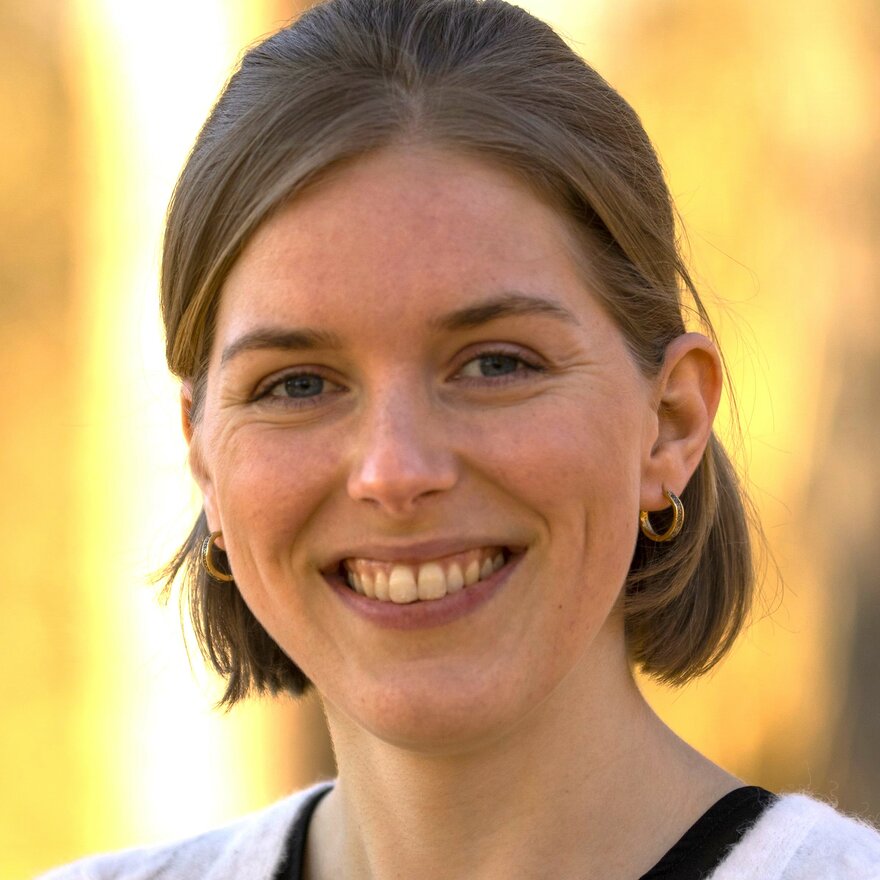
Karianne Krohn Taranger
Norway
University of Oslo/Fridtjof Nansen Institute
PhD programme: Human GeographyPhD project: Energy poverty in Norway: Lived experiences and the effects of ameliorating policies.
The PhD project aims to understand the causes and experiences of energy poverty in different Norwegian households, their responses, and the effects and potential of current and alternative ameliorating policies.Academic publications:
Inderberg, T. H. J., Nykamp, H. A., Olkkonen, V., Rosenberg, E., & Taranger, K. K. (2024). Identifying and analysing important model assumptions: Combining techno-economic and political feasibility of deep decarbonisation pathways in Norway. Energy Research & Social Science, 112, 103496.
Eikeland, P. O., Taranger, K. K., Inderberg, T. H. J., & Gulbrandsen, L. H. (2023). A wind of change in Norway: Explaining shifts in municipal stances on wind power by policy feedback and energy justice. Energy Research & Social Science, 104, 103231.

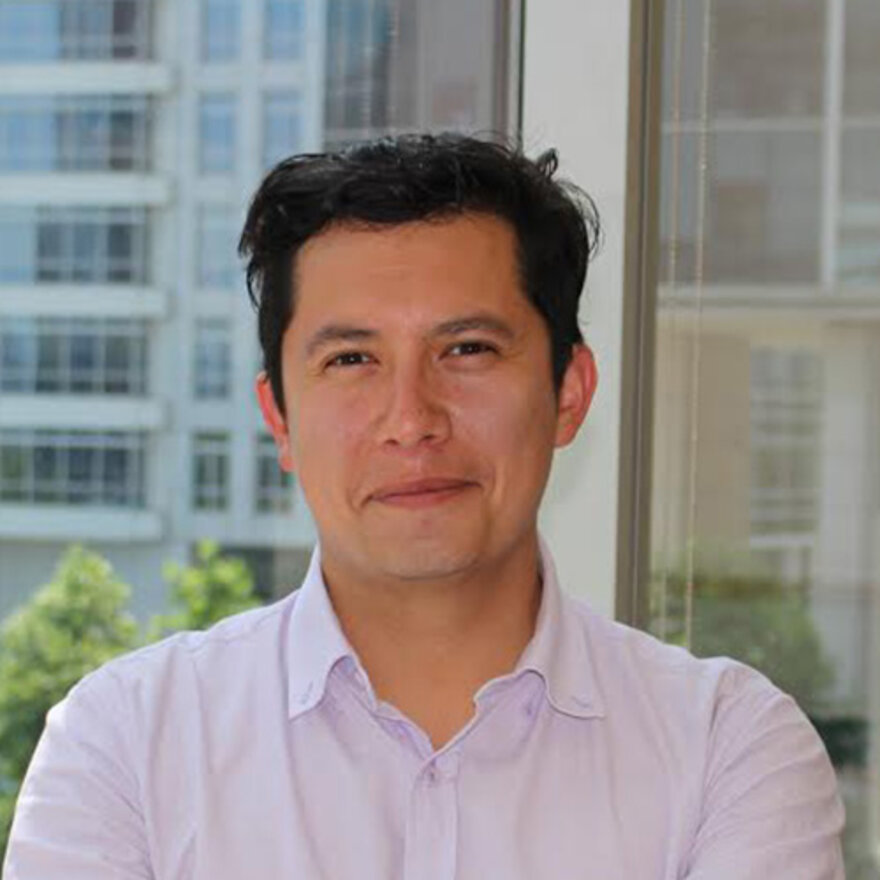
Lea Sasse
Germany
University of Stavanger
PhD programme: Social SciencesPhD project: Trans-local justice implications of the electric vehicle transition.
The project explores community engagement, governance at different scales, and tensions in electric vehicle supply chains. Case studies look at the social and environmental justice implications of a gigafactory in Germany and mineral extraction in Argentina.Academic publications:
Sasse, L. M. (2026). Grünheide becoming giga? Contesting scale and pace in the establishment of Tesla’s Gigafactory in Germany. Geoforum, 172, 104619.
Nicolas Silva Valenzuela
Chile
University of Edinburgh
PhD programme: Energy PoliticsPhD project: The Politics of Energy Transitions in Developing South America: The Cases of Chile and Peru.
The project aims to understand the challenges placed on democratic systems undergoing energy system transitions in Latin America. It examines the societal characteristics that explain why such transition processes have been accelerated (or not) in Chile and Peru, and their potential outcomes in specific areas within their territories.Academic publications:
Silva Valenzuela, N., & Jara Villalobos, C. A. (2023). La Consulta indígena de proyectos de inversión en el Sistema de Evaluación de Impacto Ambiental. Antecedentes y resultados a una década del D.S. 66/2013. Revista de Derecho Ambiental, 2(20)

Sharayu Shejale
India
University of Geneva
PhD programme: SociologyPhD project: Energy consumption, citizenship and wellbeing in the Global South - A case of Mumbai.
PhD project description: In my project, I use the case of Mumbai to study low carbon energy transitions in urban India. I ask - how do changes in household energy consumption lead to well-being outcomes and a more inclusive transition? Contributing to the literatures on energy consumption in the Global South, sufficiency and wellbeing, I examine how different urban citizens and groups in Mumbai practice an energy consumption that is ‘sufficient’ to satisfy their needs and achieve wellbeing.Academic publications:
Shejale, S., Zhan, M.X., Sahakian, M., Aleksieva, R., Biresselioglu, M.E., Bogdanova, V., Cardone, B., Epp, J., Kirchler, B., Kollmann, A. and Liste, L., 2025. Participation as a pathway to procedural justice: A review of energy initiatives across eight European countries. Energy Research & Social Science, 122, p.103982.Shejale, U. S., Zhan, M. X., & Sahakian, M. (2022). What forms of citizenship in European energy initiatives? Deterrents and enablers to further support a just energy transition. DIALOGUES: Energy citizenship for a sustainable future
Vetle Flaget
Norway
University of Agder
PhD programme: Social Sciences – Specialisation in Global Development and Planning.PhD project: Offshore Wind Planning and Energy Justice in a Multi-Level Governance perspective.
Based on a multilevel governance perspective, the aim of this project is to investigate planning processes for offshore wind. Within the political sphere, emerging crises like the climate crisis and recent energy shortages have given rise to a 'sense of urgency', subsequently putting pressure on current planning institutions. By focusing on key concepts such as energy justice and procedural justice, the project aims to reach a broader understanding of the challenges that arise when local, regional, and national governance levels are involved in planning processes for offshore wind.Alumni
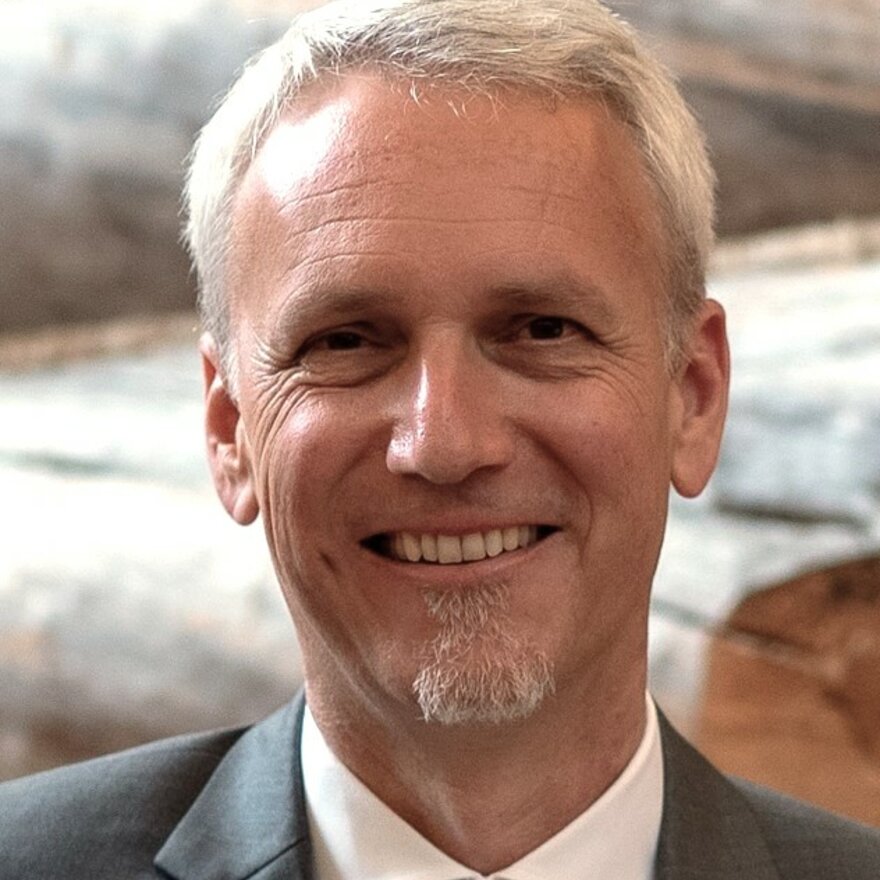
Dr. Harald Grabher
Doctoral degree awarded November 2024 by the University of Natural Resources and Life Sciences (BOKU), Vienna
PhD project: Household energy services from biomass energy and their interrelations with material stocks and energy flows.
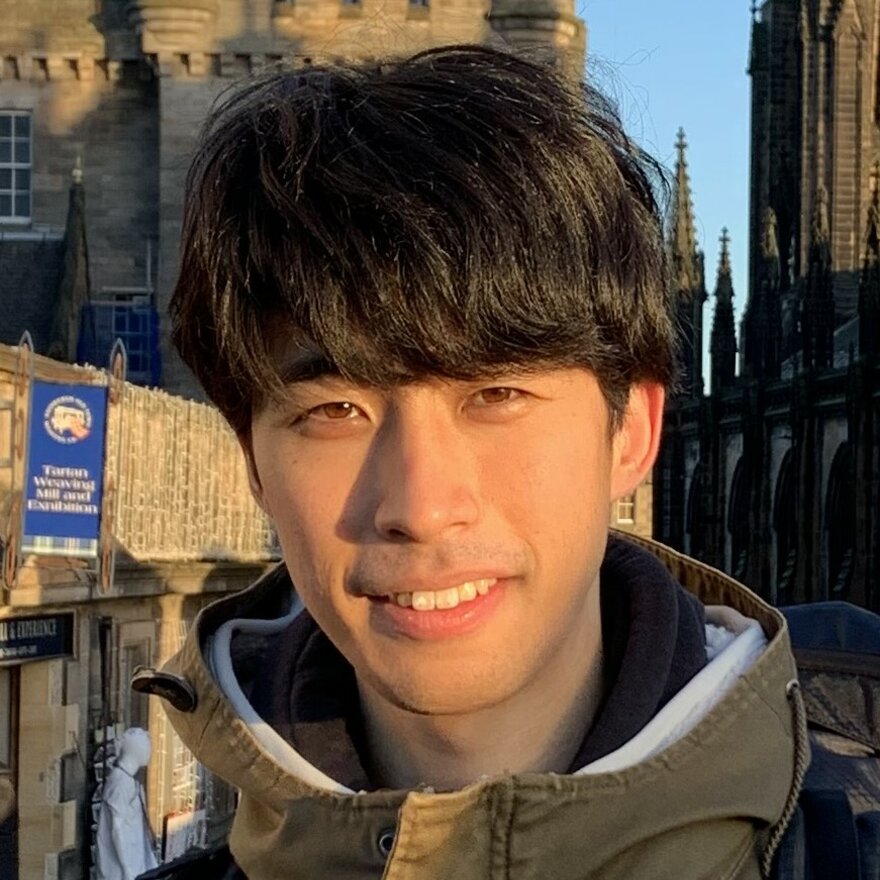
Dr. Hayato Koga
Doctoral degree awarded July 2025 by the University of Manchester
PhD project: Exploring the transformative potential of community-based energy governance in Japan to reshape democratic energy systems and tackle existing inequities.

Dr. Lara Maria Santos Ayllón
Doctoral degree awarded July 2025 by the University of Edinburgh
PhD project: The role of emerging technologies in the energy transition: a justice and responsible innovation exploration of marine energy and green hydrogen in island communities.

Dr. Anna-Sophie Hobi
Doctoral degree awarded November 2025 by the Norwegian University of Life Sciences
PhD project: Reindustrialising tomorrow: An ethnographic study of a future gigafactory and the ‘good life’ in a Norwegian municipality

Dr. Shayan Shokrgozar
Doctoral degree awarded November 2025 by the University of Bergen
PhD project: From Livestock to Light: Solar Dreams and the Foreclosure of Agropastoral Lifeworlds in Rajasthan

Dr. Finlay Bain Kerr
Doctoral degree awarded January 2026 by the University of Strathclyde
PhD project: Minewater Geothermal Energy: just, place-based models for energy resource development.
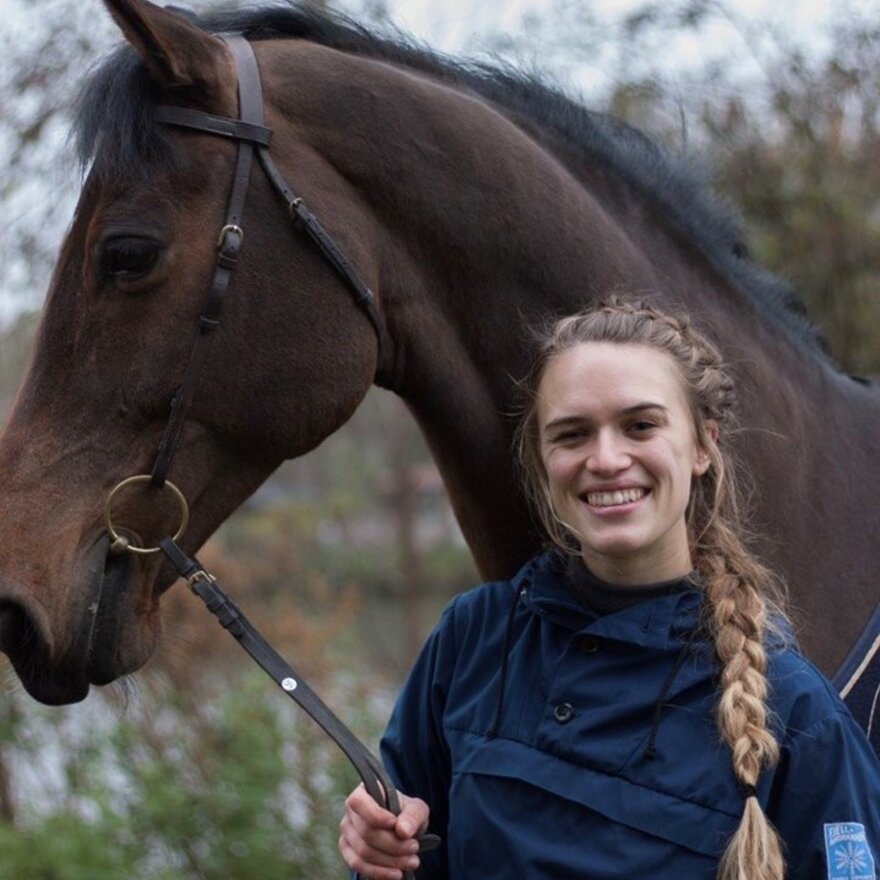
Dr. Lina Lefstad
Doctoral degree awarded May 2026 by Lund University, Sweden
PhD project: From Show Pony to Working Horse: Reimagining Carbon Capture and Storage for Just Climate Change Mitigation.

Dr. Cristián Flores Fernández
Doctoral degree awarded May 2026 by Humboldt University of Berlin
PhD project: Lithium, Green Hydrogen and the contested dynamics of green frontiers-making in Chile.

Birgitte Nygaard
Norwegian University of Science and Technology (NTNU)
PhD project: Framings of Norwegian Wind Energy Futures.
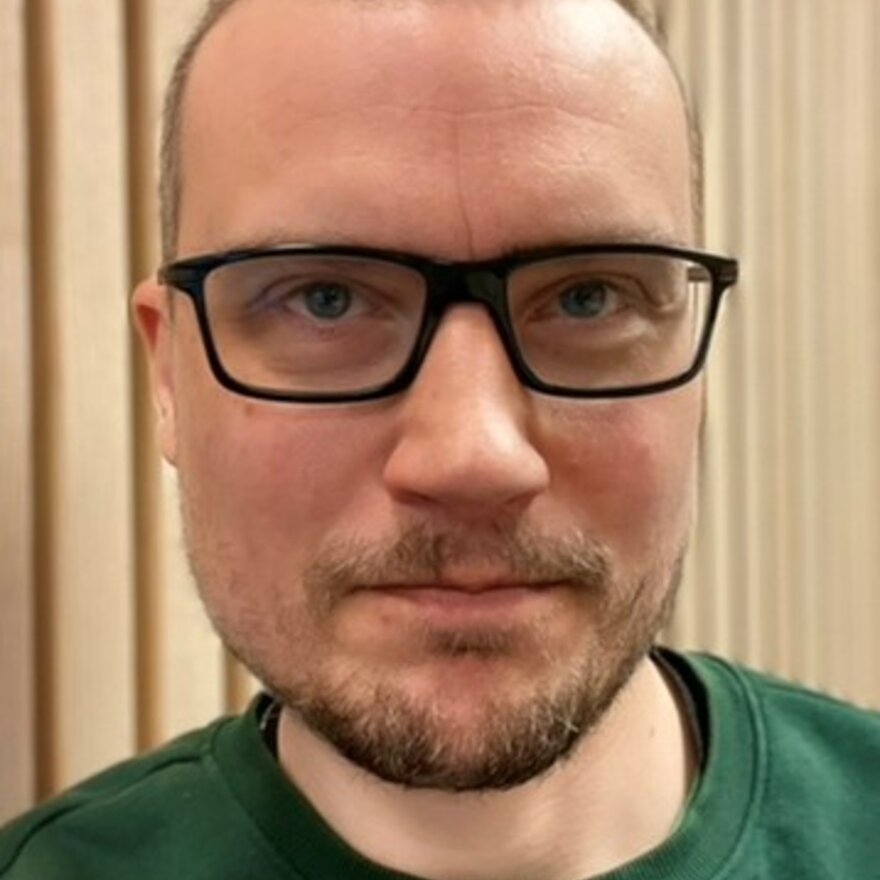
Daniel Molin
University of Oslo
PhD project: From petrol stations to charging networks.

Greg Grant
Norwegian University of Life Sciences (NMBU)
PhD project: Landscape Architects as Agents of Just Energy Transitions? A Case Study of Renewable Wind Energy Development in UNESCO Biospheres in Scotland.
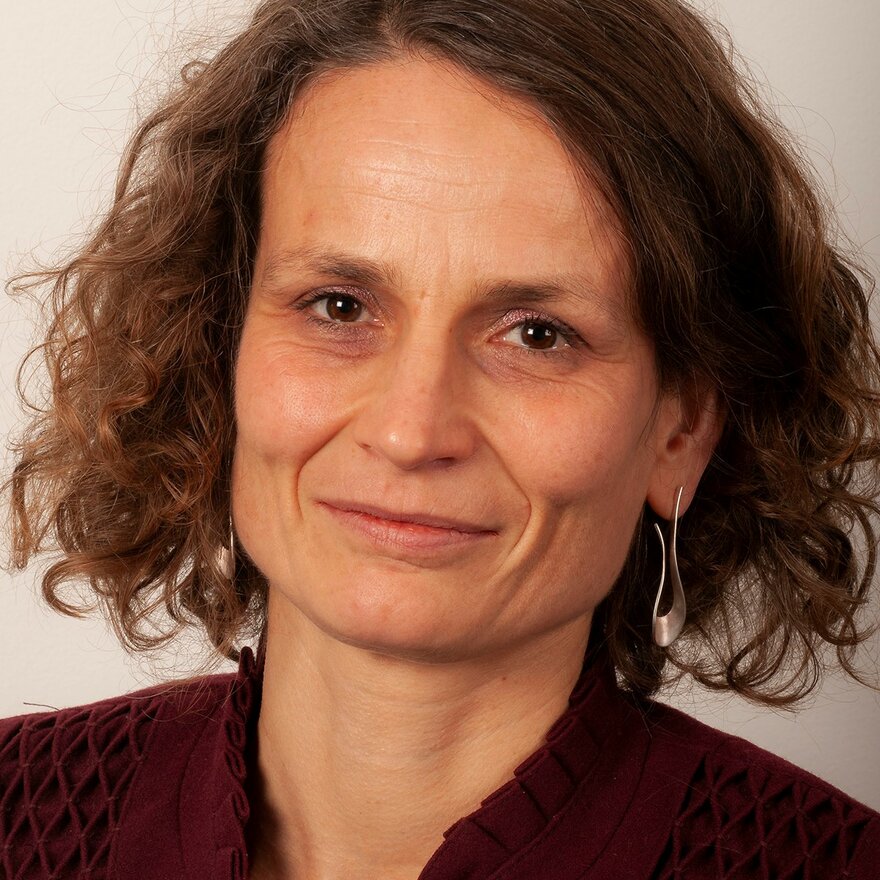
Hilde Solli
University of Oslo (UiO)
PhD project: To develop better understanding of the significance of different places and access to mobility through experiences of people’s own mobility, their possibilities and restrictions, and how they experience policy measures and intervention through a case study in Oslo.
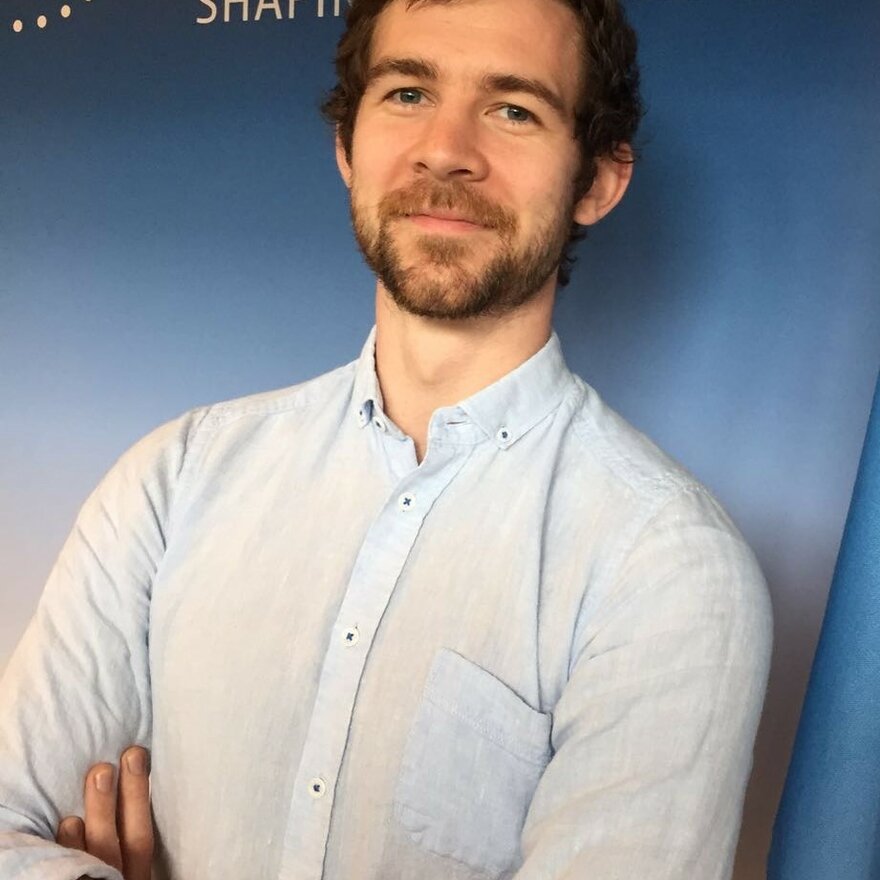
Håkon da Silva Hyldmo
Norwegian University of Science and Technology (NTNU)
PhD project: To improve understanding of how policies, industries and communities in Europe and Indonesia are shaped by the ideas of ‘green deals’ and green energy transitions.
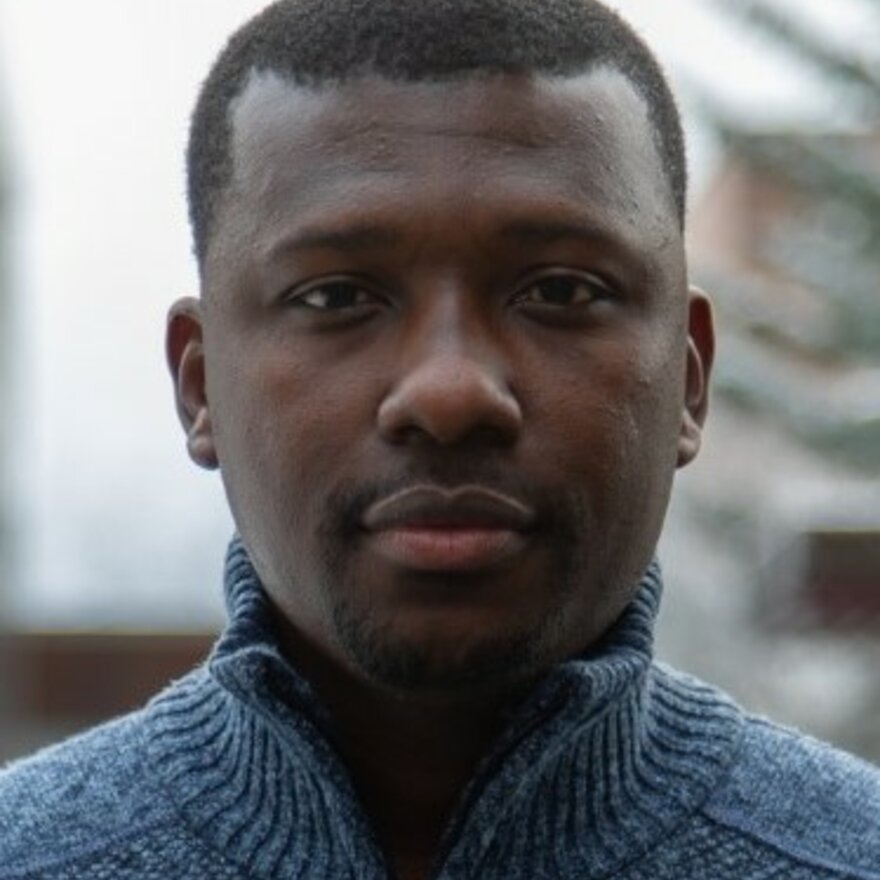
Larry Ibrahim Mohammed
Arctic University of Norway (UiT)
PhD project: In Pursuit of Self-Determination; Indigenous Peoples voices in search of impacts- A comparative study of renewable energy projects in Norway and Canada.
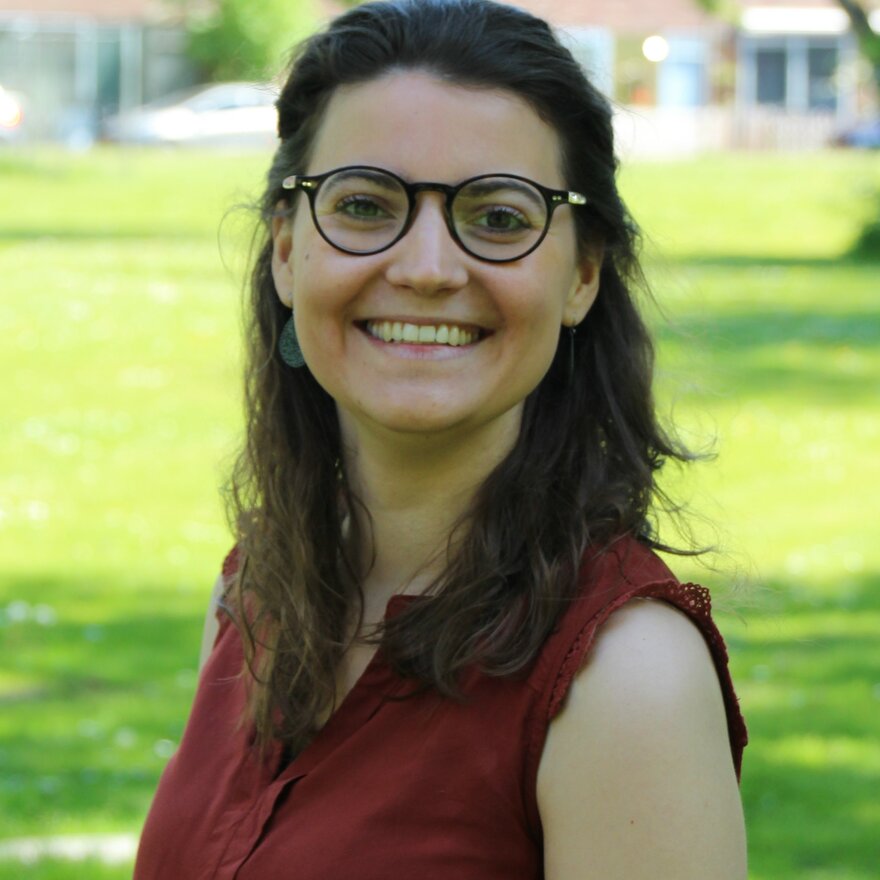
Marieke van der Star
University of Oslo (UiO)
PhD project: Residential mobility in the green compact city: class-led appropriation of urban resources.

Mathilde Rainard
University of Leeds
PhD project: Fairness implications of low carbon energy policies in the UK and France, an intersectional approach.
Nicol Staňková
Charles University, Prague
PhD project: To examine democratic processes and perceived justice in the context of local energy projects in the Czech Republic.
Ulrik Kohl
Roskilde University, Denmark
Malmö University, SwedenPhD project: Democratizing urban energy transitions. Community energy activism in Bosnia-Herzegovina and Denmark.

Vegard Solhjem Knutsen
University of Agder (UiA)
PhD project: Explores why Norwegian land-based wind power is controversial, what the driving forces behind resistance to wind power are, and how policies and planning practices can be rethought to enable a just pathway towards energy transition.
Societal Partner Profiles
Fred. Olsen Renewables
Fred. Olsen Renewables has over the last 25 years established itself as a renewables company of significance. The company covers the whole value chain from developing to constructing and operating onshore wind farms. It is committed to developing renewable energy sources both as a sound business model as well as in genuine support of the shift to a decarbonised society. Fred. Olsen Renewables is further developing its business footprint through solar projects, hybrid projects (solar and wind in combination), and floating solar projects. It is embedded in the company’s culture to maintain a sustainable business model while minimising its own environmental footprint.
Fred. Olsen Renewables seeks to expand and develop new energy projects and technologies in Norway and internationally, with careful consideration given to local ecology and society. The company has several projects related to onshore wind and solar energy and is currently venturing into an energy development project called HYPE, with support from the Research Council of Norway. The project will explore potential technical wind-solar energy synergies as well as operational strategies for solar installations under challenging climatic conditions in the Adger region of Norway.
As a partner, Fred. Olsen Renewables will be a valuable contributor to the strategic direction of Empowered Futures by discussing and providing input to the educational programmes and course curricula. The company will take an active part in the PhD courses, seminars, policy roundtables, and excursions by sharing experiences, challenges and opportunities related to development of renewable energy, seen from a developer’s perspective. Fred. Olsen Renewables will also provide candidates with opportunities for internships and consider co-developing an application for a business-PhD scholarship with partnering universities.
Fridtjof Nansen Institute
The Fridtjof Nansen Institute (FNI) is an independent foundation engaged in research on international environmental, energy and resource management politics and law. The overall objective of FNI is to understand the underlying forces in international environmental and resource politics, and on that basis make well-founded contributions to political solutions to problems in these areas.
FNI carries out research on the energy transition in Norway, Europe, and other world regions, and is a member of the University of Oslo’s INCLUDE research center on achieving a just energy transition.
FNI researchers offer expertise on climate and energy policy, opposition to renewable energy projects, and global environment and climate governance. FNI, along with University of Oslo (UiO) and Rjukin Solarpunk Academy, will plan Empowered Futures’ first PhD course to be held in Spring 2023. Throughout the partnership, FNI will also contribute to policy roundtables, impact assessment workshops, communication workshops, and practica for Empowered Futures members.Multiconsult
Multiconsult is one of the leading engineering consultancy firms in Norway. The firm offers multidisciplinary consultancy services to public and private clients worldwide, especially in the renewable energy sector. Multiconsult is involved in a wide range of services including strategic energy sector planning to project feasibility studies and environmental impact assessments to construction supervision and project audits and evaluations.
Multiconsult’s involvement in the entire cycle of renewable energy projects has provided exposure to the many dilemmas faced by project developers, governments and civil society in the locations targeted for hydro, wind, solar and power transmission developments. Whilst the firm’s role is typically to generate knowledge for well-informed decision-making, it acknowledges that the professional integrity of consultants can sometimes be challenged and be subject to public scrutiny.
Multiconsult and Empowered Futures believe that the practical experience of Multiconsult’s large team of renewable energy consultants can serve as a valuable asset to the research school. It can offer training and internships to PhD candidates and hopes to also benefit from the academic research that will be undertaken. By bringing together such a variety of stakeholders from the public, private and university sectors, Multiconsult and Empowered Futures believe that better practices can be developed, both in research and management, for a more sustainable low-carbon energy transition.Naturvernforbundet (Friends of the earth Norway)
Naturvernforbundet is one Norway’s largest environmental organisations. It has over 100 local teams and around 36,000 members who have committed themselves to taking better care of nature and the living environment. Both climate change and the loss of natural diversity are happening dangerously quickly, and the rapid development of renewable energies, such as bioenergy, water, and wind power often comes into conflict with natural values.
Naturvernforbundet emphasises a reduction in energy consumption, both in Norway and globally, in order to meet the IEA's Net Zero Roadmap 1.5 C Scenario, which states that global energy use must be lower in 2050 than today. For Naturvernforbundet, a green transition is not just a transition to renewable energy, but a transition to a society with lower consumption of energy and materials. Nevertheless, Norway still has no systematic investment in energy efficiency.
Naturvernforbundet has presented a road map for a “Fossil-fuel-free Norway” by 2040 without extensive destruction of nature for increased renewable energy production. This includes halving energy use in buildings, which will release large amounts of clean energy for other purposes, and that new infrastructure should be adapted to a zero-emissions society, such as transport being moved from road to sea and rail and prohibiting the construction of new motorways which may result in greater natural interventions and energy requirements.
Naturvernforbundet also works to ensure that products must be suitable for repair, reuse and recycling; a functioning circular economy is essential for a large reduction in the need for energy and materials. While we wait for oil and gas operations to be gradually phased out, Naturvernforbundet promotes building alternative, less energy intensive business activities instead of increasing electrification from renewable power. As a valued partner of Empowered Futures, Naturvernforbundet will be instrumental in the forthcoming policy roundtables.
Nordic Edge
Nordic Edge is Norway’s official, national innovation cluster for smarter, more sustainable cities and communities. The cluster drives innovation, business development and societal change through cross-sector and cross-border collaboration. Energy transition is a vital part of this transformation, in particular the production, transformation, and distribution of energy in urban areas.
Nordic Edge operates as a hub for year-round activities for its 120+ Norwegian members and large international network. The member base in the cluster includes small, medium, and large companies, research institutions and universities, the municipal sector, and financial institutions. Nordic Edge provides expertise within the fields of communication, co-creation, cross-sector collaboration, facilitation, workshops, and full-scale conference and exhibitions.
Empowered Futures can help strengthen the links between members from the private sector and academia. This will aid companies in bridging the knowledge gap that occurs between everyday activities and current research. The School will also be of vital importance to the sustainable energy transition by making doctoral education more relevant for the labor market; Empowered Futures can help fill a significant gap in both the labor market and the educational programmes of Norway. Nordic Edge will be a valuable partner by both hosting and supporting various activities, including practica, policy roundtables, and internships for members.
Rjukan Solarpunk Academy
Solarpunk is a visual representation of ideas that communicates knowledge between academic research and art. Art can inspire differently than traditional research, and artists can help generate new ideas in these times of environmental crises. Artists are a crucial resource for imagining innovative solutions to the most urgent questions around us.
As part of an artistic-academic collaboration with Empowered Futures, arts collective Rjukan Solarpunk Academy will organize a biennial Solarpunk Arts Festival starting from the summer of 2023. The festival will take place in the unique setting of Rjukan, home to the Sun Mirror - arguably the most famous solarpunk art piece ever made. A big part of solarpunk is using technology to improve a sustainable life. The Sun Mirror runs on solar and wind power and is thereby self-sustainable and works in harmony with nature.
The Solarpunk Arts Festival will have four editions in the next eight years, each with a different theme derived from Empowered Futures research. In collaboration with different artists, the festival showcases the research around low-carbon energy transitions and opens up questions around sustainability in new ways. Each art piece included in the festival will originate from questions surrounding the research and therefore act as a method of communication that makes science more accessible to wider audiences. Rjukan Solarpunk Academy will also host PhD courses for Empowered Futures members.Sola kommune
We are delighted to partner with Sola kommune (Sola Municipality) as part of Sola’s climate and environmental plan to address business cooperation on the green shift. Sola municipality is a national hub for the oil and gas industries, therefore it is important to build a bridge from these industries towards the green shift in the region. Sola recognises the challenges faced between rhetoric and practice and the importance of establishing a knowledge-based response.
As part of Empowered Futures, Sola Municipality plans, amongst other things, to hold lectures on the municipality’s ongoing work related to climate and energy. Sola will also arrange internships for candidates involving local case studies related to climate and energy issues.
Sola envisions that through cooperation with Empowered Futures, PhD education will become more relevant for the society in the Northern Jæren region, by training candidates to reconsider questions and renew understandings in the light of sustainable social development. Generating a network of competent researchers will be to the benefit of the labour market in the strong commercial municipality of Sola, as well as throughout Norway and beyond. As a valued partner, Sola kommune will organise policy roundtables and offer practica and internships to Empowered Futures members.Statkraft
Statkraft is one of Europe’s leading renewable energy companies, and globally, with investments in wind, solar, hydropower, and new energy technologies. Statkraft has been generating renewable energy for more than a century, primarily through the abundant resource of Norwegian hydropower. The Company is now committed to the shift to a de-carbonized society as well as to maintaining a sustainable business model. Over the next decade, Staktraft is determined to use its business to accelerate the transition to renewable energy, while also using its expertise to help with adaptation efforts.
Statkraft has met numerous challenges in seeking social acceptance and environmental sustainability while managing the development and expansion of new energy technologies. Statkraft’s robust internal management system, The Statkraft Way (TSW), outlines policy and guides all actions, including social, environmental, and ethical decision-making and implementation. Dialogue with stakeholders, benefit-sharing, and sustainability are at the core of Statkraft’s way of working. Climate policies have a large impact on Statkraft, and the Company follows national, European and global climate policy development closely to assess their impact. Statkraft also invests significant resources in market analysis to have a robust basis for future investment and operation decisions.
Statkraft’s 100+ years of experience in the Nordics developing, constructing and operating hydropower plants and over 25 years of experience with other renewables, energy services and energy trading globally, provides a wealth of research resources and industry knowledge. As a valued Empowered Futures partner, Statkraft will be instrumental in organising policy roundtables, practica, and internships for members.
Vestland fylkeskommune
Vestland is situated on the west coast of Norway, with a population of 630 000 throughout its 43 municipalities. Vestland’s vision is one of innovation and sustainability. It aims to continue to be an important host to value-creating businesses while being a driving force for sustainable development.
Vestland has high climate change mitigation and adaptation ambitions on its path towards a sustainable climate and energy transformation. The decisions regarding sustainability targets on both a local and global scale must also offer a just transition. Vestland addresses the interconnected climate and nature crises accordingly. Energy transformation and climate footprint reduction actions must also ensure sustainable land use planning and conserve or reconstruct the very basis of our existence, our ecosystems. This level of complexity is new and challenges priorities on many levels.
Vestland is an important community developer; the largest producer of renewable energy in Norway, with many businesses eager to take part in the energy transformation. The potential to produce more renewable energy is great, but challenges exist, for example in distribution. By partnering with Empowered Futures, Vestland can further develop the region in a sustainable direction where social and environmental controversies and consequences become part of the bigger picture. Candidates can look upon this as an opportunity to integrate science, regional development, and politics as a change agent towards a low-carbon society. Members can benefit from the PhD course, policy roundtables, and internships offered by Vestland fylkeskommune throughout the partnership.External Job Opportunities
Postdoctoral position in Class, Elites and the Political Economy of the Green Transition
Copenhagen Business School
Copenhagen, DenmarkThe Department of Organization at Copenhagen Business School is seeking a two-year Postdoctoral Researcher for the BACKLASH project, which examines how social and economic inequalities shape support for and resistance to climate policy in Denmark. Focusing on the intersection of class analysis, political economy, climate politics and quantitative methods, the successful candidate will play a leading role in investigating the climate-political class landscape and the alliances and conflicts emerging around the green transition. The position offers an opportunity to contribute to cutting-edge research on inequality, elite networks and the social dynamics of decarbonisation.
Application deadline: 02 November 2026.
More information and how to apply here.
Leadership

Neil Davey
Senior Advisor
Acting Administrative Leader & Communications Officer
Knowledge and competence on energy transitions transcends technological innovation. Energy developments divide opinion and generate controversy. Recognizing the social and political nature of power, Empowered Futures is a research school providing research-based competence on conflict mediation, equitable policy and development frameworks to achieve just energy transition.
Aims of the research school
Apply for membership
Activities 2026
School News
Media
External Events
Recommended Reading
Members Publications
Partners and Advisory Board
School Members 2025
School Members 2024
School Members 2023
Alumni
Societal Partner Profiles
External Job Opportunities
Leadership