Objectives
- Promote national and international critical discourse on the relationship between landscape and democratic society;
- Explore and examine the linkages between human rights, landscape, democracy and public policy interventions (legislation, policy and planning and design practice);
- Produce and collate theoretical, methodological and applied knowledge on landscape, development, and democracy from a variety of disciplines and policy perspectives.
Background
Constitutional ideals of democracy, human rights, equality and freedom have a tangible landscape dimension. Democracy as an ideal is rooted in free debate in public space; landscape is the spatial materialisation of democracy. At this time of global environmental and economic challenges driving increasing social tensions, there is urgent need in on-going discussion about the role of landscape in society and providing the relevant insights and knowledge required to address such situations.
The very concept of landscape – in policy as well as in academic disciplines – is changing from predominantly the understanding of landscape as a visual phenomenon (scenery) to wider conceptions of a complex living space/environment that is moulded by material and intangible systems and components.
Underpinning Landscape in the European Landscape Convention’s definition of 'an area, as perceived by people, whose character is the result of the action and interaction of natural and/or human factors' are the Council of Europe’s aspirational core values for Democracy, Human Rights and Social Justice. The conviction is that the quality of landscape as a living space, whether urban or rural, is vital in securing the basic human right to material and socio-cultural wellbeing.
In the last decade the landscape convention has driven production of a rich body of knowledge on the multiple, complex aspects of landscape and ways in which the convention might be implemented. Yet, there is a need for more discourse and knowledge on landscape as the spatial meaning of democracy, and on democratic values’ role in protecting, managing and planning of landscapes.
Core Researchers
Activities
2024
2023
16MarClimate Change and Socio-environmental Transformations
An open seminar organised in collaboration with the Italian Cultural Institute of Oslo as part of the Italian Routes exhibition produced by the Italian Ministry of Foreign Affairs and the MacroMicro association. With Gabriella Trovato.
2022
11NovLandscape, community and law: the case of Greece
A critical discussion of the relationship between modern Greeks, space and law as it unfolds in the Greek landscape. With Theano S. Terkenli, human and cultural geography professor at the University of Aegean.
21OctHibakujumoku: A message from silent nuclear witnesses
At 2017's Nobel Peace Prize ceremony, Oslo received saplings from Hibakujumoku, trees that survived the nuclear attacks on Hiroshima and Nagasaki in 1945. Today, their second-generation offspring grow in NMBU's gardens. This seminar offered a discussion on how Norway's Hibakujumoku can be best utilized to educate and give hope in these times of nuclear anxiety.
16JulSummer School: Living with earthquakes
A summer school for Master and PhD students working on a strategic plan for earthquake-prone regions.
27MayGreen Infrastructure and implications for urban planning
A seminar on green infrastructure and implications for urban planning in the Mexican city of Culiacán.
29AprCities between homogenisation and authenticity
A seminar on the forgotten spontaneity in cities and the production of placelessness: Case Helsinki. By PhD Fellow and lecturer in urban and regional planning at Aalto University, Hosseim Hewidy.
2021
14DecLandscape Democracy and Cultural Heritage
How is democracy envisioned and practiced in cultural heritage sites? NMBU is joined by guest speakers from Norway, Slovenia, UK and Italy for rich talks and open discussions on landscape democracy.
26NovFrom landscape citizenships to Utopian methods
Seminar providing tools for thinking landscape.
8AprCLaD seminar
15 participants actively participated. In addition to discussants from NMBU was Tim Waterman from Bartlett University and Antonello Alici from Politecnico delle Marche.
Publications and resources
- The Centre for Landscape Democracy and Transdisciplinarity: Transdisciplinary challenges, research and education in landscape democracy (pp. 363-371).
M Di Marino , MG Trovato & L Gao (2023). Conference Proceedings - ECLAS European Council of Landscape Architecture.
This paper explores the transdciplinary challenges in landscape research and education by taking the summer school ‘Living with earthquakes’ in Falerone (Italy, 2022), co-organised by the Centre for Landscape Democracy, as a case study. The study introduces the impact of the earthquakes in 2016 and 2017 that affected central Italy, including the local context of Falerone. It presents the achieved learning outcomes of the students and their proposals for revitalising Falerone. Some of the findings are discussed through the lens of landscape democracy. - Landscape democracy and transdisciplinary approaches (Landscape democracy and approcci transdisciplinari)
Di Marino M
Chapter in: Paesaggio e ambiente: Prospettive multidisciplinari per la governance
AL Palazzo & D'Ascanio R (eds.)
Book published by Carocci editore (June 2025)
- The Centre for Landscape Democracy and Transdisciplinarity: Transdisciplinary challenges, research and education in landscape democracy (pp. 363-371).
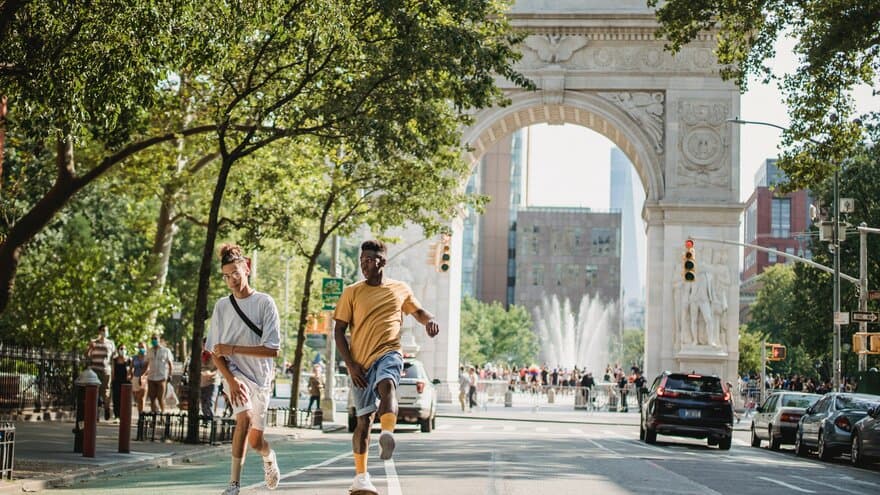
A cross-departmental and interdisciplinary centre for the creation and dissemination of knowledge, creative interpretations and innovative solutions within the themes of landscape, development, and democracy.
Objectives
Background
Core Researchers
Activities
Publications and resources