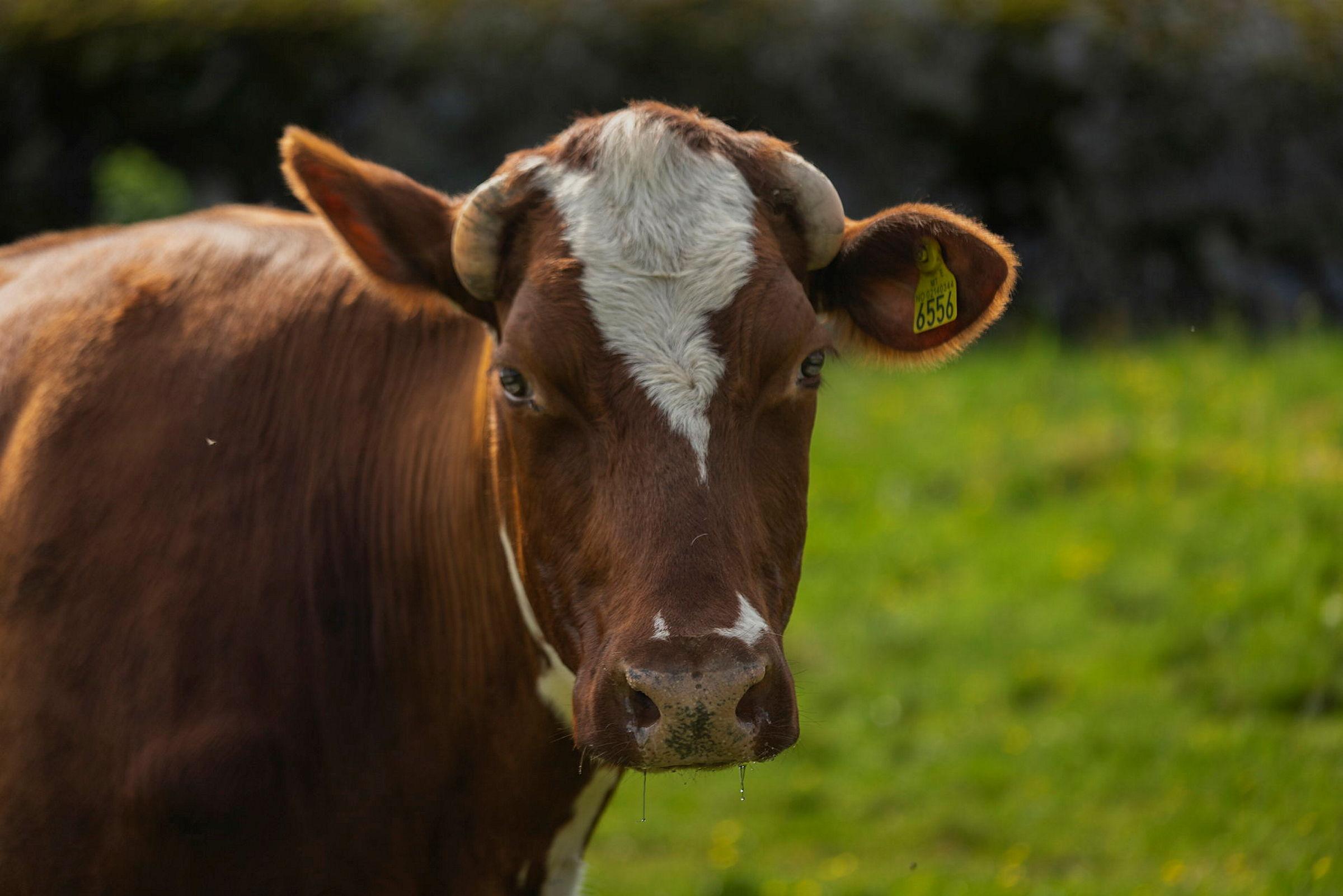
Rumen-Innovate, a €4.8 million Marie Skłodowska-Curie Doctoral Network, brings together leading European institutions to advance ruminant microbiome science.
The Norwegian University of Life Sciences (NMBU) is now a partner in Rumen-Innovate, a newly launched €4.8 Marie Skłodowska-Curie Doctoral Network funded by the European Union to advance sustainable ruminant agriculture through microbiome science. The network, coordinated by Queen’s University of Belfast, was formally signed on 30 June 2026 and begins in March 2027.
Rumen-Innovate — formally titled Doctoral Training in Ruminant Microbiome Science: Developing Evidence-Based Interventions for Sustainable Food Production and Climate Change Mitigation — will recruit 15 doctoral candidates across 11 beneficiary institutions in 8 countries. NMBU participates as a full beneficiary, contributing expertise in bioinformatics and microbiome research. Recruitment is planned for Autumn 2027, with positions open to researchers from across the world.
The consortium is deliberately broad in both geography and institutional type. The 11 beneficiaries include universities, national public research organisations, and applied research institutes across the United Kingdom, Norway, France, Spain, Finland, Ireland, the Netherlands, and Belgium. The 19 associated partners extend the network further, encompassing private companies in the nutrition, agritech, genomics, and dairy sectors alongside additional universities and research institutes, including partners in the United States.
The network addresses critical global challenges facing the livestock sector: feeding a growing population sustainably, reducing greenhouse gas emissions from ruminant animals, and improving animal health and production efficiency. Research spans the full pipeline from machine learning and multi-omics through to on-farm diagnostic tools and delivery systems, with biosafety assessed as an integral part of the work.
Will reveal how microbes and their host animals interact
NMBU is one of the 11 beneficiary institutions in Rumen-Innovate and will host and train one of the network's 15 doctoral candidates. The NMBU project (DC01 – MULTIOMIC) develops computational methods to integrate multi-omics data to reveal how microbes and their host animals interact and to pinpoint keystone microbes as targets for cultivation. The resulting open-source software tools will be applied across the wider network and shared publicly, contributing to the project's overarching goal of more sustainable, lower-emission livestock production.
– NMBU brings deep expertise in microbiome genomics, host-microbiome interactions, and the analysis of complex biological data to Rumen-Innovate. We already lead a similar international training network in this space, and we're excited to apply that experience to the rumen — developing computational tools that turn multi-omics data into real insight for more sustainable livestock production, says NMBU-professor Torgeir R. Hvidsten. Along with NMBU-colleagues Phil B. Pope and Velma Aho, he is connected to the network.
About Rumen-Innovate
- Rumen-Innovate is a Marie Skłodowska-Curie Doctoral Network funded under Horizon Europe (Grant Agreement ID: 101311612), coordinated by Queen’s University of Belfast.
- The network recruits 15 doctoral candidates across 11 beneficiary institutions and 19 associated partners spanning 9 countries and a range of institutional types, including universities, national research organisations, and private industry.
- Its aim is to advance microbiome-based innovations in ruminant agriculture, improving animal health, enhancing production efficiency, and reducing the environmental footprint of the livestock sector.
- The network runs from March 2027 to February 2031.
- Researchers from NMBU connected to the network are Phil B. Pope, Professor (KBM), Torgeir R. Hvidsten, Professor (KBM) and Velma Aho, Researcher (BIOVIT)
- Full project details are available on the EU CORDIS database: https://cordis.europa.eu/project/id/101311612