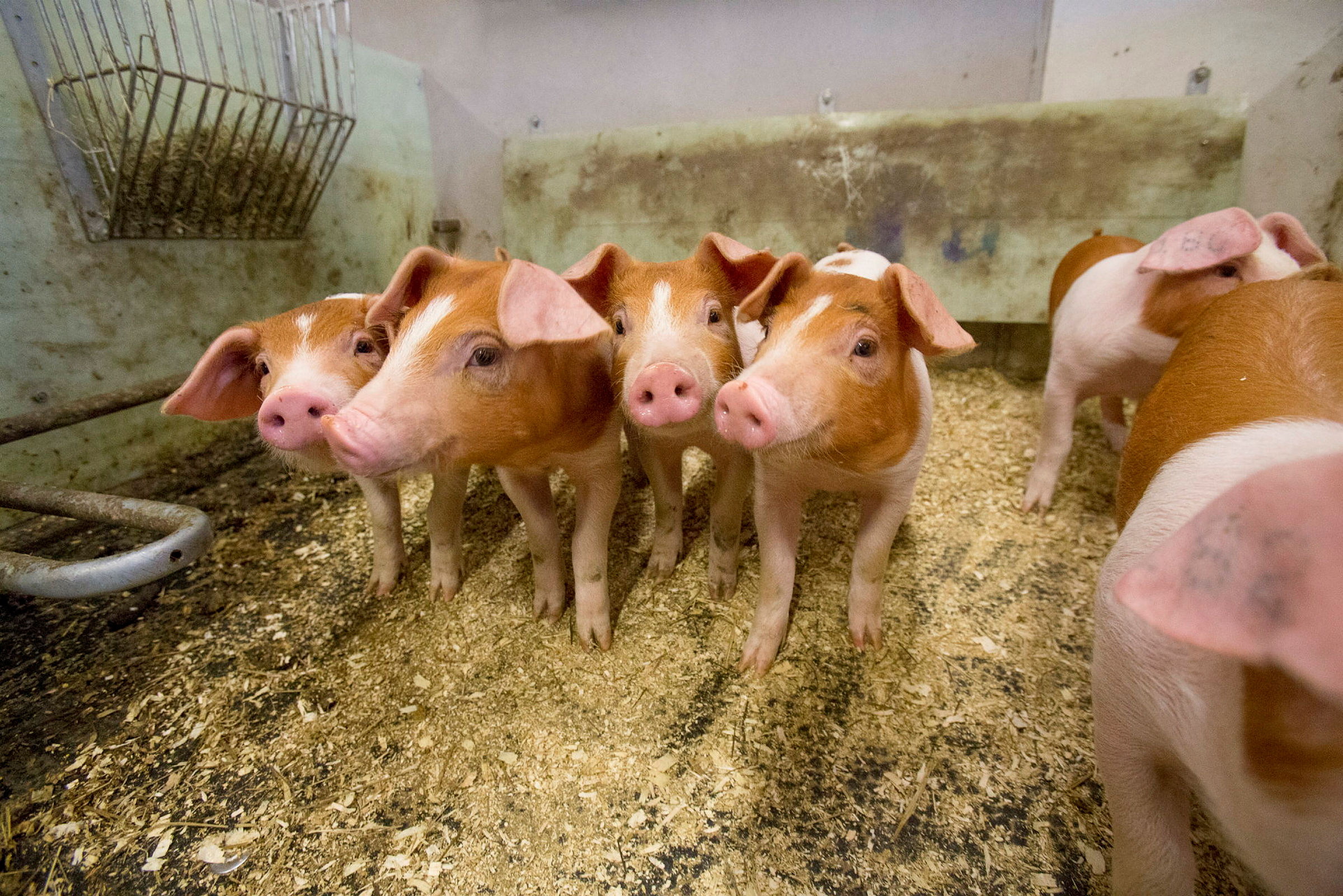
Are You Entering Our Production Animal Facilities?
The following rules apply to the Production Animal Clinic, the Ambulatory Clinic, and field herds/flocks:
After Any Travel Abroad
The following requirements apply regardless of which country you have visited:
- You must shower and wash your hair.
- Clothing used abroad must be washed at a minimum of 60°C.
- Footwear and equipment must be cleaned and disinfected.
- You must follow the general biosecurity and infection control routines of the clinics and livestock holdings.
- Use the clinic's or livestock holding's clothing and footwear where required.
- Never bring meat products, other animal products, or food waste into Norwegian livestock holdings.
- See separate regulations regarding MRSA testing.
Waiting Period After Contact With Animals Abroad
- If you have had contact with cloven-hoofed animals or wildlife during travel abroad, a minimum waiting period of 48 hours from your arrival in Norway applies before you may enter Norwegian livestock holdings.
Stay in Areas With Serious Contagious Animal Diseases
If you have had contact with cloven-hoofed animals or wildlife in an area or country with a known serious contagious animal disease:
- The waiting period is at least 72 hours from arrival in Norway.
- You must contact the responsible instructor or manager for an individual assessment before being granted access to animal facilities or livestock holdings.
- The required waiting period and any additional measures may vary depending on the disease and the level of infection risk.
Your Responsibility Before Traveling
- All travelers are responsible for keeping themselves informed about disease status and any ongoing outbreaks in the area or country they plan to visit.
- If you are unsure about the disease situation or which rules apply to your destination, you must contact the responsible instructor or manager for advice before traveling.
- If, after returning, you are unsure about the applicable waiting period or required measures, this must be clarified with the responsible instructor or manager before entering animal facilities or livestock holdings.
Are You Unsure?
Situations may arise that are not clearly defined in these procedures. Students, employees, and visitors who are uncertain about which rules apply must contact their immediate supervisor or the responsible instructor before entering animal facilities or livestock holdings.
MRSA Guidelines for the prevention of MRSA/LA-MRSA infection
Summary of guidelines for all staff, students and visitors to Norwegian herds/holdings.
Requirements for testing of staff and students
NMBU's staff and students who will come into contact with Norwegian livestock during the course of their work and studies must be tested for MRSA/LA-MRSA if they:
- have previously tested positive for MRSA, but have not since had three negative tests.
or who, during the past 12 months:
- have been in contact with foreign livestock, or
- have tested positive for MRSA (even if subsequent tests have been negative), or
- have lived in the same household as MRSA-positive humans or animals, or
- have had close contact with MRSA-positive humans or animals without using protective equipment.
or have spent the past 12 months in countries outside the Nordic region and have there:
- been admitted to a health institution, or
- had a comprehensive examination or treatment by a health service or
- worked as a health care worker, or
- resided in an orphanage or refugee camp.
Performing the MRSA test and treatment in the event of a positive result:
Staff contact the occupational health service provider for testing (or possibly own GP). Students are tested at their GP/University Foundation for Student Life's health service.
People with positive MRSA/LA-MRSA status must undergo treatment. GP is contacted.
Access for staff and students to NMBU's livestock and other Norwegian livestock:
- Livestock owners must be informed at all times about the MRSA status of each member of staff/student before they can come into contact with the herd. The livestock owner will decide whether the member of staff/student will be permitted to come into contact with the herd.
- People with unclear LA-MRSA/MRSA status: According to the professional recommendations from the VI/FHI/Norwegian Food Safety Authority, people with unclear LA-MRSA/MRSA-status can be permitted access to livestock if they follow the VI/FHI/Norwegian Food Safety Authority's recommended infection prevention measures (surgical mask, disposable gloves and headgear). (Infection control measures for producers, Infection control measures for veterinarians) in addition to the VI/FHI/Norwegian Food Safety Authority's advice regarding daily infection protection.
- People who are treated for LA-MRSA/MRSA: The professional recommendations from the VI/FHI/Norwegian Food Safety Authority require that people who are being treated for LA-MRSA/MRSA must use the above-mentioned infection prevention measures until all tests are negative. (Infection control measures for producers, Infection control measures for veterinarians)
- People with positive LA-MRSA/MRSA status must not come into contact with livestock.
Infection prevention measures when coming into contact with livestock abroad:
- Wash hands thoroughly with soap and water.
- Use disposable gloves, headgear and dust mask with valve (protects against infection FROM animals).
- Wash and disinfect hands immediately after protective equipment has been removed.
- If possible, take a shower immediately after being in contact with the herd.
- Plan prior to departure abroad. Order an appointment for testing with the in-house health service provider/GP for the fastest possible testing after arriving home.