Norwegian University of Life Sciences (Internal funding)
About the project
Background
Objective
Key research findings
Funding
Participants
Timeline
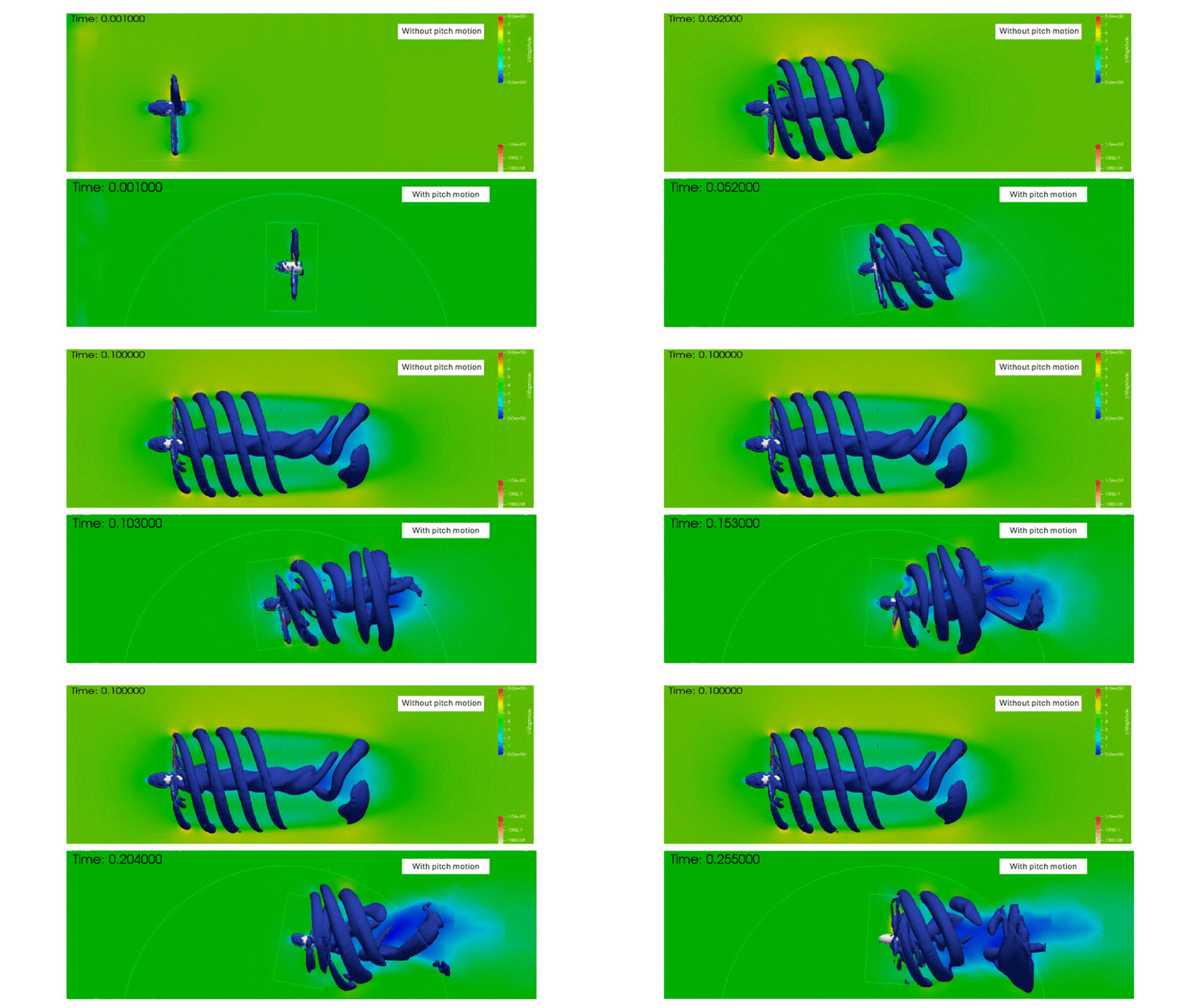
03 October 2025: Research Article published: Coherent flow structures in the wake of a model floating wind turbine under pitch and roll motions
This research numerically studies the wake dynamics of a model FOWT under platform motion using high-fidelity CFD. It was found that higher oscillation amplitudes shift coherent wake structures closer to the rotor. The pitch motion drives pulsating wakes at low Strouhal numbers, shifting to meandering at high Strouhal numbers, whereas the rolling motion causes vortex merging, thereby increasing lateral spreading and mixing. Also, the optimal Strouhal number range (
0.3–0.6) enhances wake recovery and aids wind farm design.
25 July 2025: Research Article published: Advances in computational intelligence for floating offshore wind turbines aerodynamics: Current state review and future potential
Our review article has been published in Renewable and Sustainable Energy Reviews (Elsevier). This journal is ranked Level 2 in Norway and is highly recognized in the field of renewable energy research. In this work, we provide a comprehensive overview of computational methods for floating offshore wind turbines (FOWTs), from low-fidelity engineering models to high-fidelity CFD approaches. We also highlight recent advances in data-driven modeling and AI applications for improving FOWT design and performance. The article further discusses the impact of wake aerodynamics, validation efforts, and the future opportunities for integrating AI and physics-based models in wind energy research. This publication is the result of strong collaboration across multiple institutions, and we hope it contributes to advancing sustainable offshore wind energy technologies.
9-12 June 2025: Presented research work at the WAKE conference in Visby Sweden
The iCOWE project was represented at the Wake Conference 2025, held at Uppsala University’s Gotland Campus in Visby, Sweden. Haris Hameed Mian presented the paper “Nonlinear Wake Dynamics of a Model Floating Offshore Wind Turbine Under Pitch and Roll Motions,” which explores the influence of platform-induced motions on wake behavior. The study uses advanced CFD simulations with an Improved Delayed Detached Eddy Simulation (IDDES) approach to analyze how pitch and roll dynamics affect turbulence, wake recovery, and downstream wind conditions. The findings provide valuable insights for optimizing floating wind farm layouts and support the objectives of the iCOWE project. The work is now published in the IOP Journal of Physics: Conference Series and reflects ongoing efforts to advance high-fidelity modeling techniques for offshore wind energy systems.
15-17 Janunary 2025: Presented posters in ERRA DeepWind 2025
Presented two posters at DeepWind 2025, showcasing cutting-edge advancements in wind farm optimization. The first poster focuses on Wind Farm Layout Optimization, where a machine learning-enhanced wake modeling approach, combined with SLSQP optimization, improves energy output at the Horns Rev 1 wind farm. The second poster explores Leveraging Data-Driven Techniques with LiDAR and SCADA Data, applying XGBoost and Bi-LSTM to analyze offshore wind farm performance, offering valuable insights into wind speed predictions and turbine efficiency. These studies highlight the power of data-driven methodologies in enhancing renewable energy solutions.
8th November 2024: Mid term assessment for PhD progress
The mid term assessmen is a critical milestone in PhD research. The primary aim is to present ongoing research, discuss key findings, and receive constructive feedback from academic supervisors and peers. This assessment ensured that the research is on track and aligns with academic and project goals, fostering valuable discussions to guide the next phases of the study..
1st June 2024: Completed three-month research stay at Fraunhofer IWES, Oldenburg, Germany
During his time, the research was conducted on advancing and refining floating offshore wind turbine modeling and simulation using OpenFOAM, contributing to the cutting-edge research in this critical area of renewable energy technology. The financial support for this was provided from the internal funding scheme at the Norwegian University of Life Sciences (project number 1211130114).
28-30 May 2024: Participated in TORQUE 2024 conference on wind energy
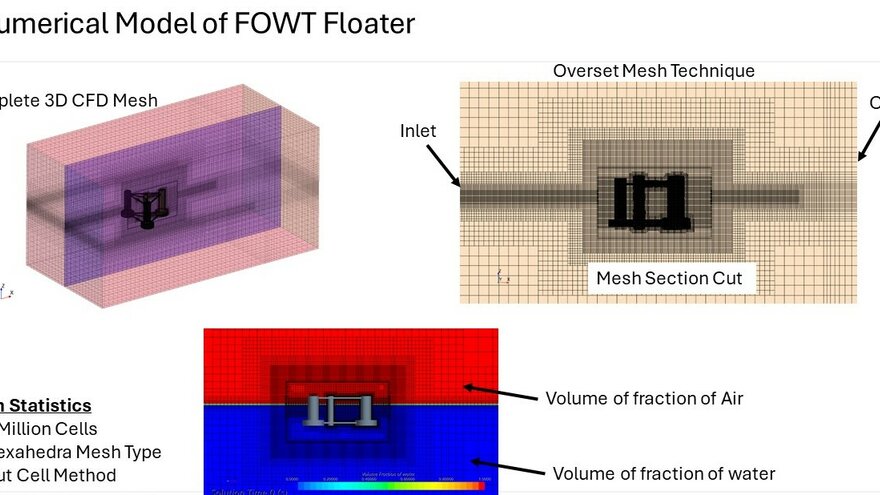
The TORQUE is an official event by the European Academy of Wind Energy and aims at gathering experts worldwide for a unique chance to discuss the cutting-edge developments in wind energy science. Presented one oral presentation dealing with hydrodynamic response on FOWT floater and one poster explaining the effect of rotor tilt angle on wind turbine performance.
13 April 2024: Participated in delivering online lecture in FLOW project
FLOW: Flexible Learning for Offshore Wind program at UiA. FLOW is a continuing education program at bachelor's level offered by the University of Agder, in collaboration with Equinor, GCE NODE and Windport. The program is financed by the Directorate for Higher Education and Skills (HK-dir).
17-19 January 2024: Participated in EERA DeepWind 2024 conference
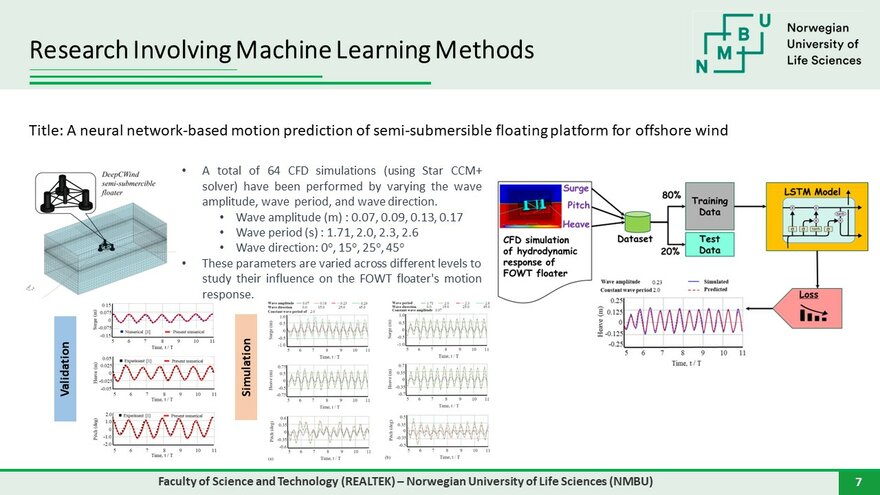
Poster was presented for the research work focused on developing neural network-based motion prediction of semi-submercible floating platform for offshore wind.
18th April 2023: Start-up seminar
The purpose of the startup seminar is to gather feedback on the project plan and to identify relevant courses and activities to include in the education plan.
18-20 January 2023: Poster presented at EERA DeepWind 2023 conference
EERA DeepWind 2023 is an international event aiming to present the best ongoing research and innovation related to deep sea offshore wind farms, both bottom-fixed and floating. Two posters were presented dealing with the wind turbine blade surface roughness and its effect on performance and wake.
Publications
Coherent flow structures in the wake of a model floating wind turbine under pitch and roll motions
Citation H H Mian et al 2025 Energy Journal Volume 335
https://doi.org/10.1016/j.energy.2025.138212
Advances in computational intelligence for floating offshore wind turbines aerodynamics: Current state review and future potential
Citation H H Mian et al 2025 RSER Journal Volume 224-116098
https://doi.org/10.1016/j.rser.2025.116098
Nonlinear Wake Dynamics of a Model Floating Offshore Wind Turbine Under Pitch and Roll Motions
Citation H H Mian et al 2025 J. Phys.: Conf. Ser. 3016 012018
Predictive Modeling of Semi-Submersible Floater Motion Using Bi-LSTM Model
Citation H H Mian et al 2024 J. Phys.: Conf. Ser. 2875 012029
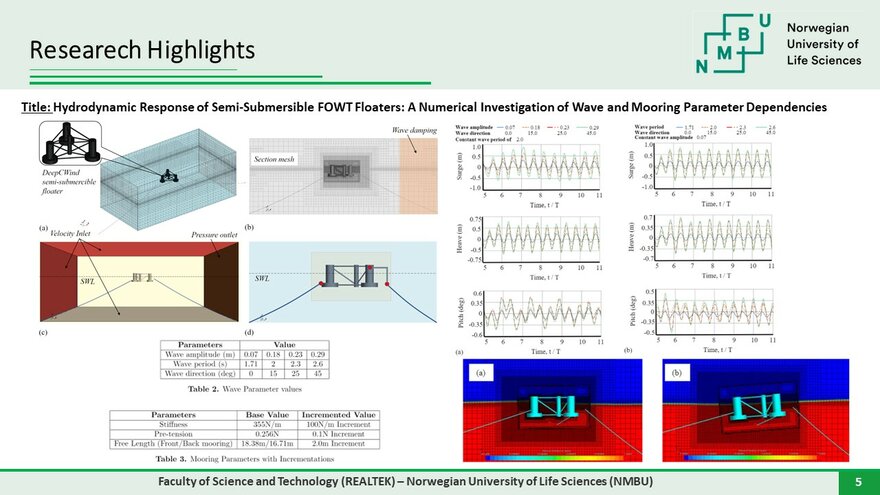
Hydrodynamic Response of Semi-Submersible FOWT Floaters: A Numerical Investigation of Wave and Mooring Parameter Dependencies
Citation H H Mian et al 2024 J. Phys.: Conf. Ser. 2767 062029
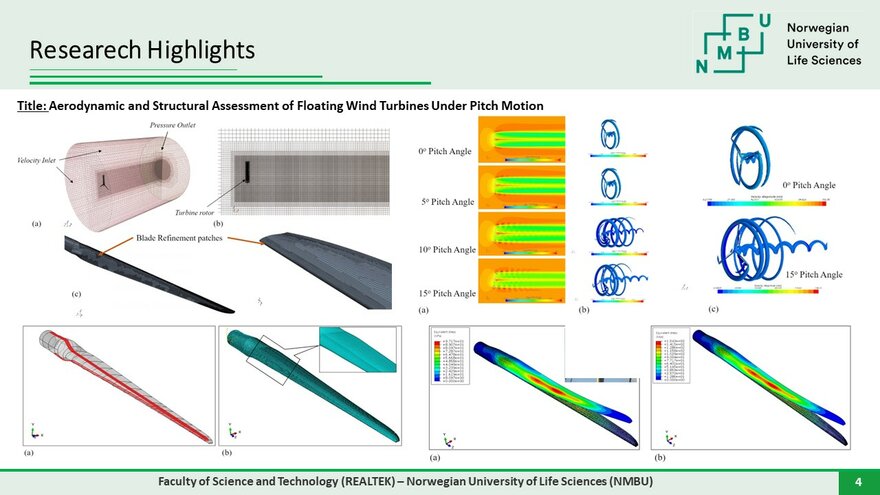
Aerodynamic and Structural Assessment of Floating Wind Turbine Rotor Under Varying Tilt Angle
Citation H H Mian et al 2024 J. Phys.: Conf. Ser. 2767 022053
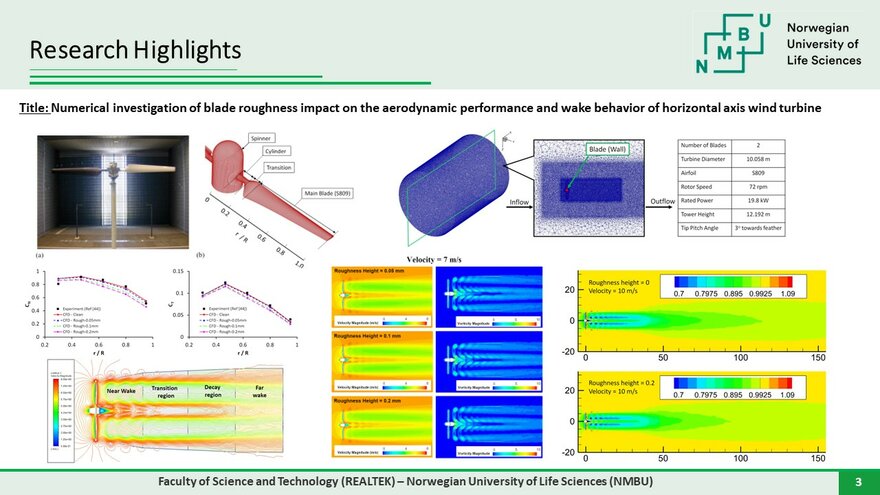
Numerical investigation of blade roughness impact on the aerodynamic performance and wake behavior of horizontal axis wind turbine
Citation H H Mian et al 2023 J. Phys.: Conf. Ser. 2626 012073
Effect of leading-edge erosion on the performance of offshore horizontal axis wind turbine using BEM method
Citation H H Mian et al 2023 J. Phys.: Conf. Ser. 2626 012028
Highlights