Professional studiesFull timeVeterinary Medicine
ECTS credits:
330
Start of Studies:
Autumn
Required points:
Number of students:
90

Program structure
In the veterinary program, you learn about the healthy animal and how to detect disease, about microorganisms that cause illness, medicines and toxins, animal welfare, sustainable food production, and food safety.
The knowledge you gain at the Veterinary Faculty is something all of Norway needs. Not only because many people have pets and need veterinarians, but also because understanding how food production and animal health affect humans is vital knowledge.
The Veterinary faculty at NMBU is the country’s only institution where you can train to become a veterinarian. The veterinary program is a professional degree leading to the title cand.med.vet and authorization as a veterinarian.
As a qualified veterinarian, you will have many career opportunities. You may work with animal treatment, research, or administration, for example at the Norwegian Food Safety Authority (Mattilsynet).
Do you want a practical, exciting, challenging, and meaningful profession?
Become a veterinarian!
What will you learn?
Studying veterinary medicine requires curiosity, a love of reading, and a desire to explore and understand. You first learn about healthy animals before moving on to diseases. A veterinarian must be able to understand many different patients who cannot speak with words, recognize the diverse needs of different species, and analyze and detect pain that animals may hide. You will study the structure and function of the healthy animal and how these change when the animal becomes ill.
You also learn about diseases that spread from animals to humans, and those transmitted through food and water.
Infections in animals and their control are key areas of veterinary medicine. Veterinarians carry a special responsibility for animal welfare and animal health.
Studying veterinary medicine means learning everything from anatomy, pathology, microbiology, and disease theory to the societal importance of veterinary medicine—and much more.
You receive a medical education covering animals, birds, and fish.
Structure of the Veterinary Program
The new curriculum is built on three levels:
1. The healthy animal – basic biological and veterinary knowledge
2. The sick animal – disease theory and clinical skills
3. Application of knowledge – practical work and professional practice
Two threads—animal welfare and professional training—run throughout the entire program. There is clear progression, with courses building on each other, and the program combines extensive theory with practical training.
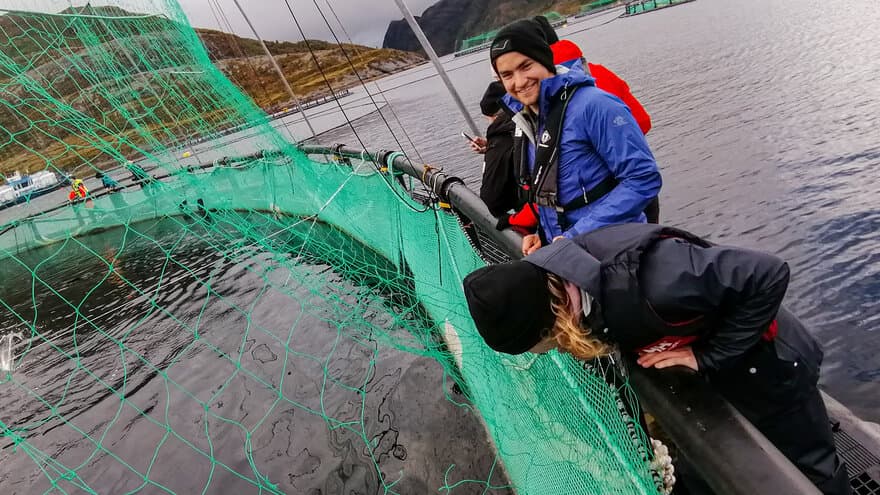
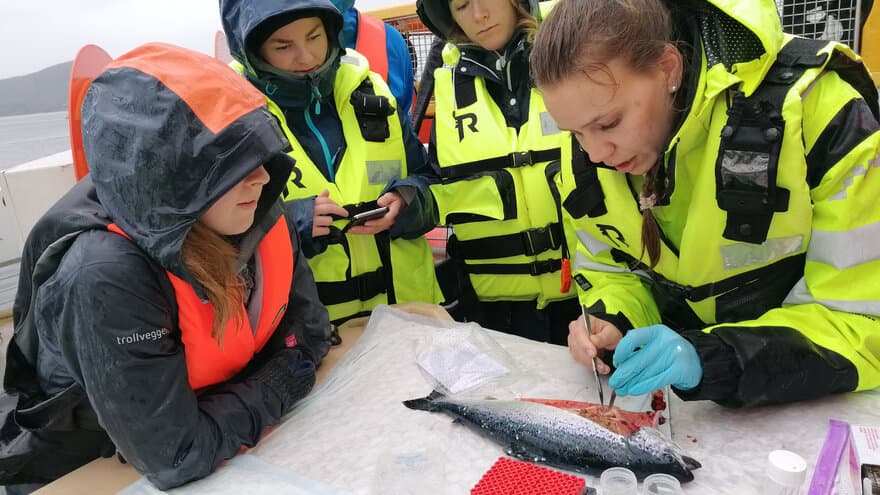
In the 9th and 10th semesters, students rotate in small groups through the school’s clinics and also visit farms. There are placements in Rogaland in aquatic medicine, small ruminant diseases, meat inspection, and herd health medicine. The program includes extensive mandatory teaching as well as evening and night shifts.
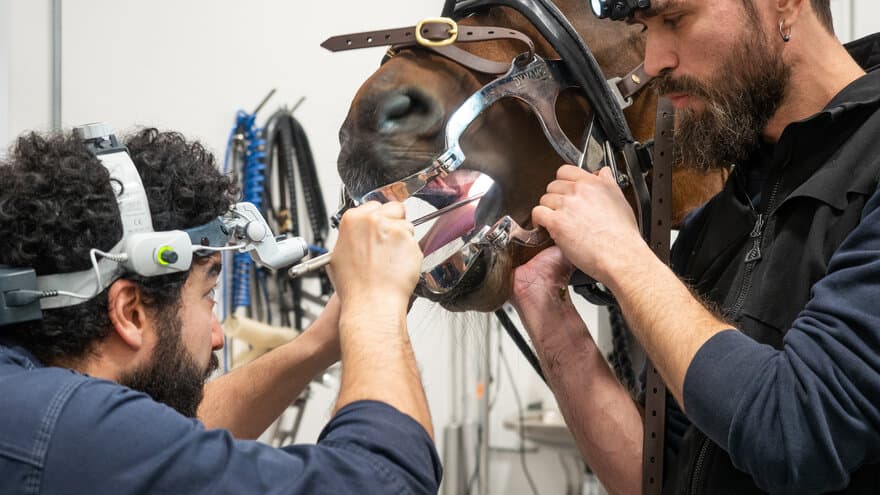
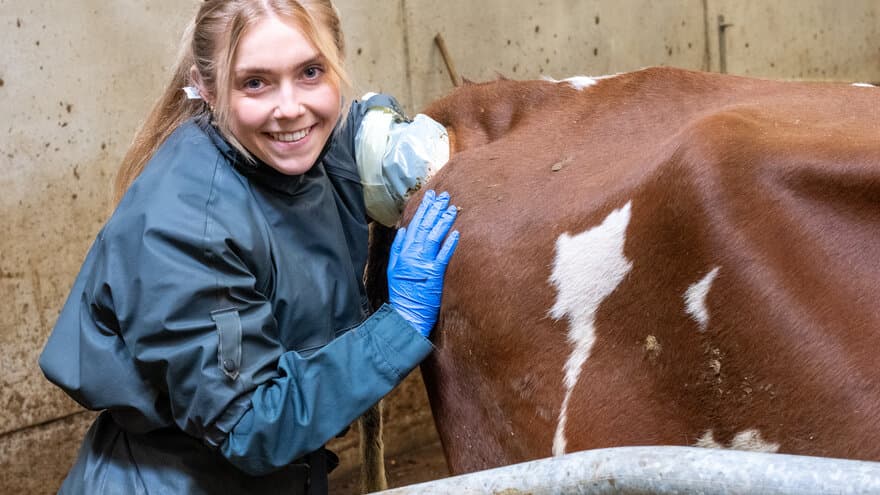
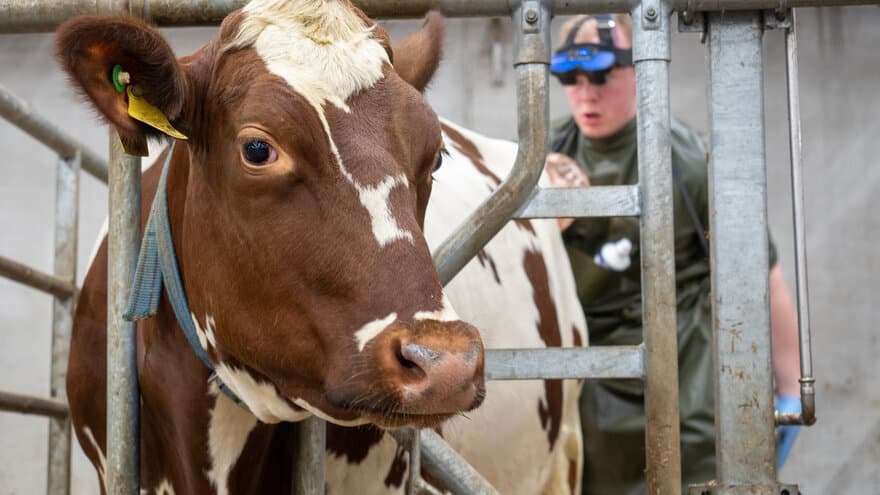
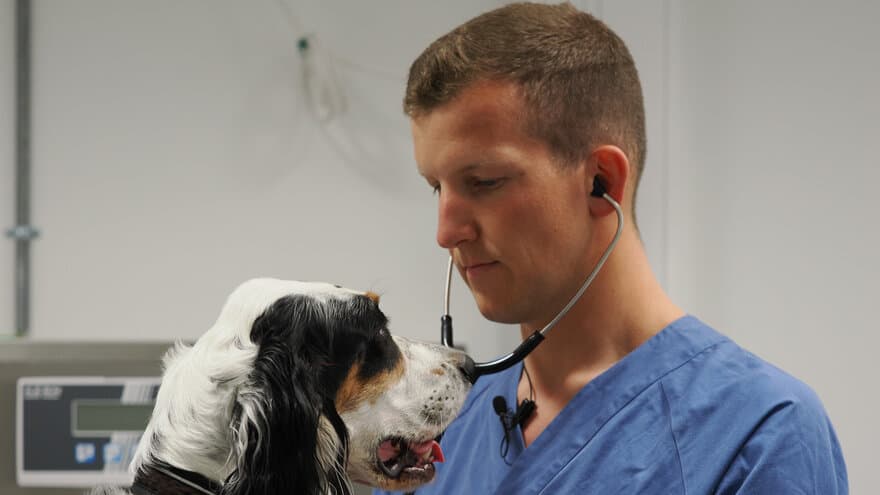
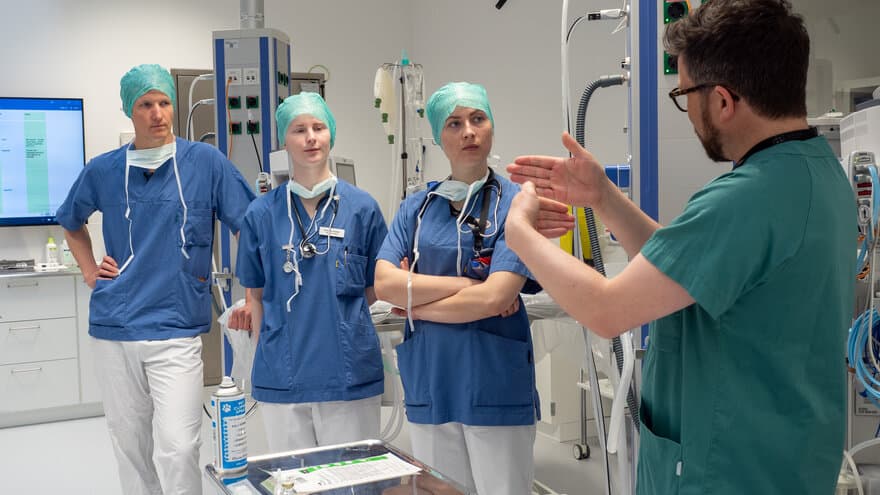
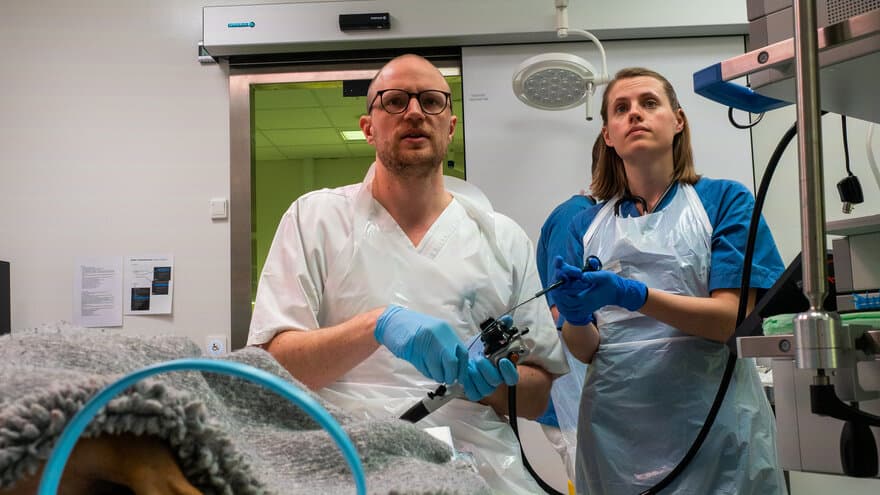
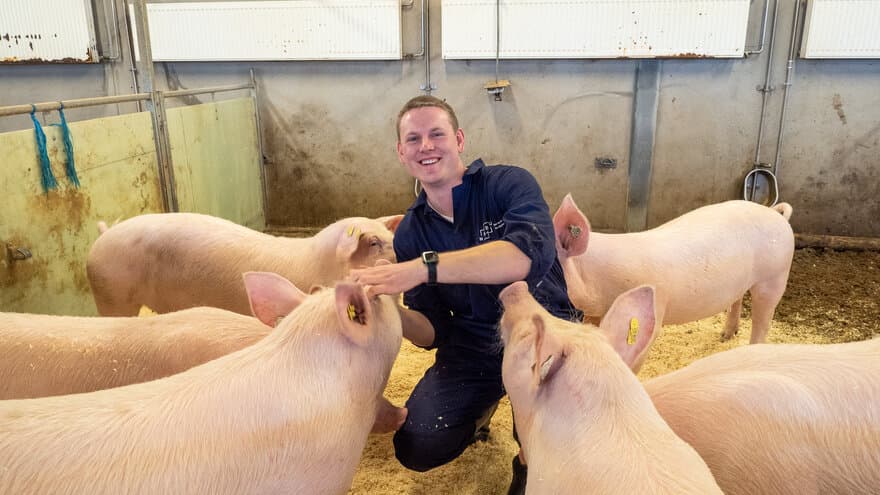
From day one, students work with live animals. The program integrates basic sciences and clinical practice using case studies, diagnostic tools, and live animals as teaching aids. There is a strong focus on student‑active learning methods, reflection, and the use of modern technology.
Students have six weeks of elective study in the 11th or 12th semester, and in the 10th semester there is also the possibility of a study abroad stay. Exams are usually held at the end of each semester, but may also occur mid‑semester when a course concludes.
Teaching is comparative across mammals, birds, and fish. The program covers common domestic animals (cattle, sheep, pigs, horses, dogs, cats, poultry), Atlantic salmon, exotic pets (reptiles, cage birds, rodents), and laboratory animals. Students gain practical experience with all these species, though to varying degrees.
There are numerous mandatory activities both during normal study hours (08:15–15:45) and in the mornings, evenings, nights, and weekends. Some days may be long. Already in the first year, students participate in early morning duties in the clinic. In the first summer, students must also complete four weeks of practical training with dairy cattle, pig production, or aquaculture, which they arrange themselves.
The Veterinary School has its own small animal clinic, production animal clinic, and equine clinic. Students take part in evening, night, and weekend shifts according to a rotation schedule.
It is also possible to choose a two‑year research track in veterinary medicine (120 ECTS credits) in addition to the veterinary program.
Learning outcomes
A candidate who has completed the education is expected to have achieved the following learning outcomes, defined in terms of general competence, knowledge, and skills:
- Possesses solid fundamental knowledge and skills in veterinary medicine, enabling them to work for improved animal health, public health, and animal welfare.
- Has a broad understanding of scientific issues and is capable of identifying, formulating, and solving complex problems within veterinary fields of work and research.
- Understands the significance of the concepts “One Health – One World” and “the intrinsic value of animals”, and acts ethically in accordance with these principles.
- Has the skills to communicate in a clear, effective, and respectful manner with clients, the public, colleagues, and relevant authorities.
- Recognizes their professional limitations and upholds the responsibility for continued education, training, and professional development throughout their career.
Exchange possibilities
There is an opportunity for a study abroad stay in the 10th semester, and it is also possible to choose a two‑year research track in veterinary medicine in addition to the veterinary program (120 ECTS credits).
Do you have questions about exchange in the Veterinary Program? You can contact
studieveileder-veterinaerhogskolen@nmbu.no On NMBU's page about exchange opportunities, you will find exciting options and answers to the following questions:
- Why go on exchange?
- Where and when can I travel?
- How do I arrange an exchange?
More about the program
Study advisor(s):

Ardian Pasjaqa

Susanne Porskrog Heiestad
