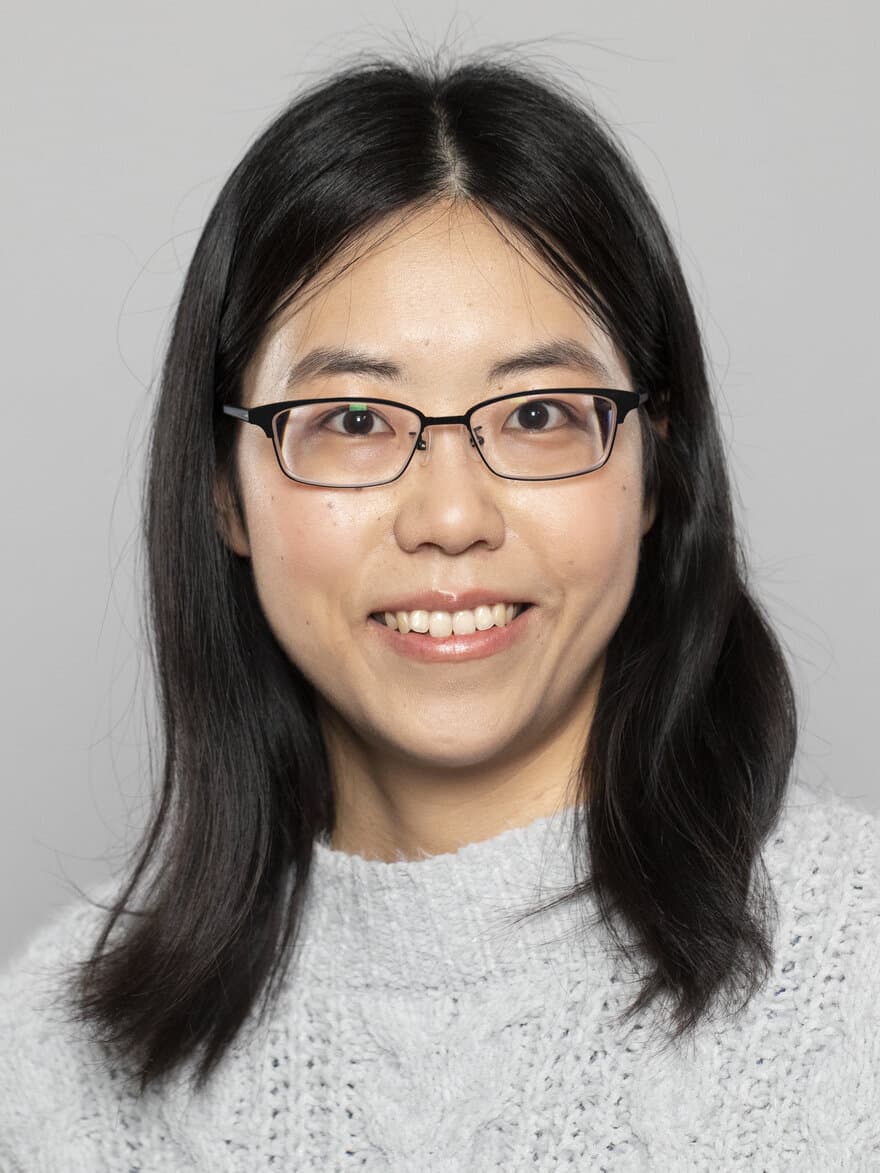
I am a tenure-track PI at CIGENE , NMBU (equivalent to Assistant Professor in the US system). I am interested in revealing the biological basis and evolutionary history of various interesting species by using genomics, bioinformatics, and biostatistics.
External websites:
My Research Group , Google Scholar, Orcid
Life on Earth is extraordinarily diverse, ranging from microbes and insects to plants, fishes, and mammals. I am interested in the genomic mechanisms underlying this biological diversity, with a particular focus on how large-scale changes in genome structure, such as chromosomal rearrangements, copy number variation, structural variation, and whole-genome duplication (WGD), have contributed to the diversification and adaptation of organisms.
During my doctoral and postdoctoral research at the University of Tokyo and in the United States (University at Buffalo and the University of Chicago), I worked primarily on evolutionary genomics and functional genomics in human populations. My research examined the evolutionary history of human genetic diversity and its functional consequences. By integrating ancient DNA analysis, population genetics, transcriptomics, and genome-editing models, I investigated the evolutionary history and functional effects of an ancient deletion polymorphism in the human growth hormone receptor gene. I also led the development of analytical approaches to detect adaptive structural variants using allele frequency distributions across multiple populations. In addition, I have worked on functional genomics topics including the identification of genes involved in cellular senescence, transcriptional regulation in human salivary gland development, and studies related to polygenic risk prediction.
Since joining the Norwegian University of Life Sciences (NMBU) in 2020, I have expanded my research beyond humans to a broader range of organisms. Supported by the Research Council of Norway’s FRIPRO Young Talent program (SalmoSV project), my group studies gene evolution and gene regulation following whole-genome duplication, primarily using Atlantic salmon as a model system. Early in vertebrate evolution, before the diversification of fishes, amphibians, reptiles, birds, and mammals, two ancient whole-genome duplications occurred. As a result, many vertebrate genes originated from these duplication events. Atlantic salmon experienced an additional lineage-specific whole-genome duplication, making it an excellent system for studying how duplicated genes diverge in function and regulation. These studies provide insights into the general principles of genome evolution across vertebrates.
In my research group, we investigate several topics using salmonid fishes as a primary model system, including the genetic basis of immune responses and viral resistance, the evolution of circadian clock genes, and the evolution of gene regulation after whole-genome duplication. We also conduct research applying evolutionary genomics approaches to other systems, including conservation genomics of European lobster and metatranscriptomic analyses of host–microbe interactions. In addition, we use comparative and functional genomics to investigate the evolutionary origins of vertebrate secretory systems, particularly the evolution of milk secretion.
I welcome opportunities for collaboration and seminar invitations, as well as visiting researchers, exchange students, and international trainees interested in evolutionary genomics and related fields.
Education and Training
Since establishing my laboratory at the Norwegian University of Life Sciences (NMBU), I have supervised researchers at the postdoctoral, doctoral, and master’s levels, as well as international interns. My supervision focuses on developing independent researchers capable of integrating population genomics, regulatory genomics, and functional genomics approaches to address evolutionary questions.
Researchers trained in my group have produced peer-reviewed publications, conference presentations, and award-winning theses, and several have moved on to academic positions.
Former trainees include:
- Dr. Jun Soung Kwak (Postdoctoral researcher, 2022–2024)
Led functional genomics analyses of regulatory evolution and circadian gene systems across vertebrates. He is now Assistant Professor at Kongju National University (South Korea). - Dr. Domniki Manousi (PhD, 2022–2025)
Studied the genomic basis of viral resistance and immune gene evolution in Atlantic salmon. She received the Best Flash Talk Prize at the 5th International Conference on Integrative Salmonid Biology and is now Postdoctoral Researcher at the Roslin Institute, University of Edinburgh. - Dr. Célian Diblasi (PhD, 2023–2026)
Investigated regulatory evolution after whole-genome duplication in Atlantic salmon, including dosage compensation and expression QTL analyses. - Erik Sandertun Røed (MSc, 2022–2024)
Developed genomic tools for conservation genetics of European lobster. He received the President’s Award for Best MSc Thesis at NMBU (2024) and is now PhD student at the University of Oslo. - Pauline Buso (Master’s intern, TULIP Program, France, 2022–2023)
Identified parallel selection signatures in domesticated salmon strains, resulting in a publication in Genome Biology and Evolution. - Akira Harding (Erasmus+ intern, 2023)
Developed a meta-transcriptomics framework for extracting microbial signals from host RNA-seq datasets.
In addition, several master’s students and international interns have contributed to ongoing projects in evolutionary genomics and functional genomics, with multiple projects progressing to manuscript submission or preprint dissemination.
Through this supervision, I have trained early-career researchers in genome analysis, quantitative genetics, and integrative evolutionary genomics, while supporting their transition to independent research careers.
Areas of Work
Publications
Teaching
Research and projects